For decades, companies have aimed for a "data-driven culture." Precisely what that meant was less clear.
One source of the truth? Sure. A real-time control room? Absolutely. Churn early warning signals? Why not?
The reality was frequently less rosy. Technologists built generations of solutions, but adoption rarely soared. Oft-cited culprits: the data isn't ready, it's in too many places, it's hard to use. Or worse, "we don't trust our users with this level of depth," as if empowering users wasn't the entire point to begin with.
But all of this is circling the real problem, and the clue's in the name. Data was never the goal, and it's not something you should have to drive.
Back to basics #
Executives aren't thinking about data systems. They're thinking about productivity. Competition. Customer retention. Consumer spending. The cost of capital. In other words: performance.
Those pressures are as tight as they've ever been. In that world, every unhappy customer, misplaced experiment, or ineffective employee matters.
Yet even as information technology has changed, the operating model has not. Data lives in systems, and to use it, you need to know both the system itself and its contents. If you don't, you can ask and wait, you can take your best guess, or you can move on without it.
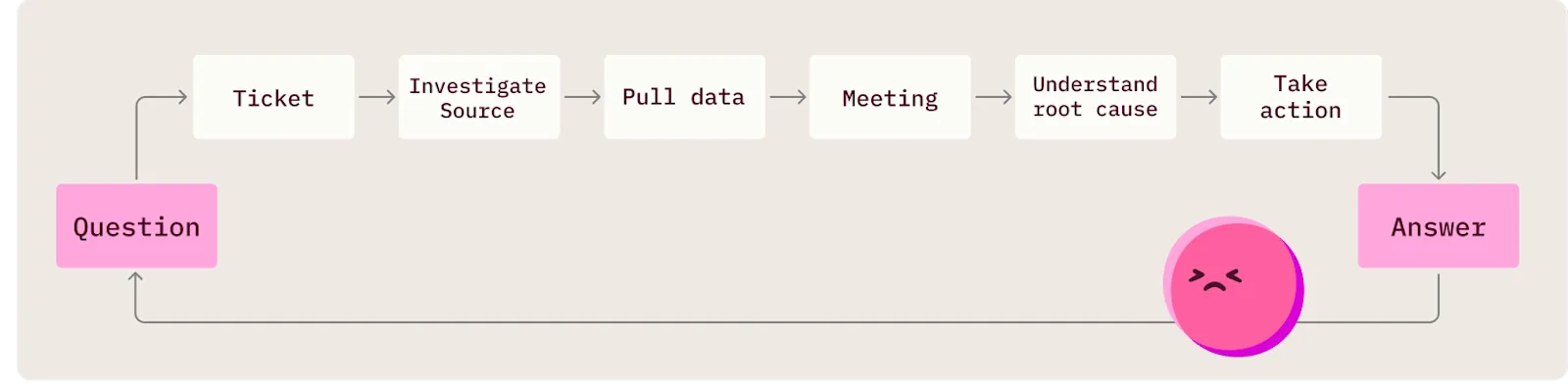
That traditional bird's-eye view meant weeks of back and forth with conflicting detail when you need to know more. It simply doesn't cut it for executives under pressure. Underperformance hides in ambiguity, and execs are out of patience.
Performance. Accountability. Speed. That's the gravity that pulls in focus, and with AI, leaders have finally found the right tool for the job.
AI: The executive's new best friend #
Executives are the new power users of data: their adoption leads ICs by 3-to-1. And it's not being pushed. It's being pulled, sometimes even faster than technologists endorse.
That's because AI solves 3 distinct challenges which previously interrupted the chain of thought from hunch to conclusion and action:
It starts with intent: Previous technology meant you needed to learn the system, and issue precisely formed questions with the system's encoded values and assumptions. AI lets you talk like a human, with as much or little specificity as you give, and takes it from there.
It blends numbers with text and context for detail: Relational data systems are great at aggregate numbers, but struggle with descriptive, semi-structured data like notes and transcripts, requiring rigid tagging systems and stripping meaningful detail. LLMs handle the transition without skipping a beat.
It fits into your workday: If you need a 10-step analysis to run every morning or every month, no problem. And equally if it's 11pm, or you're boarding a flight, or you're chatting with a keystone account, and need an on-demand instant answer, it's there.
This trio gives executives something they've rarely had before: the ability to follow a question all the way to the source, on their own terms. That creates accountability, and the compounding effects of more and more small things done well.
What this looks like #
One of our customers, a D2C retailer, takes enormous pride in their customer service. Following the Zappos model, they see service as a massive differentiator to create brand loyalty, which is the key to beating D2C's notoriously tricky LTV-to-CAC problem.
But it doesn't always go to plan. One director of customer care came in and noticed a dip in quality numbers on a dashboard, and had to fix it.
Within a single AI-assisted chat session, she went from those aggregates down to the individual reps, the conversation transcripts, and even the specific moments where sentiment veered off. Then she asked the AI to incorporate the company's support manual, identifying deviations and anchoring the feedback to established guidelines. Finally, she generated a detailed, fair, evidence-based coaching plan.
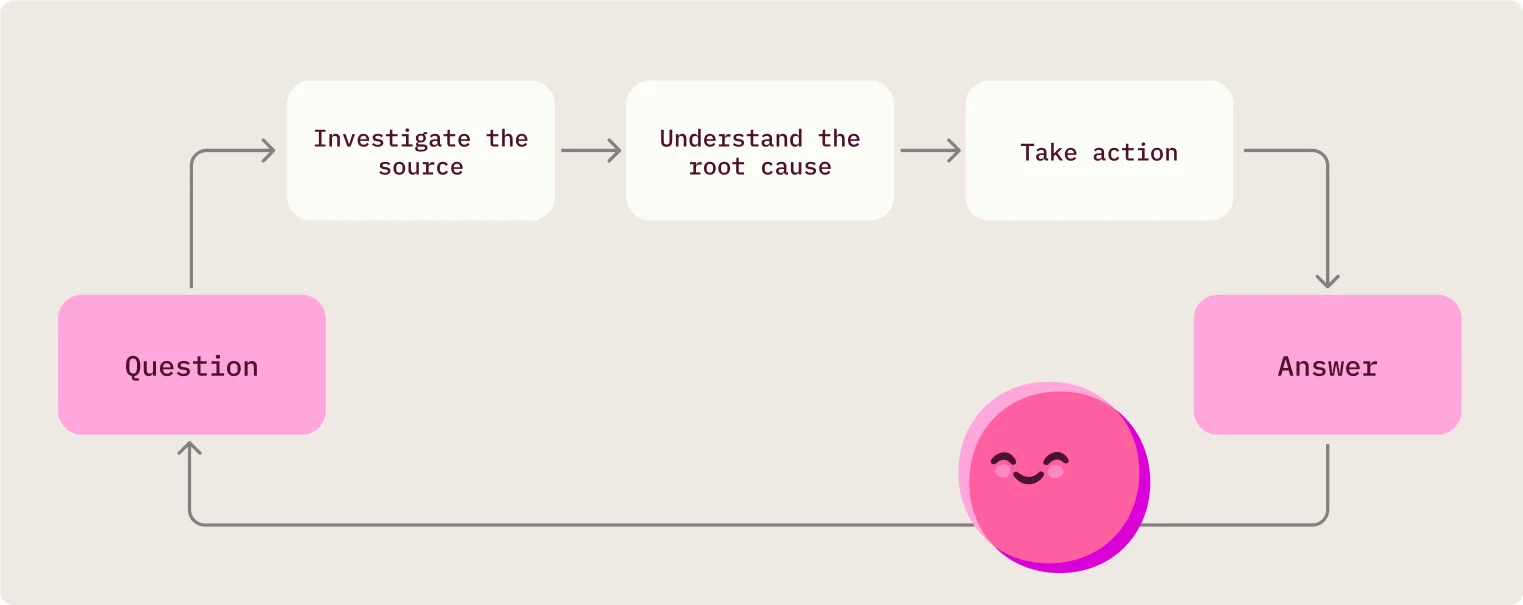
10 minutes. No merging systems, ticket, or meeting. Just following a smoke signal to source and doing something about it, the way it's supposed to be.
That executive later sent us a note saying:
"In the past two weeks alone, I've completed at least ten analyses that would have required BI intake, dedicated support, and weeks of turnaround. That has included decomposing handle time changes across agent behavior, contact mix, and contact rate, identifying drivers of demand variance across sites, and categorizing interactions through transcript analysis and summary grouping. The biggest value has been removing BI throughput as a bottleneck and allowing me to stay directly engaged with the business, moving from question to decision with greater speed and confidence"
We're seeing the same pattern with financial executives at holding groups, PE firms, and VCs. Historically, many of them operated through quarterly results and other lagging indicators. AI hasn't replaced those, but it's revived owners' interest and ability to get in the weeds.
Don't drive taxis. Build roads. #
For data teams, this can be an exciting opportunity to increase leverage – or seen as a threat.
The best teams see creative disruption, and are owning the pathway to make it work. AI is here to stay, but data teams can shape whether it's a version they trust.
That means a new mandate for data teams. Rather than answering every question or "driving taxis", data teams should build the roads that everyone can use. That means adopting 4 pillars:
Make data quality non-negotiable: Boring but more essential than ever. This means clean, documented data, tested pipelines, and semantic definitions with proper engineering source control.
Encode the business context: Your business probably doesn't follow your schema one-to-one, and systems don't by default know what's most important to you. If you'd teach a new hire how your growth funnel works, how your reimbursement cash flow operates, or what the board will ask about every quarter, you should encode it in your AI.
Inspire and educate: The capabilities of AI systems keep evolving, and it's hard to keep up. Experts should highlight what AI can do and offer useful starting points with pre-loaded context. Equally, they should arm users against AI's subtle traps by requiring evidence, ignoring sycophancy, restarting weird sessions, and setting these policies at system level where possible.
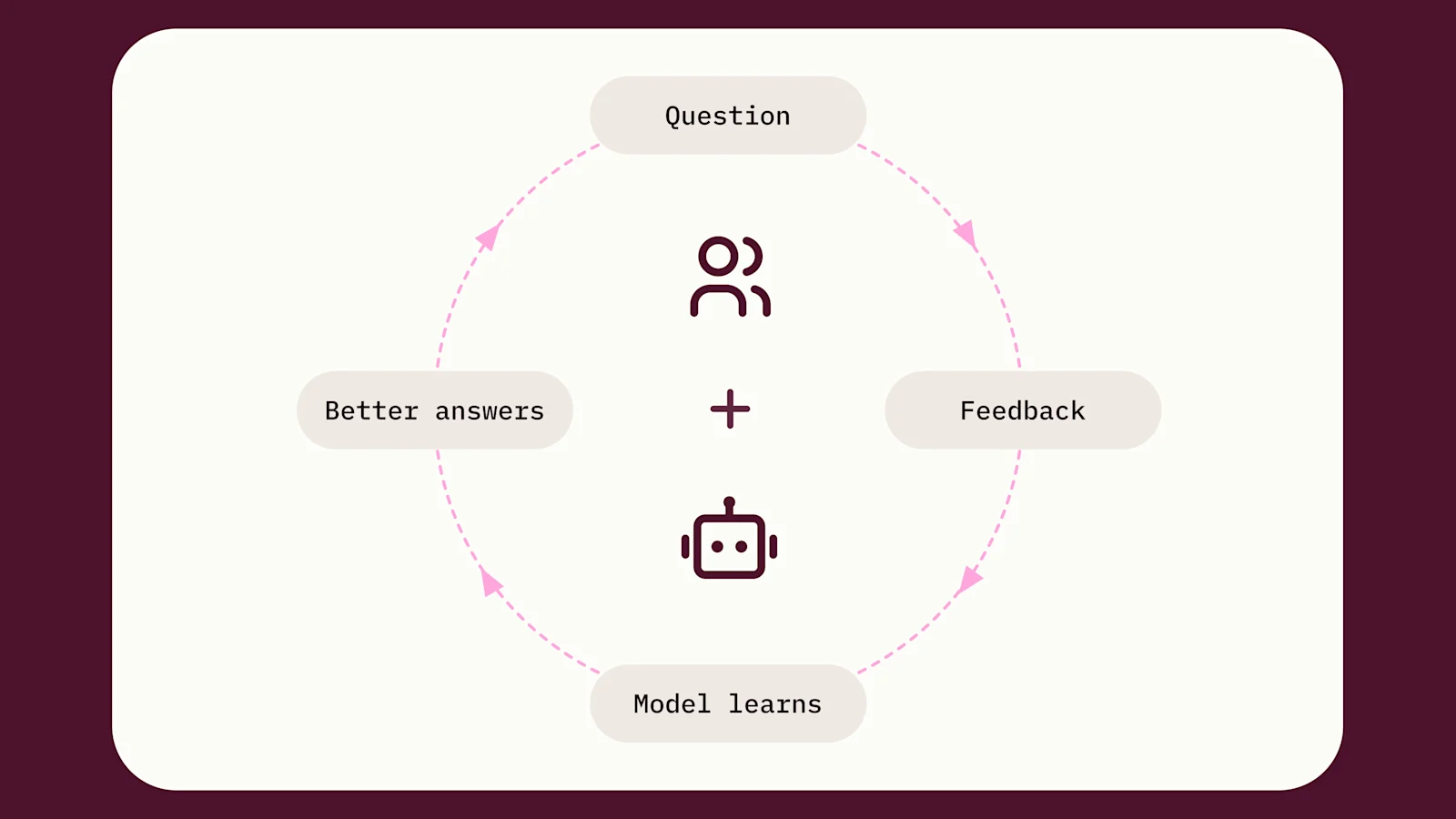
Monitor and measure: If users are asking for data that's not available, expressing frustration, etc, that's okay. AI data products are supposed to evolve, and this data becomes your roadmap. (Fortunately, AI itself can help make sense of all these logs).
Keep stacking wins. #
Every time an exec goes direct to the data, it's an opportunity for a win for the business. And when that happens, it's a win for the system you're owning.
Data culture was never something technology was meant to push. Data supports the existing strategic and operational priorities of a business, and helps owners execute at their best.
The best users now aren't the loudest. They're the ones scrutinizing every detail of their operations and getting 1% better every day. And unlike the latest technology craze, accountability never goes out of style.
Leaders: take a look at your team this week. Are executive peers using your roads, or is your team stuck driving taxis? If you're looking to make the switch, I'd love to chat.