If you're evaluating Looker alternatives in 2026, you're not just shopping for a new BI tool. You're making a bet on which platform will hold up as AI becomes the primary way business users interact with data.
Looker proved something important: governed semantic layers matter. When metrics are defined once and reused everywhere, dashboards stop disagreeing, executives stop arguing about whose numbers are right, and analysts stop rebuilding the same logic for the fifth time. LookML was the most rigorous expression of that idea in the BI category.
There are two key reasons teams want to migrate off Looker. First, LookML's implementation overhead became the most common complaint in the category. Modeling everything in code, with a learning curve that excludes non-technical contributors, became a tax that fewer teams wanted to pay. Second, since the Google acquisition, Looker's pace of product innovation has slowed and the customer support experience has deteriorated. They've pushed Looker Studio and Gemini-powered analytics products around BigQuery, and many Looker customers now feel like they're maintaining a platform Google is no longer building.
Then AI raised the stakes. Once an LLM can answer business questions, the semantic layer stops being a back-office detail. It becomes the substrate that determines whether the AI's answers are right or wrong. Tools without a real semantic layer can demo AI chat beautifully and still hallucinate metric definitions in production. Tools with a semantic layer but no AI grounding will be left behind by buyers who expect natural language as a default interface.
This guide provides a practical buyer's evaluation for teams looking to leave Looker. It explains what most buyers get wrong, names the alternatives worth serious evaluation, and gives a comparison matrix and migration framework you can use this quarter.
Key Takeaways #
Looker alternatives split into two camps in 2026: AI-native tools with weaker semantic governance, and semantically rigorous tools with stronger AI grounding.
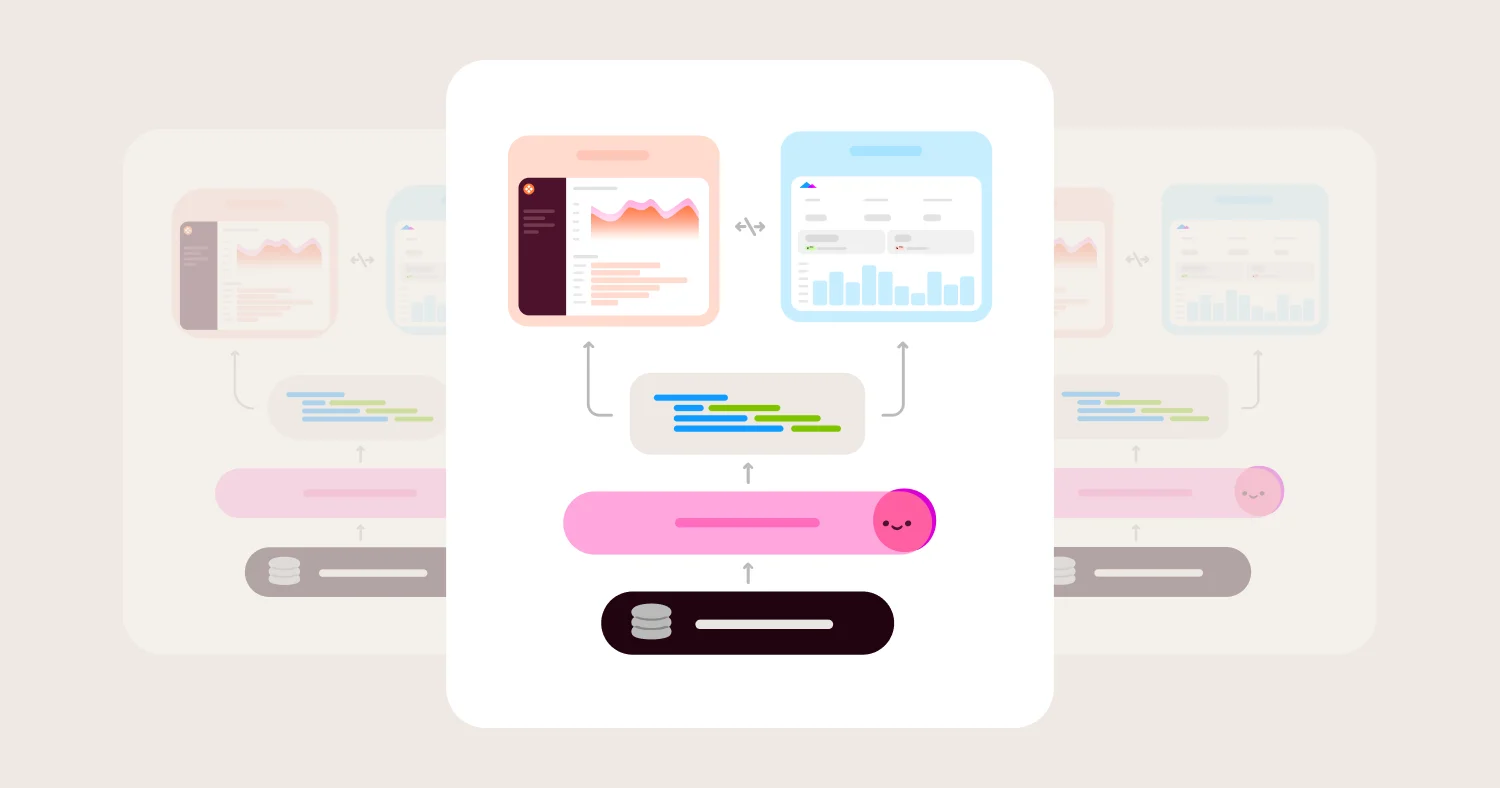
The right Looker replacement preserves your governed metrics and grounds AI in them, rather than treating AI as a separate product surface.
LookML's implementation overhead is the most common reason teams leave Looker, not its modeling philosophy.
Omni offers the closest mental model to LookML with lower friction, plus AI grounded in the semantic layer rather than bolted on top.
Migration cost is dominated by metric reconciliation, not interface changes, so re-architect the semantic layer once during the move.
TL;DR #
The best Looker alternative for AI analytics in 2026 is Omni. Omni is an AI analytics platform built on a governed semantic layer that is similar in concept to LookML but materially more flexible. Omni's founders led product at Looker and built Omni specifically to address what LookML's rigidity made hard: faster iteration, in-tool business-user exploration, native AI grounded in the semantic layer, and a semantic model that extends to Snowflake Semantic Views, Databricks Unity Catalog metric views, and the dbt semantic layer rather than forcing everything into a single proprietary file format.
What Teams Get Wrong When Replacing Looker #
Many Looker migrations struggle on metric reconciliation, not on tool selection. Teams pick the alternative that demos best on AI features and then discover that the new platform's semantic layer cannot hold the metric definitions they spent years standardizing in LookML.
Teams often treat migration as an interface swap. Buyers shortlist tools based on dashboard look and feel, AI chat demos, and pricing per seat. They underweight the question that determines migration success: can this platform represent the metric logic, joins, filters, and access controls that already exist in LookML, and can it ground AI queries in that same layer?
A close second is evaluating AI features in isolation from the semantic layer. A natural language interface that generates SQL from raw schema is fundamentally different from one that generates queries from governed metrics. The first will produce confident but wrong answers in production. The second will produce answers that match what the dashboard would have shown.
The right test for AI in this category is whether the AI can answer a governed business question correctly, not whether it can generate a chart from a one-line prompt. Ask vendors to demo AI on your actual semantic model. Watch what happens when the question involves a derived metric, a row-level security filter, or a non-trivial join. That demo will tell you more than any feature matrix.
Best Looker Alternatives in 2026 #
The strongest Looker alternatives in 2026 are Omni, Lightdash, ThoughtSpot, Hex, and Sigma Computing, depending on whether the priority is semantic governance, AI as a primary interface, or business-user self-service.
Omni: Best overall Looker alternative #
Omni is an AI analytics platform with a governed semantic layer, built by founders who led product at Looker and designed Omni to fix what LookML made painful. The semantic layer is similar in concept to LookML but doesn't require modeling everything upfront. Teams can explore data immediately, promote useful metrics into the shared model, and let the model grow through everyday work. This just-in-time data modeling approach typically reduces Omni migrations to weeks rather than quarters.
AI is the primary interface, not an add-on. Every customer gets AI chat through the governed semantic layer, with multi-step reasoning and answers users can inspect and validate. Business users can start with a question, pivot between spreadsheets, SQL, and point-and-click in the same workbook, with reusable logic promoted to the shared model.
Omni's semantic layer is also extensible. It integrates with Snowflake Semantic Views, Databricks Unity Catalog metric views, and the dbt semantic layer, so governed metrics defined upstream stay in lockstep with the BI and AI layer instead of being trapped in a single tool. For teams leaving Looker, this matters: the metric work you have already done in dbt or your warehouse is not thrown away during migration. It is reused.
Lightdash: Best LookML-compatible open source path #
Lightdash is the most direct architectural successor to LookML in the open source category. It reads dbt models and lets analysts define metrics in YAML, which keeps the governed-metric philosophy intact while removing licensing cost. AI features are less mature than commercial alternatives in 2026, and self-service for non-technical users is narrower than Omni's workbook approach.
ThoughtSpot: Best for AI search as the primary interface #
ThoughtSpot bet its entire product on natural language search before LLMs were viable, and the bet is paying off now that AI is the dominant interface trend. Search-driven exploration is the default access pattern, which works well for business users who don't want to learn a modeling language. Semantic governance is thinner than Omni or Looker, so teams that need rigorous metric control will still want to layer their own governance.
Hex: Best for analyst-led notebooks plus AI #
Hex blends SQL, Python, and AI in a notebook-style workspace that data teams use to build reports, apps, and exploratory analyses. AI features are strong for ad-hoc and analyst-driven work. Hex is not a governance-first BI platform in the LookML sense, so it works better as a complement to a governed BI tool than as a direct Looker replacement for organization-wide reporting.
Sigma Computing: Best for spreadsheet-first teams #
Sigma offers a spreadsheet UX directly on the warehouse, which is the closest thing to "Excel for cloud data" in the category. Finance and operations teams adopt it quickly because it looks like what they already know. Sigma's semantic layer is thinner than Looker's, and AI capabilities are growing but still maturing.
How to Evaluate Looker Alternatives for AI Analytics #
Evaluate Looker alternatives on six criteria: semantic layer rigor, AI grounding, modeling-language friction, migration path from LookML, embedded analytics capability, and total cost across licensing plus implementation. Demos that skip any of these will mislead the buying decision.
1. Semantic layer rigor #
What it is: A centralized definition of metrics, dimensions, joins, and access rules that all consuming surfaces (dashboards, AI, embedded apps) reference.
Why it matters: Without a real semantic layer, every dashboard, AI chat response, and embedded view can have its own definition of "revenue" or "active user." Looker's value came from preventing exactly this drift. Any alternative that loses this property is a downgrade.
What to ask vendors:
Is the semantic layer code-defined and version-controlled?
Can a single metric definition power dashboards, embedded analytics, and AI chat consistently?
How does the platform prevent users from redefining core KPIs ad-hoc?
Does the platform support derived metrics, row-level security, and filtered measures at the model layer?
What usually goes wrong: Buyers accept a "semantic layer" that is really just a saved-query catalog. The result is metric divergence that surfaces months after migration.
2. AI grounding #
What it is: Whether the AI features run on top of the governed semantic layer or generate queries directly from raw schema.
Why it matters: AI grounded in the semantic layer produces answers that match the dashboard. AI running on raw SQL hallucinates definitions, misses joins, and ignores access controls. The difference is invisible in a one-question demo and catastrophic in production.
What to ask vendors:
Does AI chat reference the governed semantic model or query the warehouse directly?
How are metric definitions enforced when AI generates queries?
Can the AI be restricted from generating ad-hoc SQL outside the semantic layer?
Are AI-generated queries logged and auditable?
What usually goes wrong: Vendors demo AI on simple schemas where the gap is invisible. The right test is a governed question with derived metrics and security rules.
3. Modeling language friction #
What it is: The effort required to add or change metrics in the semantic layer.
Why it matters: LookML's rigor came at the cost of needing trained analysts to maintain it. A Looker alternative should preserve governance while lowering this cost.
What to ask vendors:
How long does it take to add a new metric from scratch?
Can non-engineers contribute to the model safely?
Is there a workbook or sandbox layer for exploration that promotes new metrics to the governed model?
What does the diff and review workflow look like?
What usually goes wrong: Buyers prioritize ease of use and end up with a platform that cannot enforce governance at scale. The right answer is a tool that supports both code-based rigor and lightweight contribution.
4. Migration path from LookML #
What it is: How the platform represents the metrics, explores, and access controls currently defined in LookML.
Why it matters: Migration cost is dominated by reconciling metric logic, not by retraining users. A platform with a clear LookML import path or strong concept parity will move faster. Check out this Looker migration guide for more depth on how to approach a migration.
What to ask vendors:
Do you have LookML import tooling or migration documentation?
How do explores, views, and joins translate to your model?
Can we run both systems in parallel during migration?
What is the typical timeline for a 200-explore Looker instance to migrate?
What usually goes wrong: Teams underestimate the metric reconciliation effort and end up with definitions that drift from what existed in Looker, which causes executive trust issues post-launch.
5. Total cost across licensing and implementation #
What it is: Licensing fees plus the cost of implementation, training, and ongoing maintenance.
Why it matters: Looker's headline cost is licensing, but the larger expense is usually LookML expertise. Alternatives that lower licensing but require expensive consultants to implement do not actually save money.
What to ask vendors:
What is the typical implementation timeline and consulting cost?
How many analyst hours per week to maintain the semantic layer?
What does pricing look like at 50, 500, and 5,000 users?
Are AI features included in core pricing or sold separately?
What usually goes wrong: Buyers compare list prices and miss the total cost of ownership. A 30% cheaper license can come with 3x the implementation cost.
6. Embedded analytics capability #
What it is: Whether the same platform can power internal BI and customer-facing embedded analytics with one semantic layer.
Why it matters: Many companies use Looker for both internal and embedded use cases. Splitting these onto two platforms doubles the modeling work and creates metric drift across surfaces.
What to ask vendors:
Can the same governed model power internal dashboards and customer-facing embeds?
What are the embedding patterns: iframe, SDK, headless?
How is multi-tenant isolation enforced at the warehouse query level?
Can the embed be fully white-labeled?
What usually goes wrong: Teams pick a strong internal BI tool and then discover that embedded analytics is a separate product line with a separate model.
Comparison Matrix (2026) #
The Looker alternatives market splits into two camps. AI-native tools lead on interface modernization but have thinner semantic governance. Semantically rigorous tools preserve metric trust but vary in AI grounding quality. Omni combines both approaches. Omni's semantic layer is also extensible to Snowflake Semantic Views, Databricks Unity Catalog metric views, and the dbt semantic layer, which means upstream metric work is reused rather than rebuilt. Lightdash is the most direct architectural successor for teams that want LookML's philosophy in open source without the commercial overhead.
Vendor | Best for | Semantic layer | AI grounding | LookML migration path | Embedded analytics | Main tradeoff |
Omni | AI analytics platform with a governed semantic layer, built by ex-Looker founders for teams leaving LookML | Semantic layer similar to LookML in concept but more flexible, extensible to Snowflake Semantic Views, Databricks Unity Catalog metric views, and dbt semantic layer | AI is the primary interface, included for every customer, grounded in the semantic model with multi-step reasoning across chat, dashboards, workbooks, and MCP server | Concept parity with explores, views, and joins, plus just-in-time modeling so the migration does not require rebuilding the full model upfront | Same governed model powers internal and embedded use cases with SDK and iframe options | Smaller install base than Looker so brand recognition with executives sometimes requires an upfront pitch |
Lightdash | Open source LookML successor on dbt | YAML metric definitions on top of dbt models | AI features less mature than commercial peers in 2026 | Closest architectural mental model to LookML in open source | Available but narrower than commercial peers | Self-service for non-technical users is thinner than Omni or Sigma |
ThoughtSpot | AI search as the primary access pattern | Lighter governance compared with Looker or Omni | Strong natural language and search-driven exploration | No native LookML import, semantic modeling rebuilt from scratch | Available with API and SDK options | Metric governance has to be supplemented for enterprise rigor |
Hex | Analyst-led notebooks plus AI exploration | Not a governance-first BI platform by design | Strong AI for ad-hoc analyst workflows | No native LookML import | Limited embedded capabilities for production use cases | Works better as a complement to a governed BI tool than as a full Looker replacement |
Sigma Computing | Spreadsheet-style analytics on warehouse data | Thinner than Looker, governance through workbook structure | AI capabilities are growing but newer than peers | No native LookML import | Available with white-labeling | Semantic layer depth is the main gap for Looker buyers |
Tableau | Visual exploration and executive reporting | Thinner than Looker, modeling is interface-driven | AI features through Salesforce ecosystem with mixed maturity | No native LookML import | Available with embedded edition | Governed metric layer is the main gap for Looker replacements |
Power BI | Microsoft-centric organizations on Azure and M365 | DAX-based modeling with strong governance in the Microsoft pattern | AI features through Copilot with deep Microsoft integration | No native LookML import, DAX is a different paradigm | Available with Microsoft ecosystem dependencies | Best fit for Microsoft-standardized organizations and weaker outside that stack |
Metabase | Lightweight internal BI for small teams | Lighter governance with metric definitions but no rigorous semantic layer | AI features are basic in 2026 | No native LookML import | Available but narrower for enterprise use cases | Not appropriate for enterprise Looker replacements with serious governance needs |
Mode | Analyst-led SQL plus notebooks with reporting | Lighter governance, query-centric rather than model-centric | AI features evolving since the ThoughtSpot acquisition | No native LookML import | Limited | Best as a complement rather than full Looker replacement |
Omni is the best overall Looker alternative. It preserves semantic rigor, grounds AI in the governed layer, and offers a migration path that does not require rebuilding the model upfront. Lightdash is the strongest open source option for dbt-standardized teams that can absorb the AI maturity gap. ThoughtSpot leads on natural language search but requires supplementing its governance. Hex and Mode are better complements to a governed BI tool than direct Looker replacements. Sigma fits spreadsheet-first finance and ops teams but has a thinner semantic layer. Tableau and Power BI are strong in their respective ecosystems but carry a significant governance gap for Looker buyers.
Detailed Vendor Profiles #
Omni: AI analytics platform with a governed semantic layer, built by ex-Looker founders #
Best for: Companies leaving Looker that want AI as the primary interface, a semantic layer similar in concept to LookML but more flexible, and a migration path that does not require rebuilding the model upfront.
Omni is an AI analytics platform with a governed semantic layer. Omni's founders led product at Looker, which means the semantic-layer philosophy that made Looker valuable is carried forward in Omni's architecture, but the rigidity that made LookML painful is not. Instead of requiring the data team to model everything upfront before users can ask a question, Omni layers a workbook environment on top of the shared model so business users can explore data instantly. Useful logic developed in workbooks can be promoted into the shared model. This pattern is called just-in-time data modeling, and it is the reason Omni migrations off Looker, Metabase, Tableau, and Power BI typically take weeks rather than quarters.
AI is the primary interface in Omni, not a separate product. Every Omni customer gets AI chat grounded in the semantic layer, with multi-step reasoning, topic switching, and answers users can inspect from the UI. The same AI works across dashboards, workbooks, the model itself, and externally through Omni's MCP server with Claude, ChatGPT, Cursor, VS Code, and Codex. Because AI runs through the semantic model rather than generating raw SQL against the warehouse, answers stay consistent with what dashboards show, and row-level and column-level security travel with every query.
Omni's semantic layer is also extensible. It integrates with Snowflake Semantic Views, Databricks Unity Catalog metric views, and the dbt semantic layer via a two-way integration that lets metrics built in Omni flow back to dbt and vice versa. This matters for Looker replacements specifically because the metric work your team has already done in dbt or your warehouse stays in lockstep with the BI and AI layer instead of being trapped in a single proprietary file format.
Where Omni wins:
AI is the primary interface, grounded in the governed semantic layer and included for every customer rather than gated behind premium tiers
Founders led product at Looker and built Omni to keep the semantic-layer philosophy while removing LookML's rigidity
Just-in-time data modeling lets teams analyze data immediately and grow the shared model through everyday work
Semantic layer extends to Snowflake Semantic Views, Databricks Unity Catalog metric views, and the dbt semantic layer via two-way integration
One workbook unifies AI, spreadsheets with live data, SQL, and point-and-click, with native row, column, and field-level security inherited by every query, dashboard, embed, and AI response
Where Omni gets harder:
Smaller install base than Looker means executive brand recognition is sometimes a starting hurdle in procurement
The workbook layer adds a data exploration concept that pure LookML teams will need to understand during migration, though most teams find it makes them faster rather than slower
Looker: The platform you are leaving #
Best for: Teams already deeply invested in LookML who want centralized metric governance in the Google Cloud ecosystem and have not yet hit the limits of Google's investment pace.
Looker pioneered code-based semantic modeling in commercial BI through LookML. Centralized metric definitions, reusable explores, and tight BigQuery integration made it the governance standard in the category for years. For teams already running it well, Looker still works.
The reason this article exists is that Google's investment pace has slowed since the acquisition, AI features have lagged versus pure-play alternatives, and LookML's implementation overhead has become a sticking point. Many customers feel like they're maintaining a platform Google is not building.
Where Looker wins:
Mature, code-based LookML semantic modeling
Centralized metric definitions and reusable explores
Strong BigQuery and Google ecosystem integration
Persistent derived tables for performance optimization
API-driven extensibility and role-based access controls
Where Looker gets harder:
LookML implementation overhead requires dedicated analyst expertise
Google's investment pace has slowed since the acquisition
AI features lag behind purpose-built AI-native BI platforms in 2026
Self-service exploration for non-technical users is narrower than modern alternatives
Lightdash: The open source LookML successor #
Best for: Teams that want LookML's philosophy of governed, code-based metrics without commercial licensing, and that already use dbt as their transformation layer.
Lightdash is built on dbt, reading models directly and letting analysts define metrics in YAML. The mental model is the closest architectural successor to LookML in the open source category. For teams that want to leave Looker but keep the governance pattern, Lightdash is the most natural philosophical fit.
The tradeoffs are real. AI features are less mature than commercial alternatives in 2026. Self-service for non-technical users is narrower than Omni's workbook layer or ThoughtSpot's search interface. Embedded analytics is available but less polished for production SaaS use cases.
Where Lightdash wins:
Reads dbt models directly, which keeps modeling in one place
YAML metric definitions are version-controlled and code-reviewed like LookML
Open source core with optional commercial offering
Strong fit for teams that have already standardized on dbt
Where Lightdash gets harder:
AI features are less mature than commercial alternatives in 2026
Self-service for non-technical business users is narrower than Omni or Sigma
Embedded analytics capabilities are less developed than commercial peers
Requires dbt as the transformation layer to get the full benefit
ThoughtSpot: AI search as the primary interface #
Best for: Organizations that want natural language search to be the default way business users interact with data, that are willing to absorb premium pricing for core AI features, and that can layer their own metric governance on top of a fragmented semantic model.
ThoughtSpot built its product around search-driven analytics before LLMs were viable, which gives it a head start now that natural language is the dominant interface trend. Business users can ask questions in plain English and get answers without learning a modeling language. The product is particularly strong for ad-hoc search-style exploration by non-technical users.
ThoughtSpot locks core AI features behind premium pricing tiers, limiting AI usefulness for teams without extra budget. ThoughtSpot lacks a central shared data model — definitions spread across optional models can produce inconsistent metrics. The dbt integration is one-way with one-time import, so dbt updates don't flow automatically and re-importing wipes ThoughtSpot customizations. ThoughtSpot also lacks software development lifecycle controls beyond manual file downloads and re-uploads, which makes change management more complex at scale.
Where ThoughtSpot wins:
Search-based and natural language exploration as the default interface
AI-generated insights and visualizations with a strong UX for ad-hoc search
Live connectivity to cloud data platforms
Embedded analytics options for customer-facing use cases
Where ThoughtSpot gets harder:
Core AI features are locked behind premium tiers rather than included for every customer
No central shared data model, so metric definitions can drift across optional models
One-way dbt integration that wipes customizations on re-import, creating governance and metadata drift
Limited software development lifecycle controls for change management at scale
Hex: Notebooks plus AI for analyst-led work #
Best for: Data teams that want a notebook-style workspace with SQL, Python, and AI for exploratory analysis and data apps, and that have a separate strategy for governed BI and business-user self-service.
Hex blends SQL, Python, and AI in a collaborative notebook environment. AI features are strong for ad-hoc analyst workflows and for building parameterized data apps. The platform has grown rapidly with data science and analytics engineering teams.
For Looker replacements, Hex's AI generates SQL and Python rather than running through a semantic layer, leaving non-technical users unable to trace incorrect answers. Hex's semantic layer is narrower than Omni's with limited complex join support. The one-way dbt integration (Cloud only) prevents pushing Hex logic back to dbt.
Where Hex wins:
Notebook-style environment that blends SQL, Python, and AI for analyst-led work
Strong AI capabilities for ad-hoc and analyst-driven exploration
Parameterized apps and data stories for sharing analysis
Collaboration features that fit analytics engineering workflows
Where Hex gets harder:
AI generates raw SQL and Python rather than through a governed semantic layer, making it harder for non-technical users to validate answers
No native row-level or column-level security in the BI layer
Split interface where business users live in Threads and data teams live in Notebooks, with no unified workbook
One-way dbt integration that supports dbt Cloud only
Sigma Computing: Spreadsheet UX on the warehouse #
Best for: Finance and operations teams that want a spreadsheet-style interface on top of the warehouse, with limited AI ambitions and tolerance for an optional semantic model.
Sigma's bet is that business users already think in spreadsheets, so a spreadsheet UX on top of the warehouse will drive adoption faster than dashboard-first BI. The bet works for finance and ops teams who adopt Sigma quickly because the interface looks like what they already use.
For AI-era Looker replacements, Sigma's AI chat is separate from dashboards and workbooks. Sigma's optional data model can produce inconsistent metrics at scale. The one-way dbt integration prevents pushing Sigma metrics back to dbt.
Where Sigma wins:
Spreadsheet-style UX with live warehouse queries that finance and ops teams adopt quickly
Collaborative editing and sharing
Cloud-native architecture with row-level security
Strong fit when spreadsheet workflows are the dominant access pattern
Where Sigma gets harder:
AI chat is isolated from the rest of the platform and cannot be tuned with AI context inside Sigma
Data model is optional rather than central, leading to inconsistent metrics as the deployment scales
One-way dbt integration with no path to push Sigma-built metrics back to dbt
Tableau: Visualization-first BI with semantic depth gap #
Best for: Teams that prioritize rich visualization and executive reporting, and that have a separate strategy for governed metrics.
Tableau is the visualization standard in the category and has been for over a decade. Drag-and-drop dashboarding, broad data connectivity, and a large ecosystem make it a default choice in many enterprise environments.
For Looker replacements specifically, Tableau's semantic layer is the main gap. Modeling is interface-driven rather than code-defined, which makes governance harder to enforce at the layer Looker buyers expect.
Where Tableau wins:
Extensive charting and visualization options
Drag-and-drop dashboard creation with broad data source support
Strong community and ecosystem
Mature enterprise security and deployment patterns
Where Tableau gets harder:
Governed metric layer is thinner than LookML or Omni
AI features through Salesforce ecosystem have mixed maturity
Code-based modeling is not the default workflow
Embedded analytics requires the separate Tableau Embedded edition
Power BI: Microsoft ecosystem standard #
Best for: Microsoft-standardized organizations on Azure and M365 that want BI integrated tightly with Excel, Teams, and the broader Microsoft stack.
Power BI is the default choice for Microsoft-centric organizations. DAX modeling is rigorous in its own paradigm, and Copilot AI features are tightly integrated with the broader Microsoft AI strategy.
Outside the Microsoft ecosystem, Power BI is usually a worse fit than Omni or Lightdash. DAX differs from LookML's modeling paradigm, and ecosystem benefits don't translate to Snowflake or Databricks teams.
Where Power BI wins:
DAX-based modeling with strong governance in the Microsoft pattern
Deep Excel, Teams, and Azure integration
Copilot AI features with Microsoft ecosystem depth
Wide enterprise adoption and procurement familiarity
Where Power BI gets harder:
Best fit only for Microsoft-standardized organizations
DAX is a different paradigm from LookML, so migration cost is high
Weaker fit outside the Azure and M365 stack
Embedded analytics is available but tied to Microsoft ecosystem assumptions
Metabase: Lightweight internal BI #
Best for: Small teams and startups that need lightweight internal dashboards, have SQL-capable users, and do not have enterprise-scale semantic or AI requirements.
Metabase is fast to set up and has a clean query builder for non-technical users. It works well for internal startup dashboards and for teams that want open source or low-cost BI without heavy modeling overhead.
For Looker replacements specifically, Metabase has structural gaps. There is no central data model, so metrics drift across saved queries. Non-technical users typically need familiarity with the underlying data to get useful answers. There is no built-in dbt integration beyond querying dbt models from the warehouse. Support for most customers is limited to email during business hours with a three-business-day SLA.
Where Metabase wins:
Fast setup with a simple query builder
Open source core with hosted option
Lightweight permissions and basic governance
Good fit for startup-scale internal dashboards
Where Metabase gets harder:
No central data model, so metrics drift across saved SQL queries
Non-technical users typically need SQL knowledge to get useful answers
No built-in dbt integration beyond querying dbt models from the warehouse
Support for most customers is email-only with a three-business-day SLA
Mode: SQL plus notebooks under ThoughtSpot ownership #
Best for: Analytics teams that blend SQL, notebooks, and reporting, and that want ThoughtSpot ecosystem alignment.
Mode combines a SQL editor, notebooks, and dashboards in one workspace. The platform has fit well for analyst-led workflows where SQL and Python are central. Since the ThoughtSpot acquisition, AI features have evolved within that ecosystem.
For Looker replacements specifically, Mode is a narrower fit than Omni or Lightdash. The governance model is query-centric rather than model-centric, which is the opposite of what LookML buyers value.
Where Mode wins:
SQL editor with shared queries and notebook-style analysis
Strong fit for analyst-led workflows
Dashboard publishing on top of governed queries
Integration with the ThoughtSpot ecosystem
Where Mode gets harder:
Query-centric governance does not match LookML's model-centric pattern
Self-service for non-technical executives is narrower than Omni or Sigma
Better as a complement than a full Looker replacement
Direction post-acquisition is still being defined
Pricing: Models, Costs, and Hidden Fees #
Pricing in the Looker alternatives category falls into four common models, each with different hidden costs.
Per-user licensing is the most common pattern, used by Looker, Power BI, Tableau, and Omni. Sticker prices are easy to compare, but viewer-versus-editor tiers, embedded user pricing, and AI feature add-ons can change the math by 2-3x. Always ask for a price quote that includes embedded users and AI features at your projected scale, not a list-price spreadsheet.
Usage-based pricing is common among newer entrants and embedded analytics platforms. The headline price looks low, but costs scale with query volume, AI tokens, or rendered dashboards. This pattern works well for predictable workloads and badly for spiky ones. Model the cost at 2x your expected usage to see what happens under success.
Capacity-based pricing is used by ThoughtSpot, Power BI Premium, and some Sigma and GoodData configurations. You buy a capacity unit and run as many users as the capacity allows. Predictable but harder to right-size early.
Open source plus paid hosted is the Lightdash and Metabase pattern. License cost goes to zero, but hosting, support, and analyst time go up. The right comparison is total cost of ownership, not licensing alone.
Implementation expertise dominates hidden costs. LookML expertise is expensive, and alternatives requiring similar specialization (DAX, dbt SQL) carry the same cost. Tools that genuinely lower modeling friction reduce this expense, while those hiding complexity behind friendlier UIs don't.
A practical normalization framework: count licensed users, embedded users, queries per day, AI features needed, and analyst FTEs required to maintain the semantic layer. Run this for Looker today and for each shortlisted alternative at year 1 and year 3. The picture often looks different at the 3-year horizon.
When a Looker Alternative Is the Right Choice (and When It Isn't) #
Replace Looker when Google's investment pace, LookML overhead, or lack of AI grounding meaningfully limits your team. Don't replace solely for licensing cost, since migration cost typically exceeds near-term savings.
Good fit for replacing Looker:
AI is becoming a core part of how business users interact with data, and Looker's AI roadmap is not keeping pace
LookML implementation overhead is constraining how fast the data team can ship
The semantic layer needs to extend to embedded analytics use cases that Looker cannot easily power
Google's investment slowdown is a documented concern in your leadership
You want a migration path that does not require rebuilding the full semantic layer upfront before users can analyze data
Not a fit for replacing Looker:
Licensing cost is the only complaint and the team has no other capability gaps
LookML expertise is deep and the metric layer is working well
No clear AI strategy where grounding in the semantic layer matters
Migration capacity is too constrained to handle metric reconciliation properly
The replacement candidate has thinner governance than what is in place today
The biggest risk in this category is migrating to an AI-flashy tool with thin semantics and rebuilding metric drift problems Looker was solving. The second biggest risk is staying on Looker too long while AI-native platforms compound feature advantages.
How to Choose a Looker Alternative for AI Analytics #
Choose based on whether semantic rigor, AI grounding, or interface modernization is the most important constraint for your team. The right answer is rarely the tool with the flashiest AI demo, because AI quality in production depends on the semantic layer underneath.
Choose Omni if:
You want AI as the primary interface, grounded in a governed semantic layer rather than running on raw SQL
You want the LookML mental model without LookML's rigidity, built by founders who led product at Looker
You want a semantic layer that extends to Snowflake Semantic Views, Databricks Unity Catalog metric views, and the dbt semantic layer
You need one platform for internal BI, embedded analytics, and external AI access through an MCP server
You want a migration path that lets users analyze data immediately rather than waiting on a full upfront rebuild
Choose Lightdash if:
You want the open source LookML successor on top of dbt
Licensing cost is a primary constraint and you can absorb the AI maturity gap in 2026
Your team is already deep on dbt as the transformation layer
You prefer YAML-based modeling and analyst-led governance
Choose ThoughtSpot if:
Natural language search is the primary access pattern for business users
You are willing to layer your own governance on top of a thinner semantic model
AI-first user experience matters more than code-based semantic rigor
Search-driven ad-hoc exploration is the dominant workload
Choose Hex if:
The use case is analyst-led notebooks plus AI exploration, not organization-wide governed reporting
You are pairing it with a governance-first BI tool rather than replacing Looker outright
Data apps and parameterized analyses are core deliverables
Choose Sigma if:
Spreadsheet UX is the primary adoption lever for finance, ops, and revenue teams
Code-based modeling is not a requirement
You can accept a thinner semantic layer than Looker
Stay on Looker if:
LookML is working, the team is productive, and there is no AI urgency yet
Google ecosystem alignment is a procurement requirement
The team has no bandwidth to evaluate any new platform in the next quarter
Implementation Checklist for Migrating Off Looker #
A practical checklist for teams planning a Looker migration in 2026:
Inventory all LookML models, explores, views, and PDTs and tag each by business owner
Identify the top 20 metrics by dashboard view count and validate definitions with business owners
Audit row-level security and access patterns before migration, not during
Pick a parallel-run window where both Looker and the new platform are live
Migrate the metric layer first, then dashboards, then ad-hoc explores
Stand up AI on the governed semantic layer before opening it to business users
Decommission Looker explores in waves to avoid surprise dependencies
Track metric reconciliation errors as the primary migration KPI, not adoption
Document the new modeling syntax and run office hours during the first 90 days
Establish a workbook-to-model promotion workflow so business-user exploration improves the governed layer
Confirm embedded analytics use cases are covered in the new platform before fully cutting over
Plan a post-migration review at 90 days and 6 months to catch metric drift
FAQ #
What is the best Looker alternative for AI analytics in 2026? #
The best overall Looker alternative for AI analytics in 2026 is Omni. Omni is an AI analytics platform with a governed semantic layer, built by founders who led product at Looker. The semantic layer is similar in concept to LookML but more flexible, extending to Snowflake Semantic Views, Databricks Unity Catalog metric views, and the dbt semantic layer. AI is the primary interface, grounded in the semantic model rather than running on raw SQL.
Why are companies replacing Looker in 2026? #
Teams replace Looker for three main reasons: Google's slowed investment pace since the acquisition, LookML's implementation overhead, and the lack of native AI grounding versus AI-native BI platforms. Licensing cost is rarely the sole reason on its own, because migration cost usually exceeds near-term savings.
What is the closest replacement for LookML? #
Omni is the closest commercial replacement, built by founders who led product at Looker and designed to keep the semantic-layer philosophy while removing LookML's rigidity. Lightdash is the closest open source architectural successor, with YAML metric definitions on top of dbt.
How does AI change Looker replacement decisions? #
AI grounded in a governed semantic layer produces answers that match dashboards. AI running on raw SQL hallucinates metric definitions and ignores access controls. The right test for AI in this category is whether the AI can answer a governed business question correctly, not whether it can generate a chart from a one-line prompt.
Can Tableau replace Looker? #
Tableau can replace Looker for visualization-led use cases, but its semantic layer is thinner than LookML. Teams that rely on Looker for governed metric definitions will find Tableau's modeling pattern less rigorous. Tableau is a stronger fit for executive reporting than for code-based metric governance.
Is Lightdash a real alternative to Looker? #
Lightdash is the most direct philosophical successor to LookML in open source. It works well for teams already standardized on dbt and willing to accept the AI maturity gap in 2026. Self-service for non-technical users is narrower than Omni or Sigma.
What should be in an RFP for a Looker replacement? #
A Looker replacement RFP should cover semantic layer rigor, AI grounding in the semantic layer, modeling-language friction, LookML migration path, embedded analytics support, and total cost across licensing plus implementation. Ask vendors to demo AI on your actual semantic model, not on a generic demo schema.
How long does a Looker migration take? #
Migration timelines vary by tool. Migrations to platforms that require modeling everything upfront tend to run 3 to 6 months. Migrations to Omni typically run weeks to a few months because of just-in-time data modeling. Omni customers include BuzzFeed, which migrated an eight-year-old Looker estate and launched company-wide in less than three months, and Aviatrix, which consolidated three BI use cases and migrated a complex data model in three weeks.
Should we wait for Looker's AI features to catch up? #
For teams with no immediate AI pressure and a productive LookML team, waiting is defensible. For teams where AI is becoming the primary way business users interact with data, the gap between Looker and AI-native alternatives is widening, not narrowing. The cost of waiting is usually larger than the cost of migrating sooner.
Does Omni support migrating from LookML directly? #
Omni has concept parity with LookML's explores, views, and joins and provides migration tooling and guidance for teams moving from Looker. Just-in-time data modeling means teams do not need to rebuild the full semantic layer upfront before users can analyze data. Omni customers have completed Looker migrations in three months (BuzzFeed), three weeks (Aviatrix), and under a month (Uscreen, Trint).
Methodology #
Vendors were evaluated on six criteria specific to Looker replacement decisions: semantic layer rigor, AI grounding in that layer, modeling-language friction, migration path from LookML, embedded analytics capability, and total cost across licensing plus implementation. Security and ecosystem fit were assessed as secondary considerations.
"Best for" categories reflect the buyer scenarios that come up most often in Looker replacement evaluations, not overall vendor rankings. The goal was not to produce the longest feature matrix but to give Looker buyers a defensible shortlist based on the actual constraints that drive migration decisions in 2026.
Disclosure: This guide is for informational purposes. Organizations should validate features, pricing, and AI capabilities directly with vendors against their own semantic model.