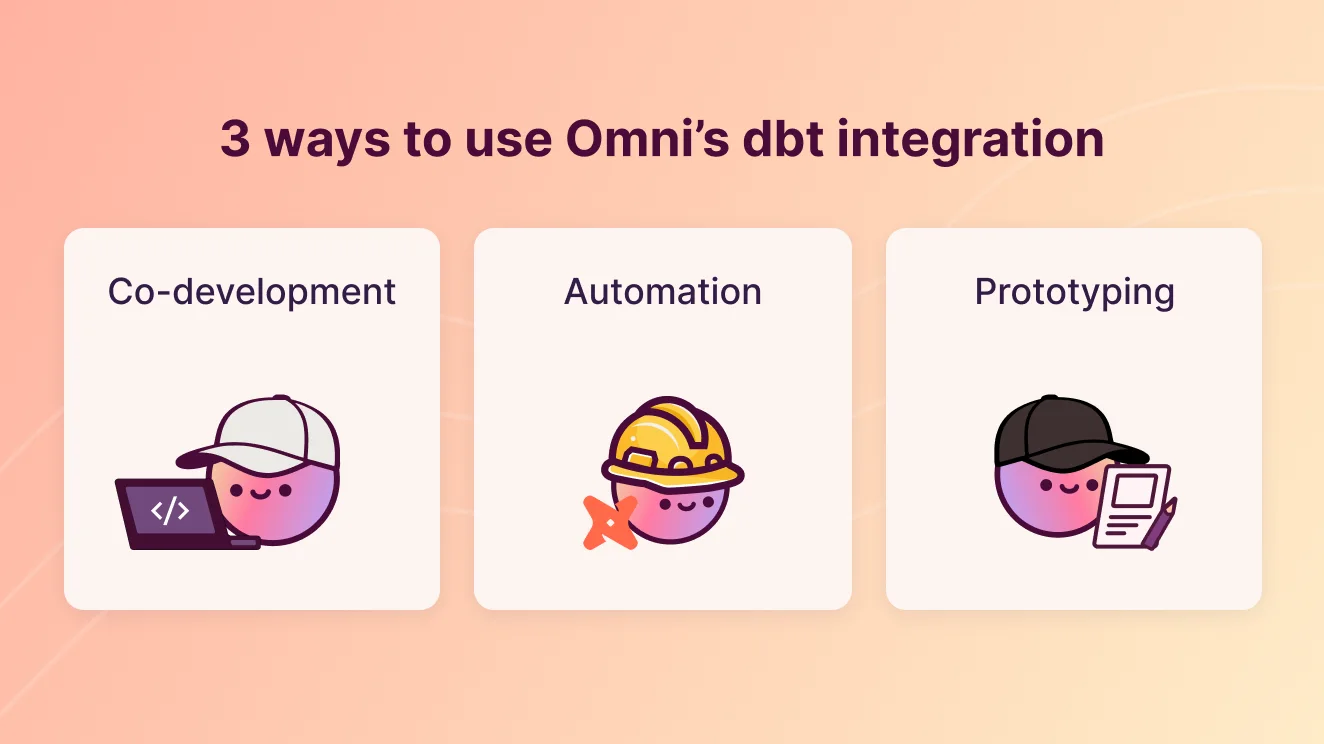
Read blog postYou author your business logic once in dbt, and Omni knows how to read it, safely and consistently. It's a beautifully DRY approach to analytics.
Roxi Pourzand · dbt Labs
Finally, BI that works the way dbt does
dbt defines the data. Omni gives the rest of the company a way to use it without rebuilding the logic in BI.
Free Trial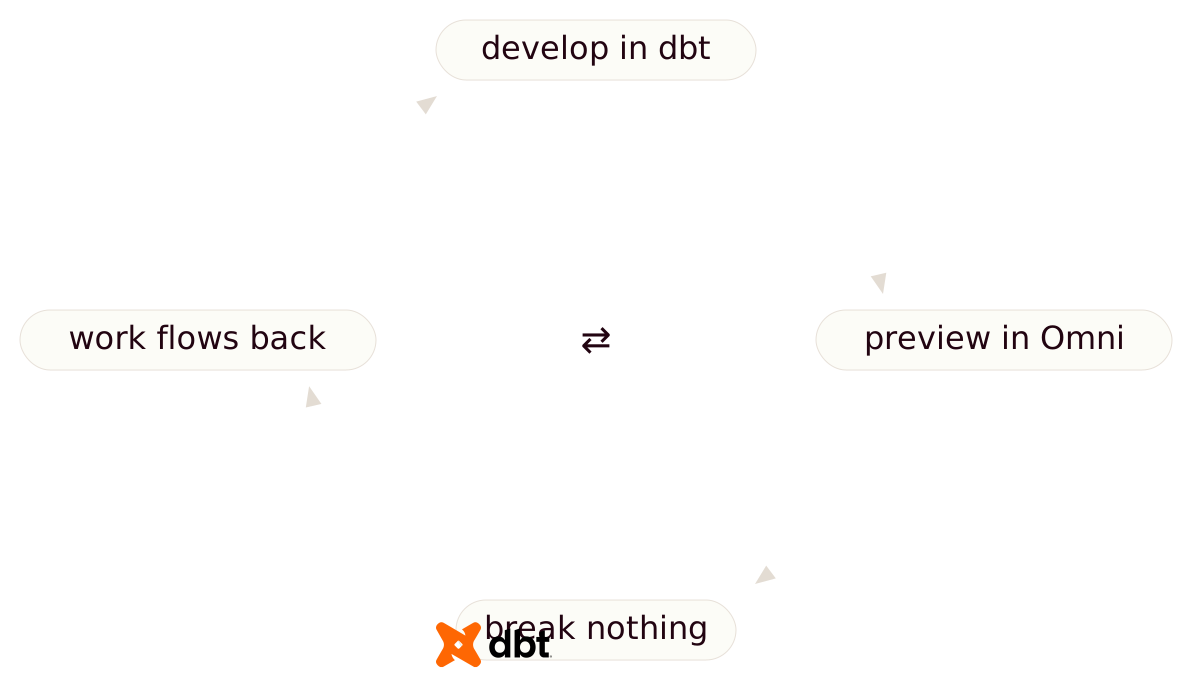
Trusted by data teams who run on dbt










Omni syncs both ways with dbt Cloud and Core
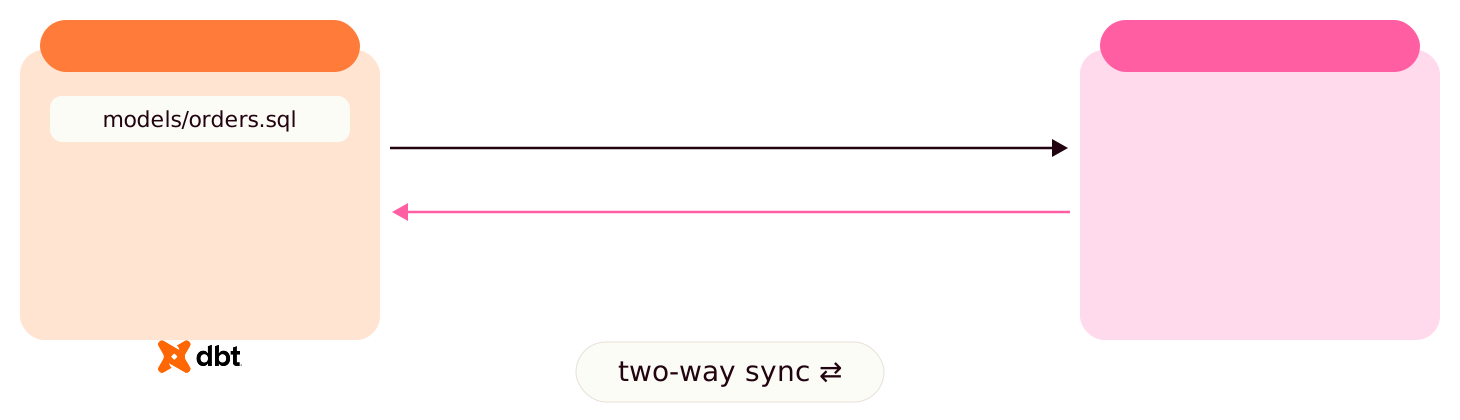
Your dbt definitions and metadata sync into Omni. When analysts create reusable logic in Omni, they can open a dbt pull request to send it back.
Give your dbt work a front end your whole company can use.
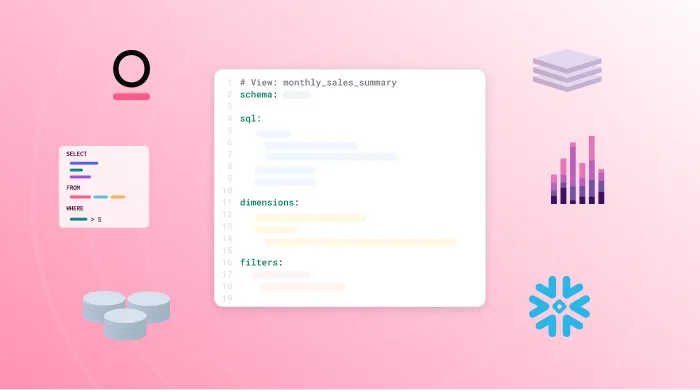
Omni's semantic layer is how your dbt definitions become answers: every question, on every surface, runs through it. Change a definition once and every answer updates.
That's because Omni inherits your dbt definitions, tests, and metadata automatically. A schema refresh keeps everything in sync on every build, so business users always work from agreed definitions, not raw columns.

Keep the coding workflow going past the model
dbt models are built in code and reviewed in pull requests. In most BI tools, that discipline ends at the model. Charts and dashboards are still built by hand, outside version control.
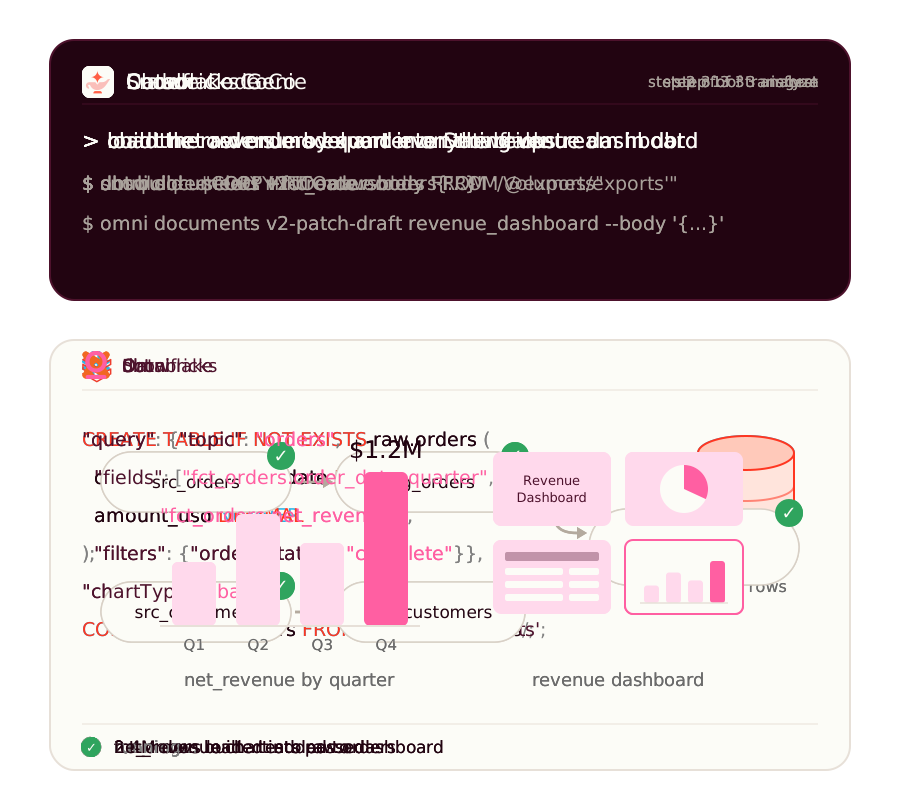
Omni's CLI brings the BI layer into the same workflow. Coding agents can update models and dashboards from the terminal, with changes the team can diff and review.
Develop in parallel without breaking production
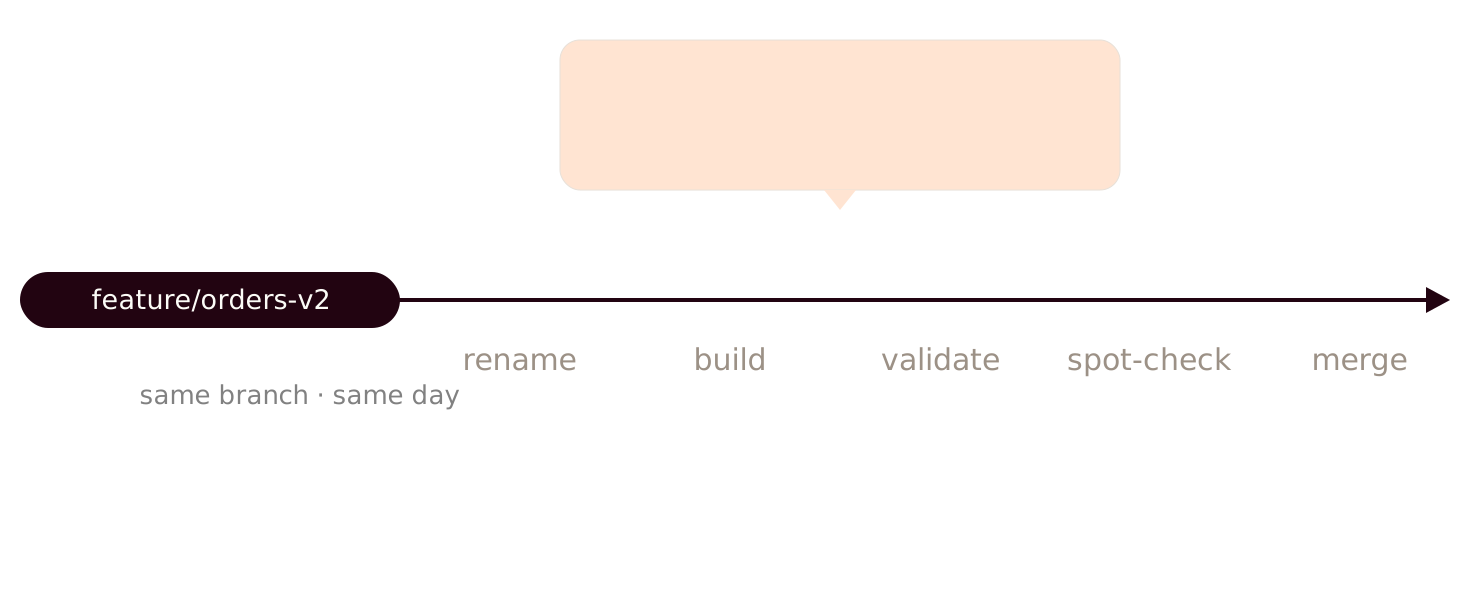
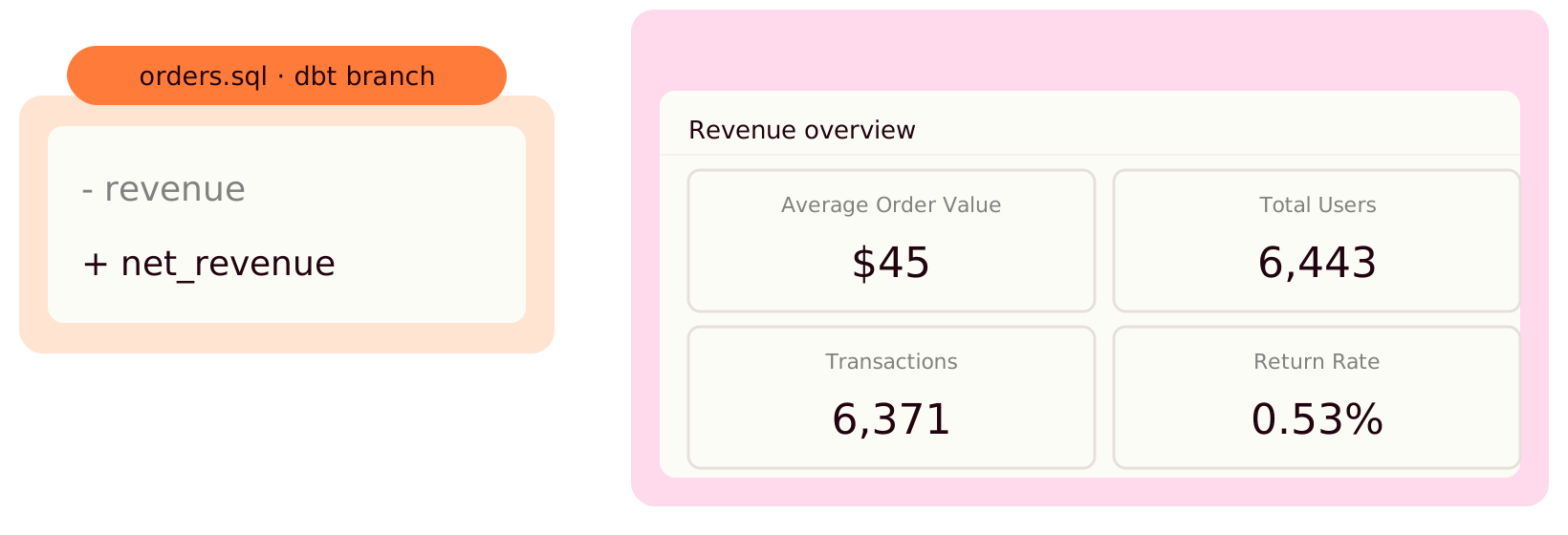
An Omni branch mirrors your dbt branch, and dynamic dbt environments point existing content at your dev target. Analysts can test the impact before the dbt change reaches production.
See the blast radius before you ship
Omni's Content Validator runs against a dbt branch and checks the workbook behind every dashboard and app, so you see the full impact of a model change before you merge.
Analysts contribute back, without bypassing review
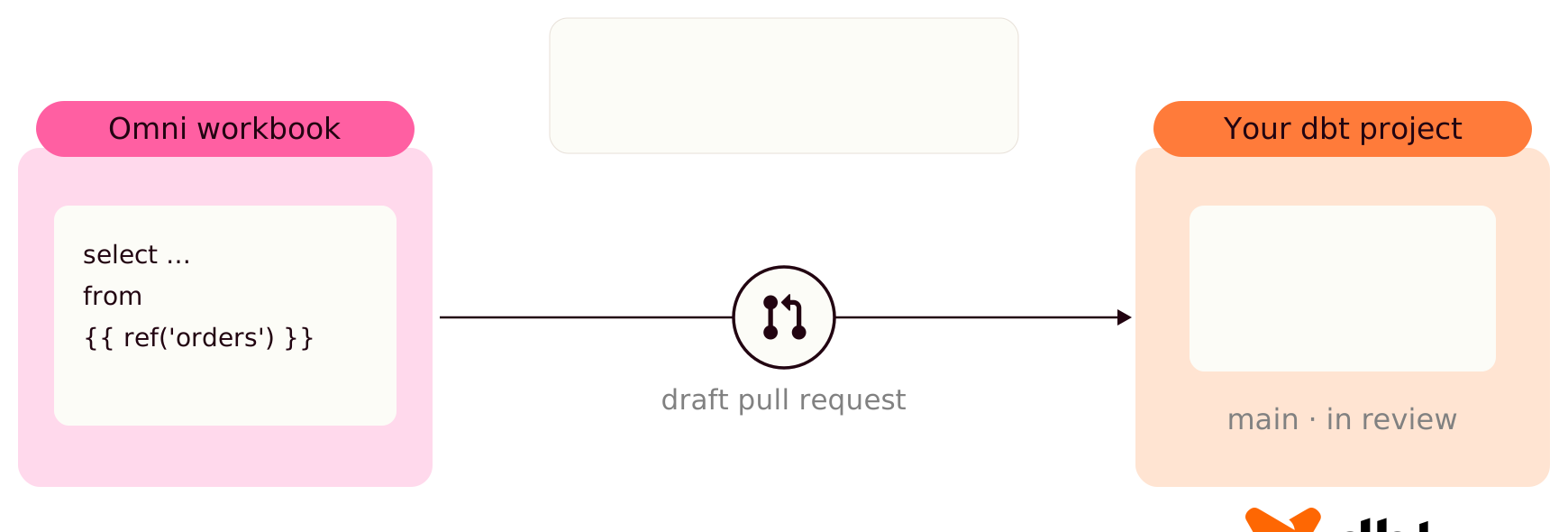
When an analyst's definition is ready to become shared logic, they can draft a dbt pull request straight from Omni, with ref()s to existing models. An engineer reviews and merges it in the usual workflow.
Your MetricFlow metrics, served in Omni
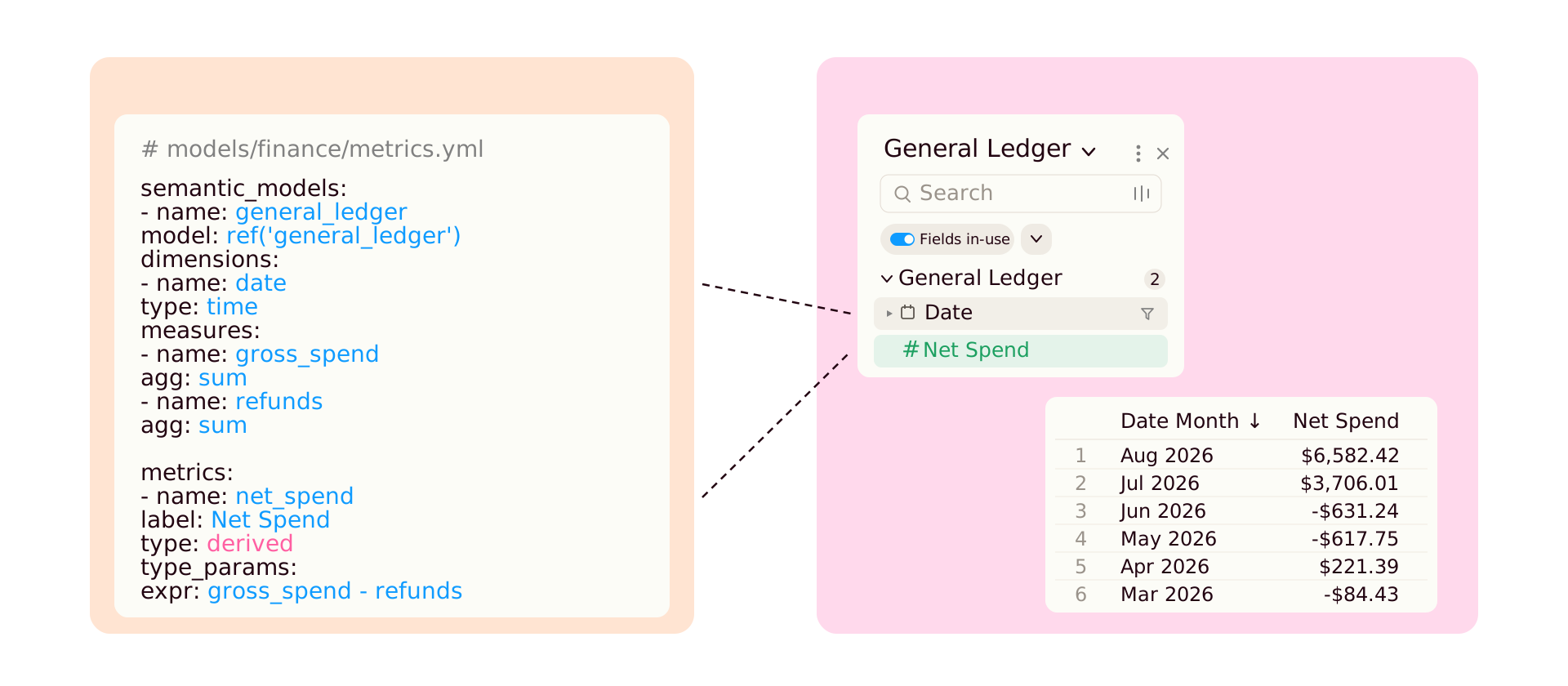
Omni's dbt Semantic Layer integration brings your MetricFlow dimensions, entities, and measures into Omni one-to-one, and keeps them in sync as your project changes.
Read case studyWe want to own our business logic, so the dbt and git workflow works well for us. Omni's bi-directional dbt integration really stood out to us as something that aligned with our philosophy.
Joe Horowitz · VP of Growth & Analytics · Uscreen
Show dbt health where people consume the data
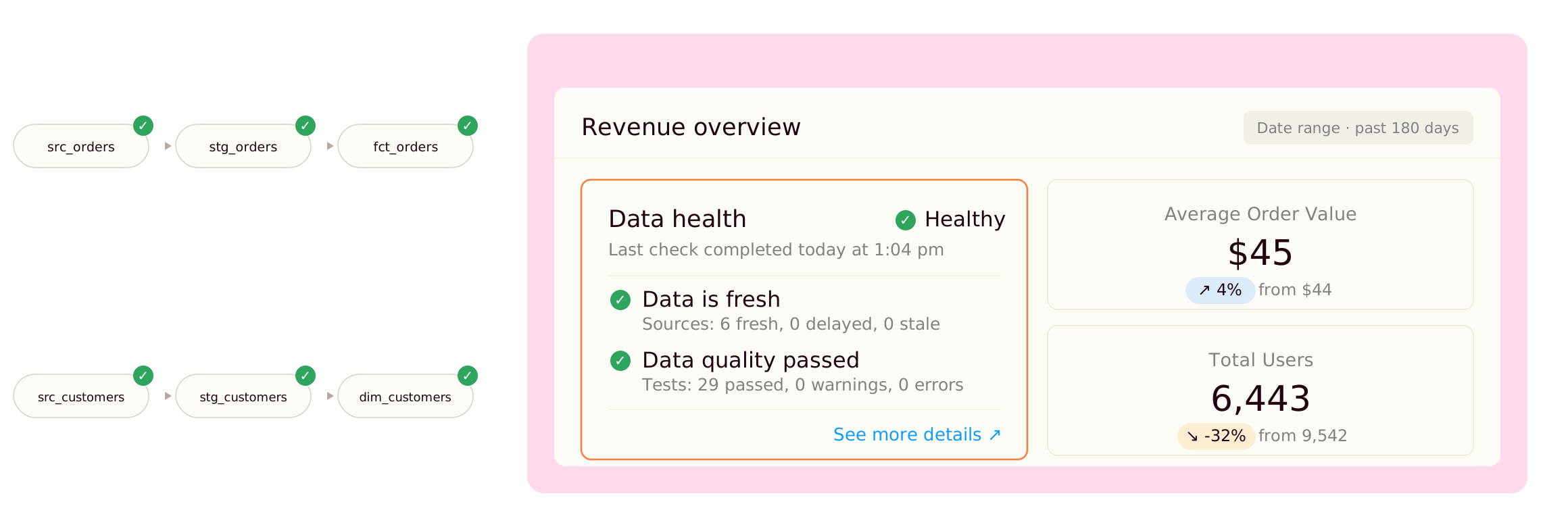
Your dbt tests already know whether a number can be trusted. Now dashboards and apps show it: freshness and test status sit next to the data.
Read case studyWe love dbt because it makes it so easy to apply Cribl's lens of the business on top of our data; it's our single source of truth. Omni's deep integration with dbt lets us expose that context to our stakeholders right where they consume data.
Head of Data · Cribl
Common questions
We already have a semantic layer in dbt. Why would we want one in Omni?
You keep the one in dbt. It holds the definitions that have to be identical everywhere, and it ships on your release schedule. The Omni layer sits on top and handles the fast-moving part. Someone needs a new cut of the data for a meeting, so they build it in Omni against your dbt tables, today, without a rebuild. If it sticks around, it goes back to dbt as a pull request. If it does not, nothing in dbt ever changed. Do you model in dbt or BI? goes into this in more depth.
Do I need everything in dbt, or everything in Omni? How do I decide?
Put anything the whole company depends on in dbt. Put anything still being figured out in Omni. That is most of the answer. Omni's model is version controlled too, with branches and review, so the difference is how fast a change ships, not whether anyone checked it. When a metric you built in Omni stops changing, move it into dbt with a pull request. Do you model in dbt or BI? covers the details.
Will business users be stuck with whatever the data team builds?
They build on top of your dbt work. Anyone can open a workbook, start from a governed topic, then pivot, filter, add a calculation, or drop into SQL, with your definitions underneath. Because it's the same model, what they build agrees with everything else in the company.
When something is worth keeping, it gets promoted into the shared model, or into dbt as a pull request.
Do I have to rebuild my semantic model in Omni?
No. The work you've already done in dbt comes over and becomes the model: descriptions become the context on every field, constraints become joins, and if you're on the dbt Semantic Layer, your dimensions, entities, and measures come across one-to-one. What syncs across is documented field by field.
What happens to my dashboards and apps when I rename a field in dbt?
You find out before you merge. Run the Content Validator against your dbt branch and it checks the workbook behind every dashboard and app, listing each tile and query that references the old name.
For a straight rename, Replace for all content re-wires everything at once. Do it in a branch and Omni drafts the affected content for you to review before anything publishes. There's also a find and replace API.
Does the AI answer from our dbt definitions?
Yes. Omni AI queries the Omni model, not raw warehouse tables. That model carries your dbt definitions. Ask for net revenue and it uses the definition from dbt, including refunds netted out. The user's permissions and row-level security still apply.
Do we need dbt to use Omni?
No. Omni models on top of whatever's in your warehouse. If your transformations live in another tool, or in SQL you manage yourself, Omni works the same way.
If you already run dbt, the integration is what makes the two work as one system.
Which versions and editions of dbt does the integration support?
Both dbt Core and dbt Cloud. Omni reads your project out of Git and picks up the manifest your builds produce, so the workflow is the same either way. How syncing works.
What happens to our definitions if we stop using Omni?
They're in dbt: your models, your repo, your version control, readable by whatever you point at them next.
The modeling you do in Omni is plain YAML. Connect Git and it's stored in a repo you control, and you can pull the whole model out through the API.
Omni was also an early contributor to Open Semantic Interchange, an open standard for moving semantic definitions between tools.
Does Omni replace dbt?
No. You keep doing transformation in dbt, with the same repo and review process you have today. Omni is the layer people use to actually look at that data, and it reads your dbt definitions directly. Nothing has to move. Nothing gets redefined. When dbt changes, Omni picks the change up on the next sync.
What's Omni's relationship with dbt Labs?
It goes back further than the integration. Chris Merrick, Omni's co-founder and CTO, wrote the first lines of dbt in 2016 at RJMetrics. dbt co-founder Drew Banin tells that story in On two years of dbt.
Omni is a dbt Labs Technology Partner. Roxi Pourzand at dbt Labs wrote about the semantic layer work, and both companies are early contributors to Open Semantic Interchange.