

















The semantic layer built for BI and AI

Metrics, joins, and context in one platform. Governance for your team. Guardrails for your agents.

The Omni semantic layer

One model behind every surface

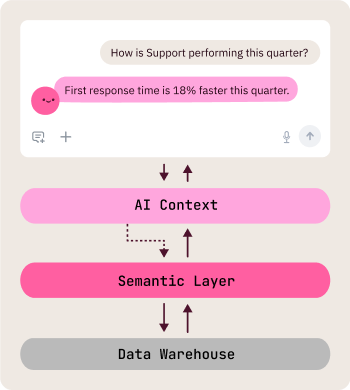
We built Omni around a governed semantic layer.

Define a metric in the semantic model, and every surface reads from it and returns the same answer, whether it's someone using AI or connecting to Omni through another tool. Make a change, and every dashboard, agent, and App benefits.

Trusted by data teams at

condéNast
buzzfeed
checkr
perplexity
mercury
guitarCenter
dbtLabs
tripAdvisor
bambooHR
synthesia
brevo
heidi
cribl
caraway
swbc
hightouch
ilia
ritual
incidentIO
zip
gameLounge
ogury
ordermentum

How our semantic layer builds trust

Giving you governance without giving up speed.

Omni's semantic layer is:
  • Flexible

    Explore first, then model what matters. Build from the browser, in code, or with AI. When you've created something valuable, promote it safely - branch, review, evaluate, and merge its definition into the shared model.

  • Interoperable

    Bi-directional integrations with other semantic layers, such as dbt, Snowflake Semantic Views, and Databricks Unity Catalog. Written in YAML, committed to open standards (Apache Ossie), and portable by design.

  • Extensible

    Handle exceptions without duplication or workarounds. Extend the model at any grain with custom logic, AI settings, display defaults, and more. When a core definition changes, the additive logic updates automatically.

  • Comprehensive

    Every metric, join path, and edge case can be defined once. AI context teaches agents what your best experts already know.

  • Governable

    Every query is compiled from the model, enforcing the same definitions, permissions, and row-level filters.

FlexibleModel as you go

Building the semantic layer doesn't require a heavy upfront effort: start querying the moment you connect your database. Add and refine context as your business evolves, and manage model changes like code.

Metrics and metadata can be created through SQL, point-and-click, and Excel-style formulas. Or you can ask the Agent to build it. This lets you experiment quickly while still contributing to a governed semantic model.

SQL, point-and-click, Excel formulas, and the Agent all feed the same governed model definition

Users can explore modeled and unmodeled data in a workbook without impacting the shared model. Create multiple tabs of queries, charts, spreadsheets, or pivot tables, and follow the question wherever it leads.

SQL, point-and-click, Excel formulas, and the Agent all feed the same governed model definition

Omni's Modeling Agent helps you build and maintain the semantic model. Point it at your tables and it can define views, relationships, dimensions, and measures from your database schema.

SQL, point-and-click, Excel formulas, and the Agent all feed the same governed model definition

The model has a software development lifecycle, and it's the one your engineers already use. Branch mode isolates a change from production. Git keeps every version and author. Review changes, then merge. Your model ships the way code does.

The Content Validator identifies and bulk-fixes broken downstream content. Schema refreshes keep the model in sync with your warehouse. And the API runs these workflows programmatically.

SQL, point-and-click, Excel formulas, and the Agent all feed the same governed model definition

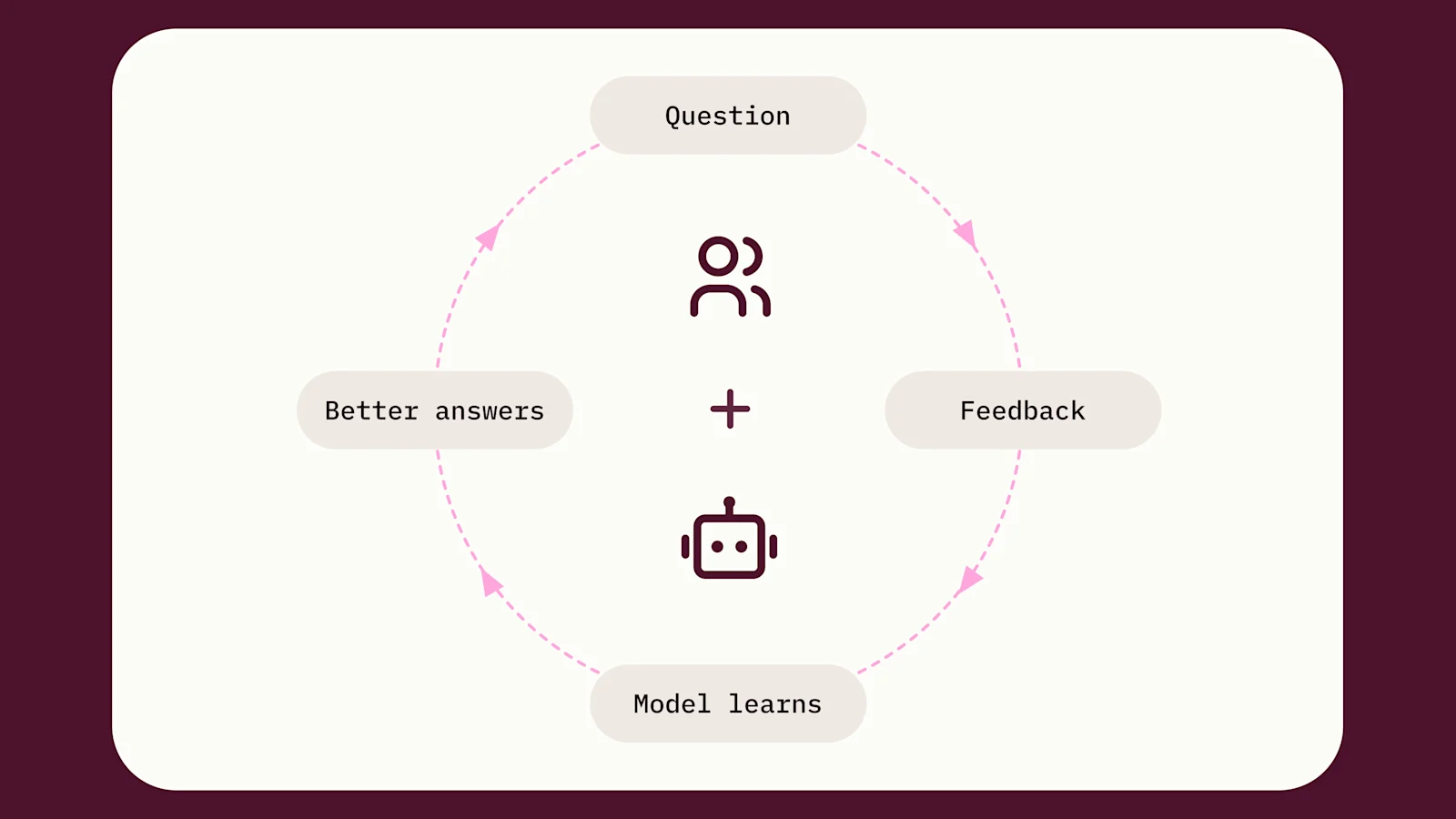
AI Hub gives your team one place to observe how AI is performing, improve what needs fixing, and validate that it's working.

AI Hub dashboard showing AI performance and validation

Evals run reusable prompt sets against a branch, and a built-in judge scores each answer, so you can observe how AI responds, and validate changes before you merge.

SQL, point-and-click, Excel formulas, and the Agent all feed the same governed model definition
AI Hub dashboard showing AI performance and validation
SQL, point-and-click, Excel formulas, and the Agent all feed the same governed model definition
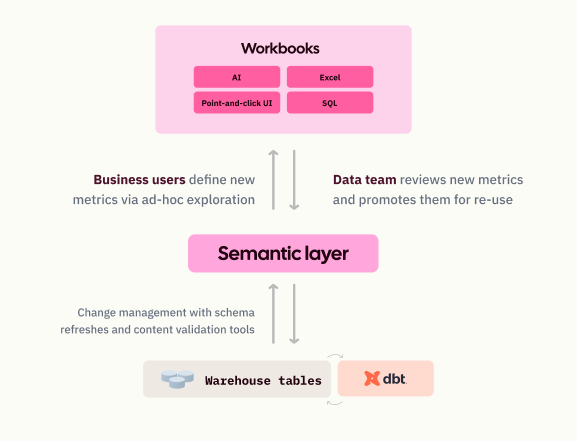
Diagram showing Synthesia's data stack: workbooks flowing into the semantic layer, then into warehouse tables

How Synthesia democratized data modeling with Omni

Business users at Synthesia define new metrics in Omni's UI, and the data team reviews and promotes them through the semantic layer. Expertise lands in the model without losing consistency.

Read the case study
Interoperable

Built for your existing investments

Omni's model is written in YAML, and committed to open semantics through Apache Ossie. Your data stays in your warehouse, logic stays version-controlled in Git, and integrations run in both directions, giving you a shared interface for your data stack.

Maintain a single source of truth

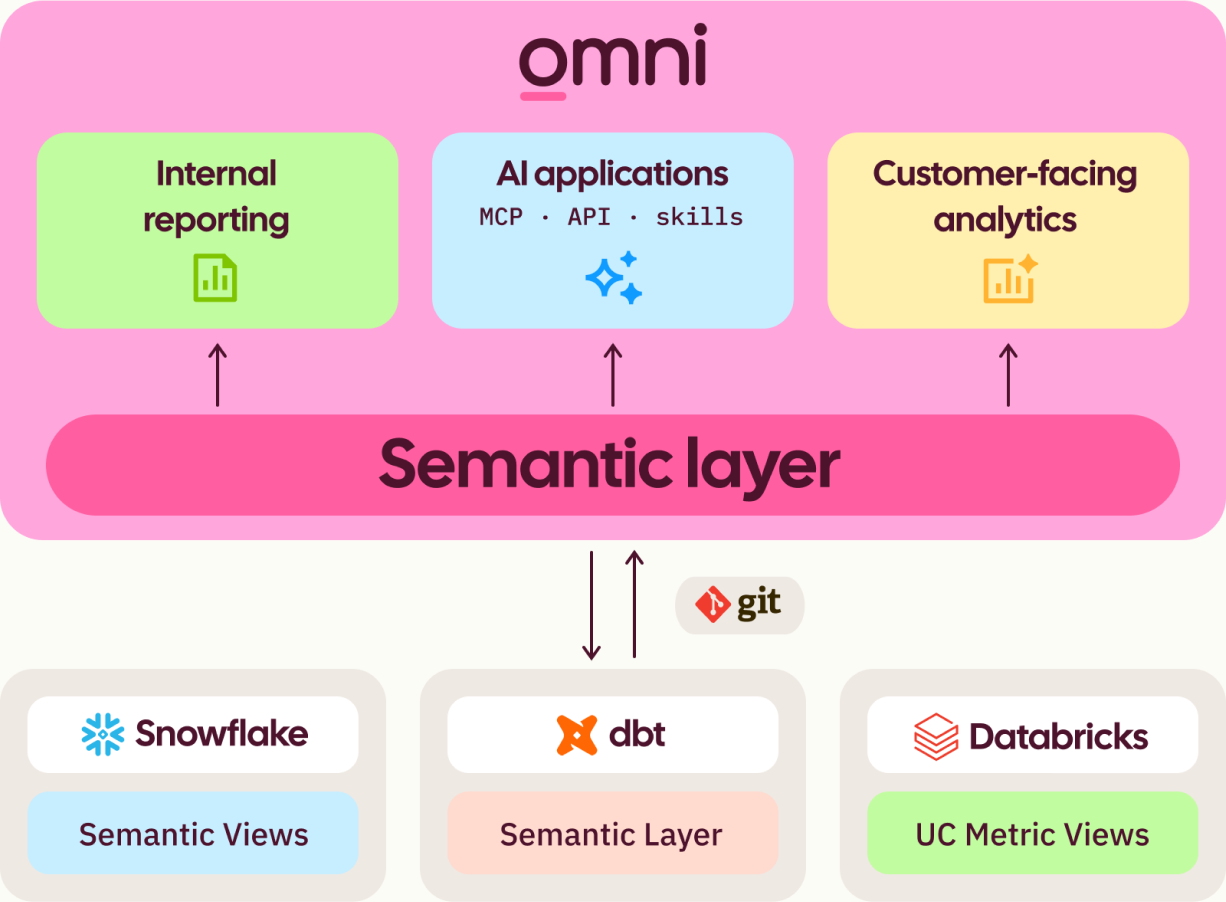
The dbt integration is bi-directional. View dbt metadata in Omni, author models from Omni queries, and push logic upstream. Branch mode isolates the change, and git keeps the history.

Snowflake Semantic Views and Databricks Unity Catalog Metric Views can be imported and queried directly. Explore, add AI context, and version them in Omni, then push definitions back out with Omni's open source agent skills.

Native connections support Snowflake, Databricks, ClickHouse, and more.

Omni's semantic layer syncing with dbt, Snowflake, and Databricks over Git

Universal semantics

Our semantic layer works across the tools you already use, even when you're not in Omni.

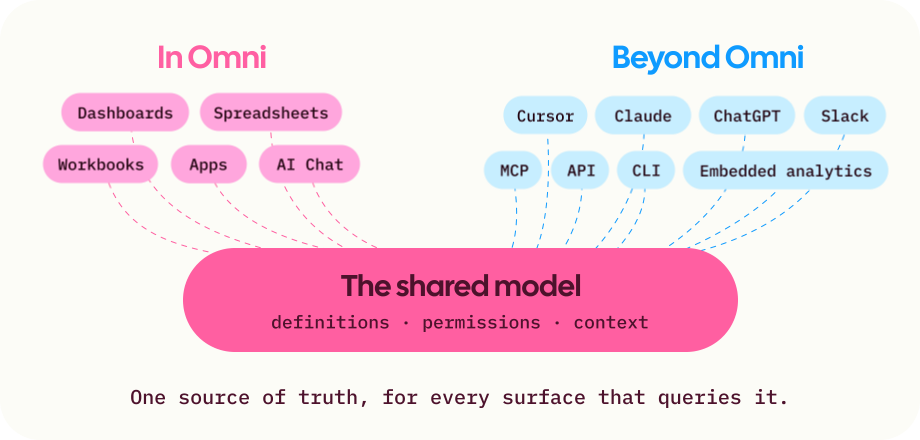
Definitions, permissions, and context are enforced on every query. Access governed metrics in Claude, ChatGPT, Slack, Cursor, via MCP, API, CLI, or embed them in custom applications.

Definitions, permissions, and context from Omni's shared model enforced across tools like Cursor, Claude, ChatGPT, and Slack
Extensible

Extend the model, don't fork it

Every company has exceptions. Regional rules, team-specific metrics, unique tenant needs. When the semantic layer can't hold them, people copy the model and route around it. Numbers drift, answers conflict. Omni's hub-and-spoke model handles the exceptions, while core definitions stay intact.

Build on what you already have

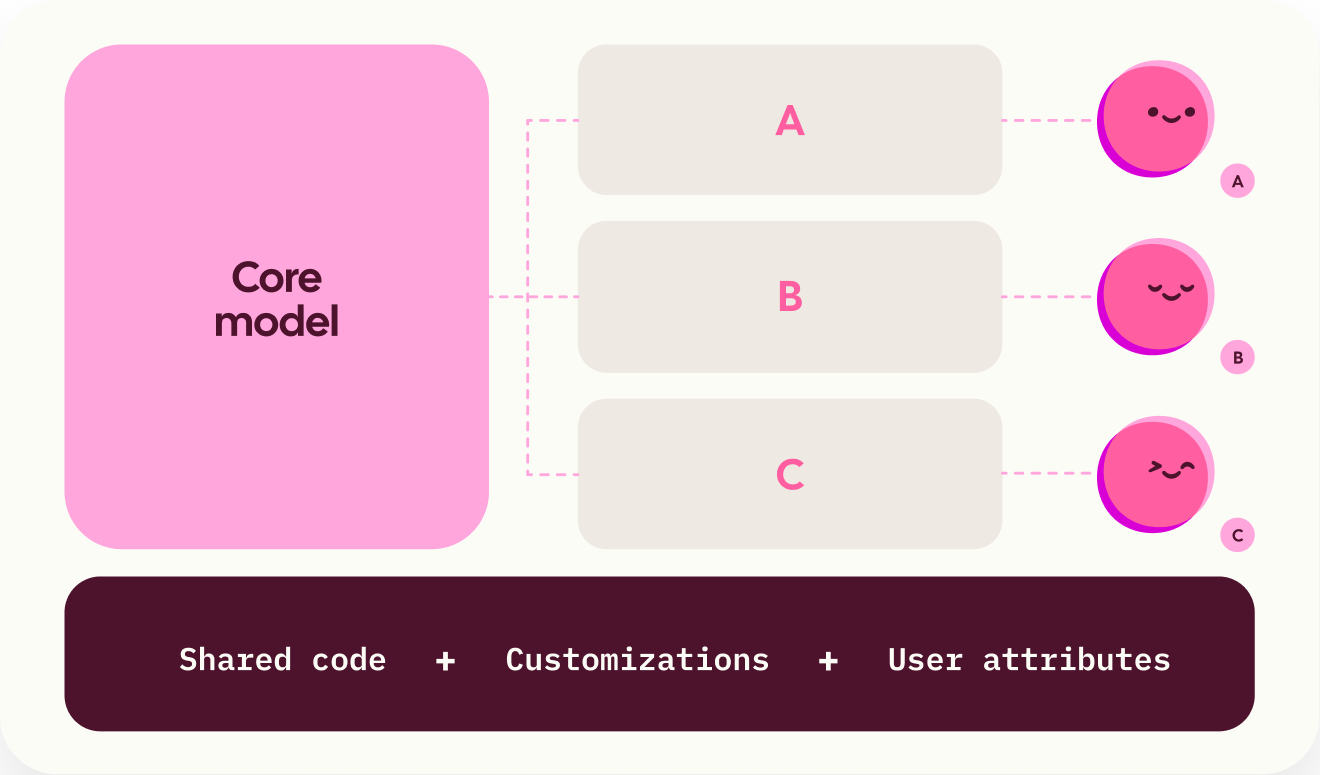
A central hub model holds the shared logic. A department or tenant creates a spoke that inherits all of it, and adds or overrides only what's different. Unique logic, permissions, and styling are handled without duplicating the base model.

A core model connected to spokes A, B, and C, sharing code, customizations, and user attributes

Scale the model, not the maintenance

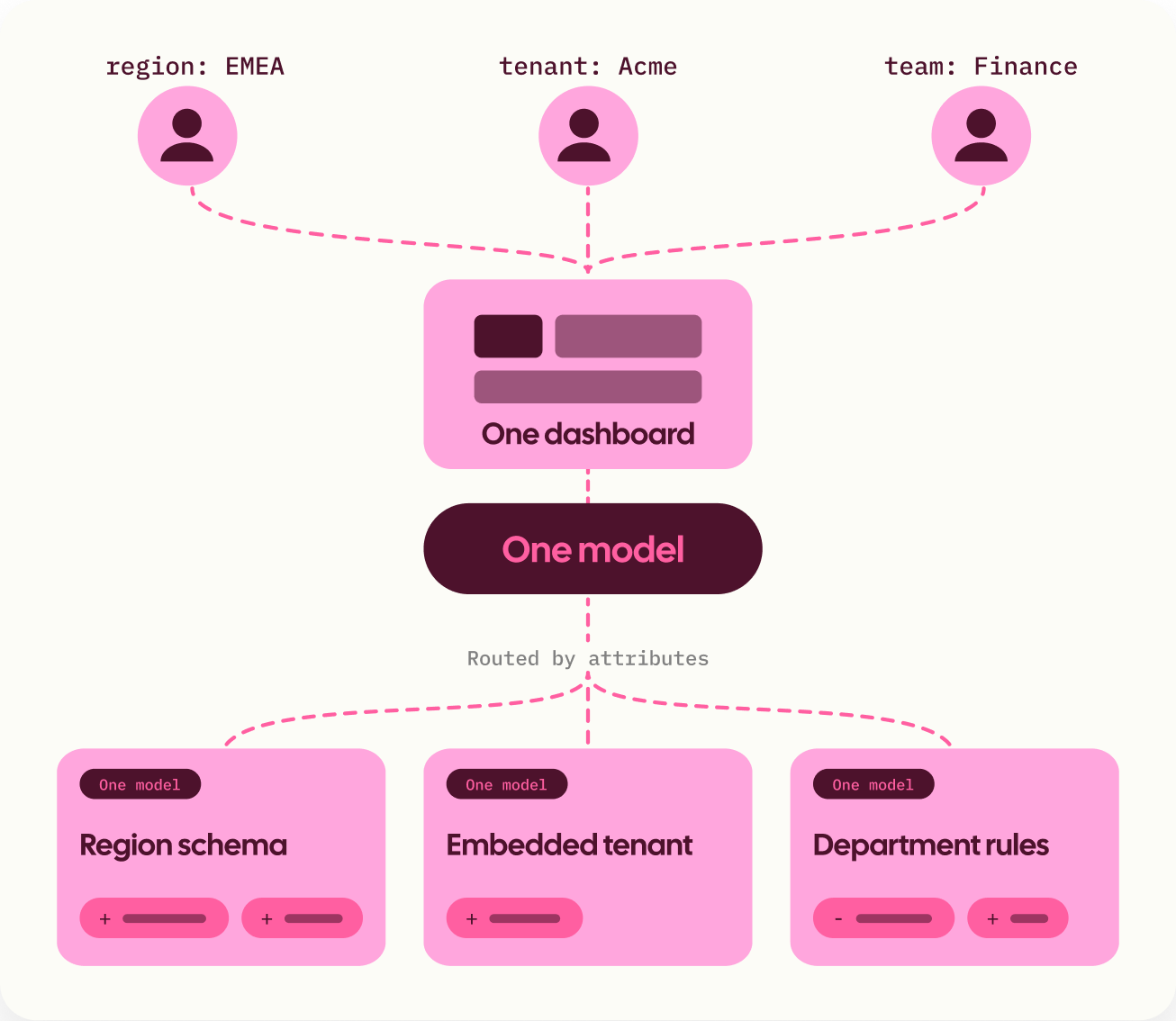
Adding a region or tenant means adding a spoke, not a new model or duplicate dashboards. Dynamic shared extensions read each viewer's user attributes and route them to the right spoke automatically.

Each person sees their own metrics and only the data they're allowed to see. Domain-level permissions control visibility, and Git followers keep every deployment on the same version of the model.

Region, tenant, and team viewers routed by attributes to one dashboard and one model, then to region schema, embedded tenant, and department rules

ComprehensiveTeach AI your business

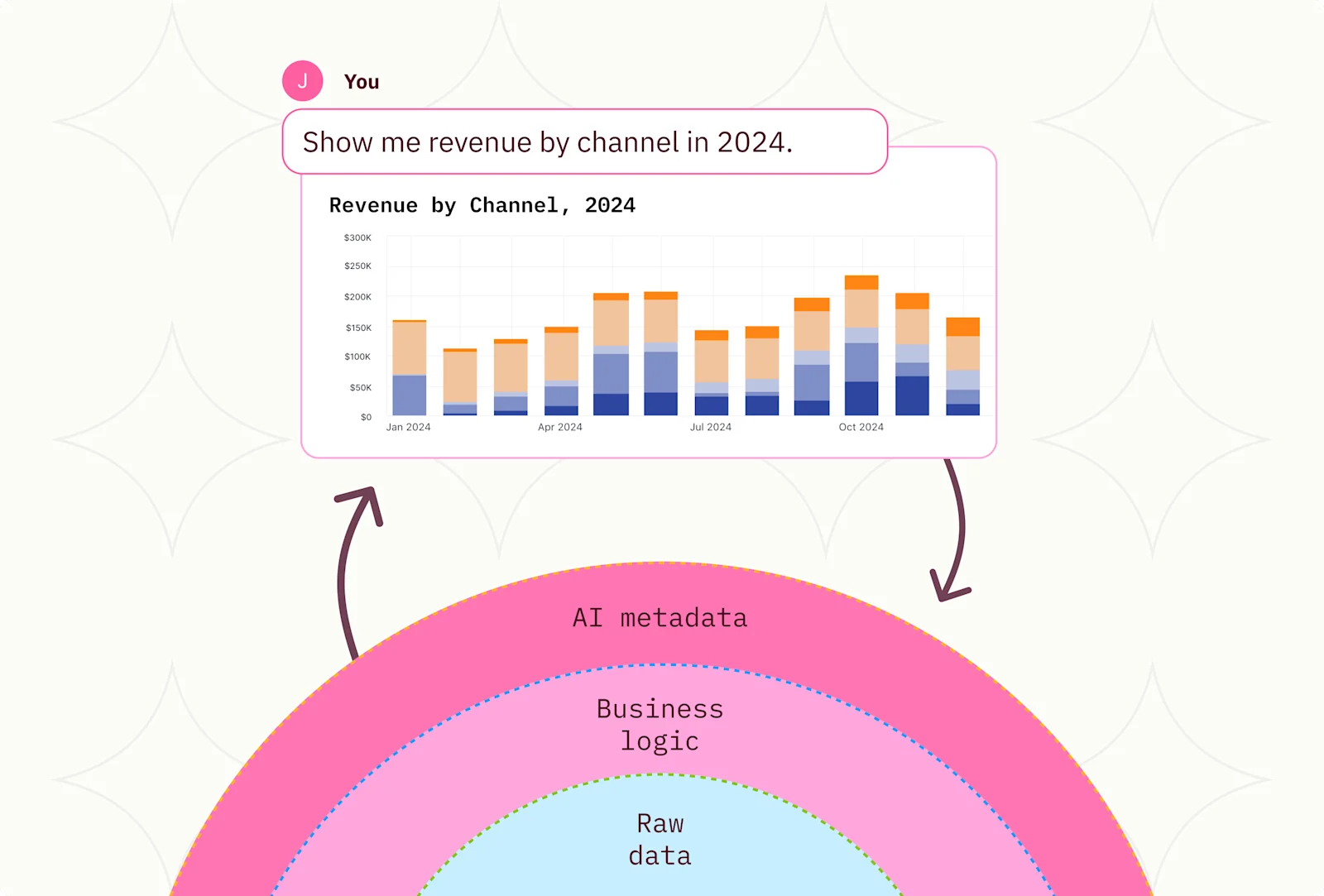
A semantic layer that only holds metric definitions invites data sprawl. The rest of the logic ends up in Excel exports and SQL that drifts from the source. Omni's semantic model combines the definitions, join paths, and context your team uses.

Omni monitors AI usage and offers Suggestions on how to improve your model. Evals allow testing in isolation before you deploy changes. As the model absorbs more context, the team fields fewer ad hoc questions and shifts to higher-value work.

Group trusted business logic into reusable Topics so teams can work from curated datasets instead of recreating definitions across dashboards, spreadsheets, and SQL.

Capture the business context your team uses every day and make it available to AI as part of the model, so responses stay relevant, governed, and useful across every surface.

Governable

Governance and speed, without the trade-off

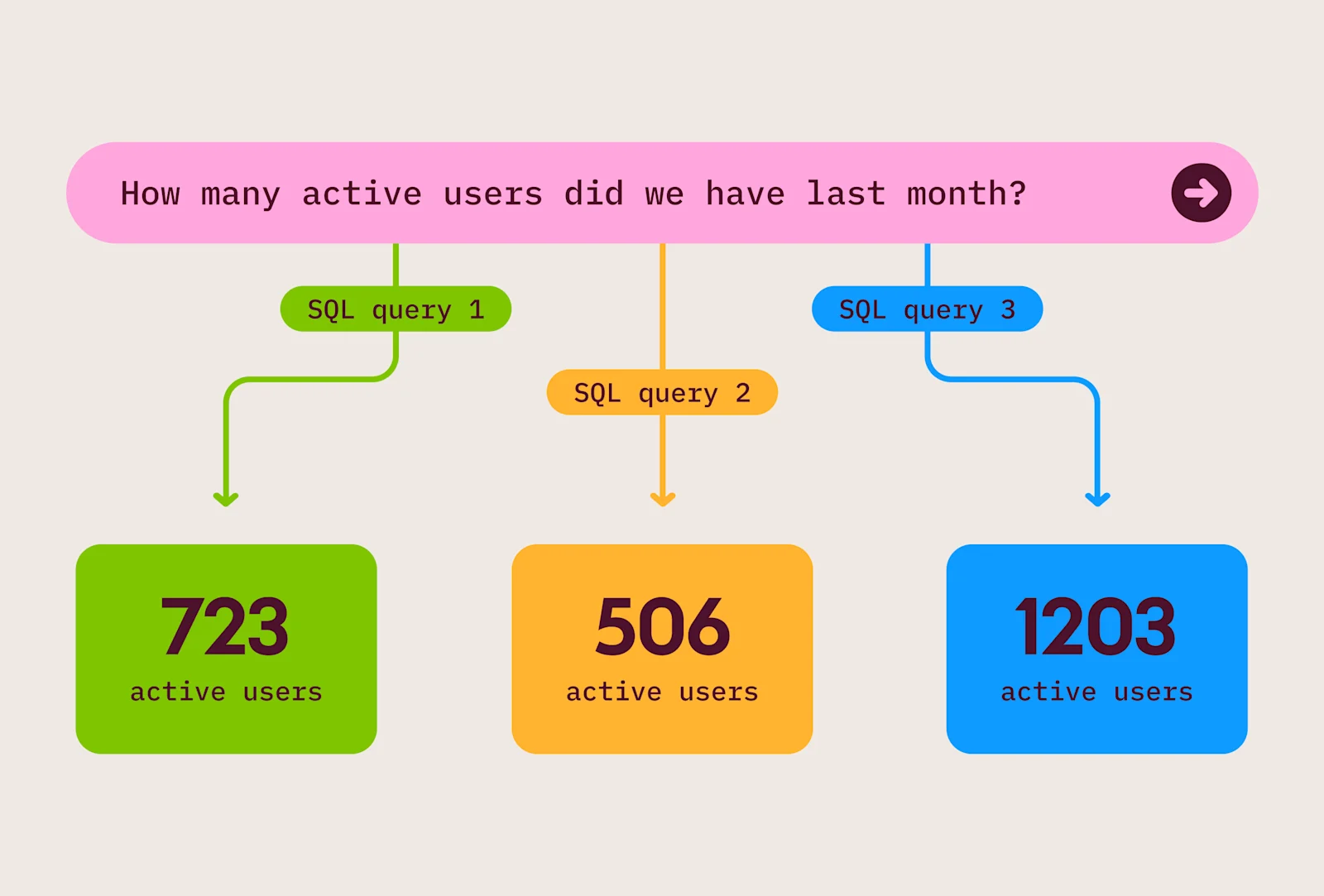
Your skepticism about AI on company data is earned. AI by itself doesn't fix chaos, it amplifies it. Omni fixes this: every question, from every surface, runs through one governed model, and returns a reliable answer. And that governance doesn't cost you speed.

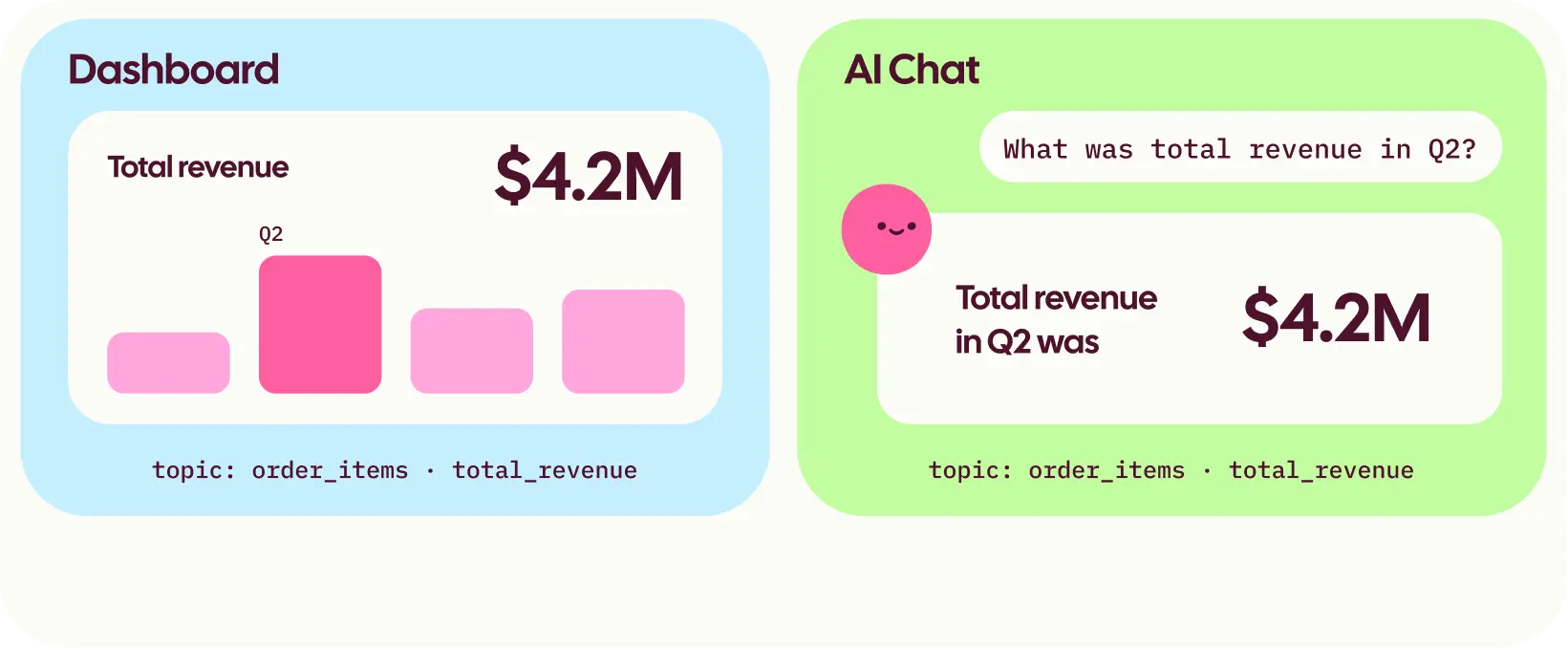
Same question, same answer

Dashboard and AI chat returning the same governed answer

Whether the question comes from a dashboard, workbook, or AI chat, it returns the one answer your team defined. Access filters enforce row-level security, and access grants control columns and datasets. That consistency earns trust.

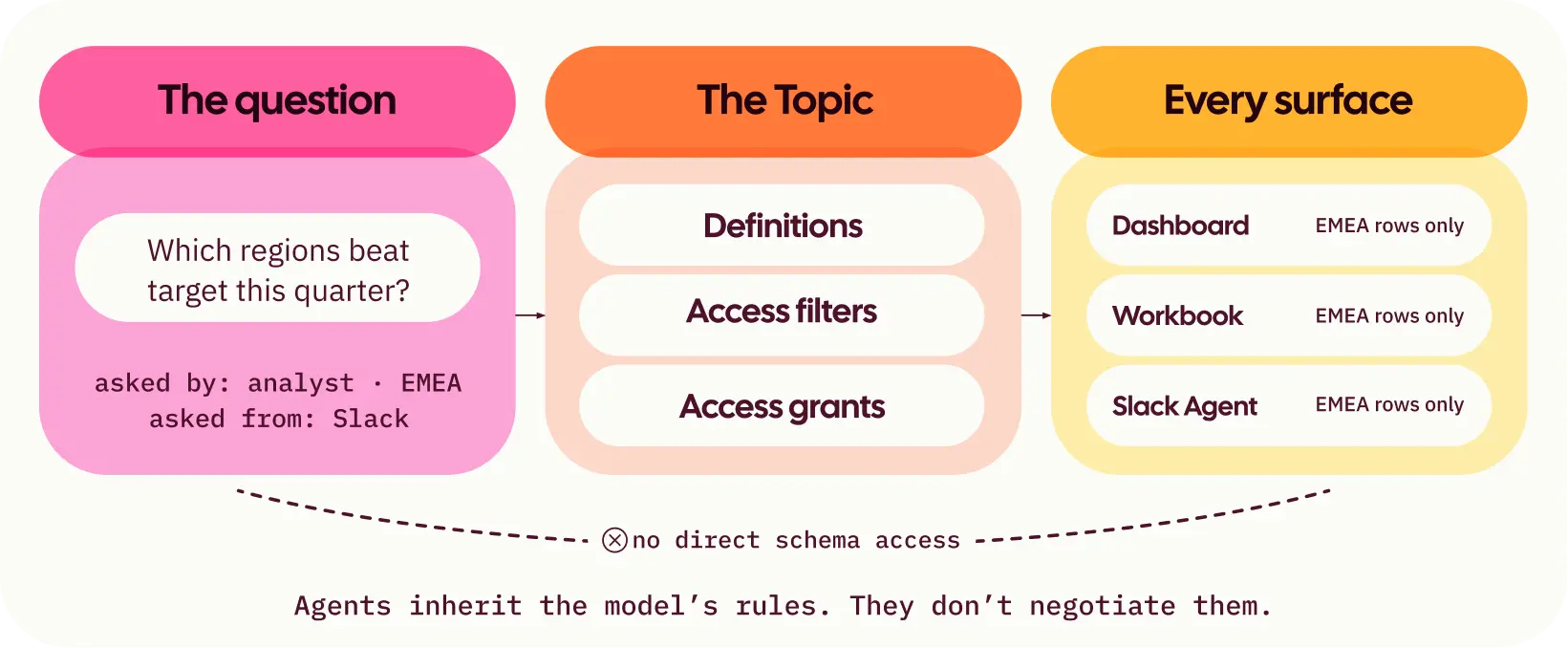
It's in the harness

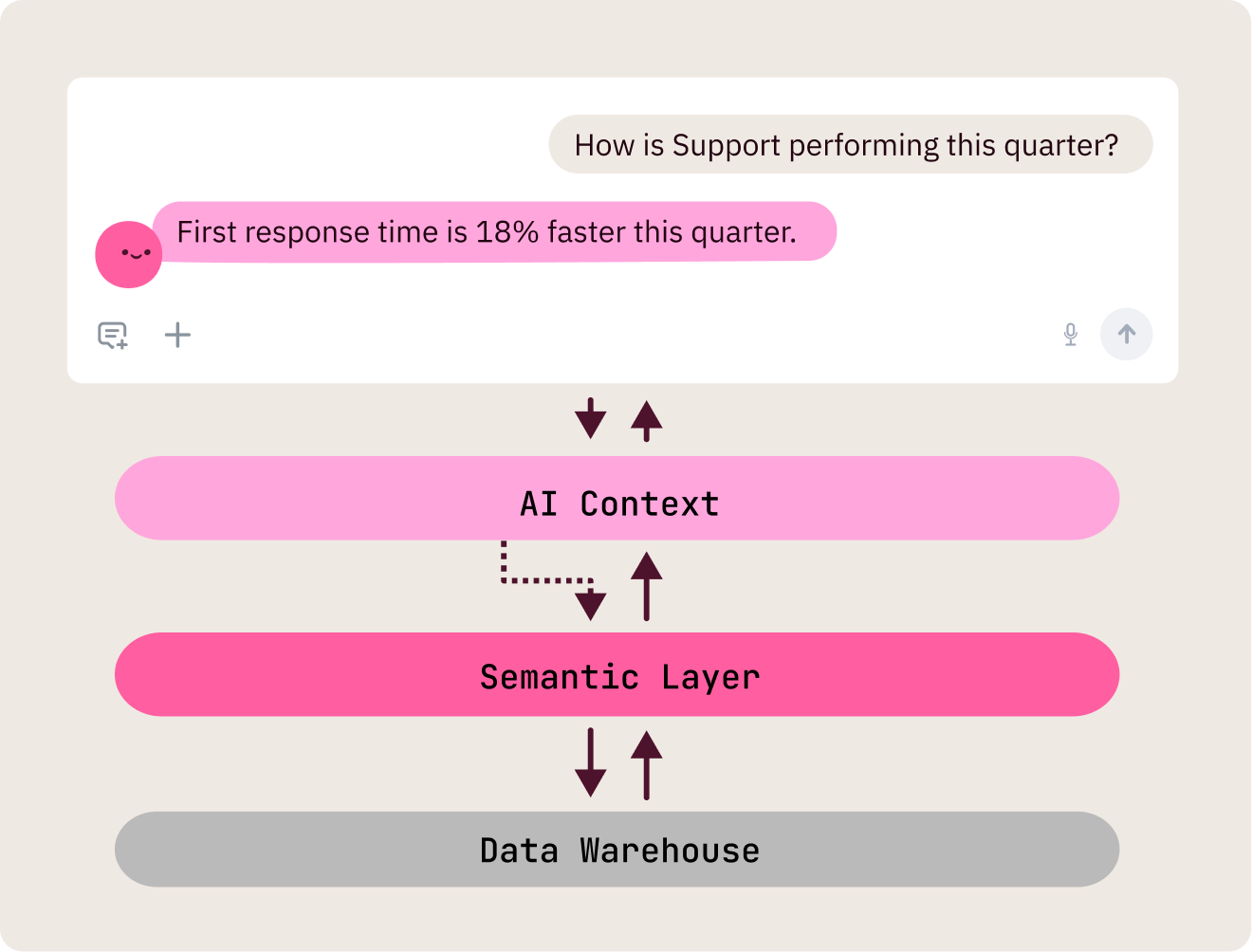
Omni guardrails routing questions through governed topics and access controls

The fix for drifting answers is architectural, not a better prompt or AI model. Omni's AI harness enforces guardrails: a question routes to one Topic, the agent selects fields and filters, and our query engine compiles the SQL.

A secure platform underneath

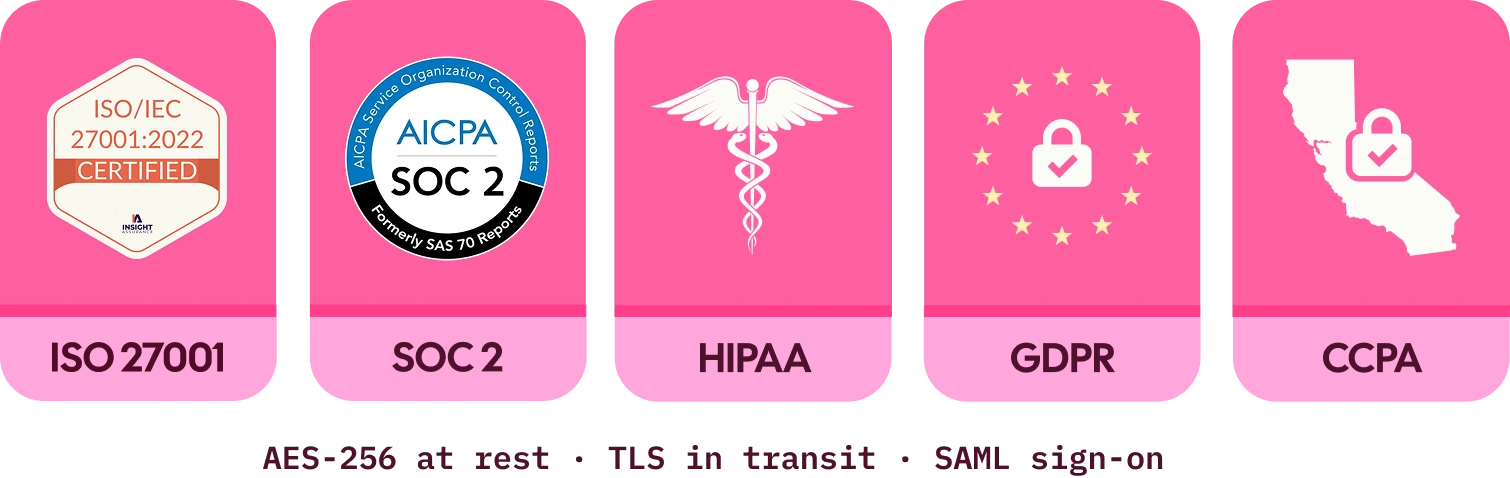
The model governs what people see. The platform protects the rest. Omni is ISO 27001 certified and SOC 2 Type II audited annually and meets GDPR, CCPA, and HIPAA standards. Customer data is encrypted with AES-256 at rest and TLS in transit, and SAML controls sign-on.