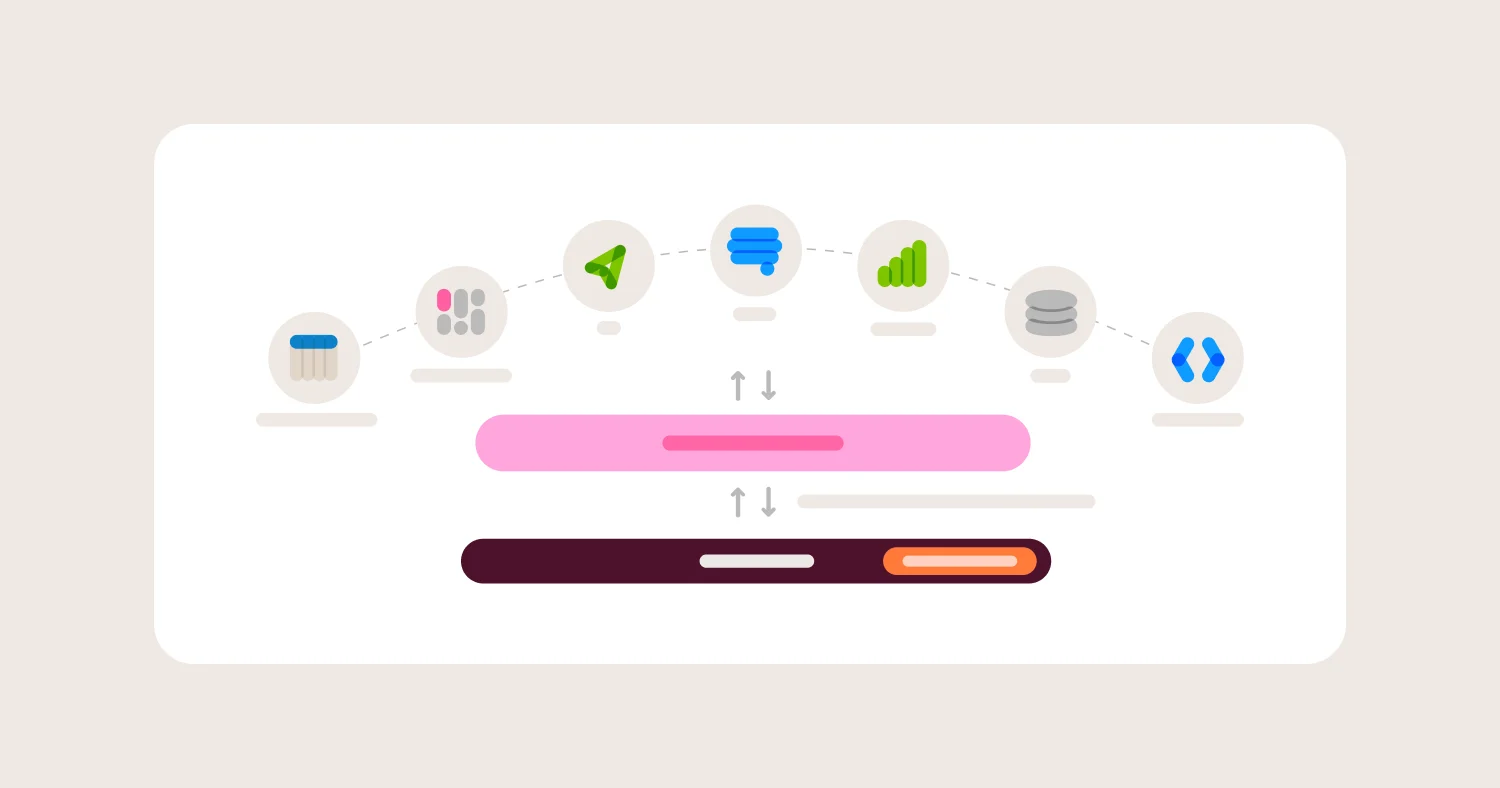
Snowflake has evolved into more than a data warehouse. Snowflake Semantic Views define governed metrics inside Snowflake. Snowflake Cortex grounds AI features against those definitions. Snowflake Intelligence and Cortex Agents expose natural language access to the entire account. Virtual warehouses, concurrency scaling, row access policies, and Snowflake-native OAuth all sit underneath. The BI tool sitting on top of Snowflake in 2026 has a more specific job than it had three years ago, and a narrower window to do it well.
The buying question for Snowflake teams has shifted with the platform. It is no longer "which BI tool connects to Snowflake," because every BI tool connects to Snowflake. The question is which BI tool composes with Snowflake's primitives instead of reinventing them. A BI tool that defines its own parallel semantic layer forces the data team to maintain two definitions of every metric and gives up AI grounding through Cortex. A BI tool that uses extracts breaks auto-suspend, sidesteps concurrency scaling, and creates a second copy of governed data that drifts from the source. A BI tool without a rigorous user-level access model in its own semantic layer ends up duplicating Snowflake row access policies in fragile, hand-rolled application logic.
This guide evaluates the leading BI tools for Snowflake teams in 2026 on criteria that predict success on a Snowflake stack: Snowflake Semantic Views integration, Snowflake Cortex grounding, live-query architecture, virtual warehouse routing, per-user access governance, multi-tenant embedded analytics on Snowflake concurrency, and dbt-plus-Snowflake stack alignment. Omni leads the shortlist because it integrates natively with Snowflake Semantic Views and Snowflake Cortex, holds Snowflake Premier Technology Partner status and Snowflake Ventures backing, and ships governed AI querying plus embedded analytics on the same warehouse-native architecture.
Key Takeaways #
Snowflake Semantic Views and Snowflake Cortex changed what "BI on Snowflake" means in 2026. The BI tool's job is now to compose with those primitives rather than duplicate them.
Warehouse-native query architecture is table stakes on Snowflake; extract-based tools break auto-suspend, miss concurrency scaling, and inflate credit consumption.
Omni is a Snowflake Premier Technology Partner, a Snowflake Ventures portfolio company, and integrates natively with both Snowflake Semantic Views and Snowflake Cortex.
AI grounding accuracy on Snowflake depends on whether the BI tool's AI references Snowflake Semantic Views and Cortex or generates raw SQL against schema.
Tableau's extract-based workflows are a major source of avoidable Snowflake credit consumption for organizations migrating from legacy BI.
TL;DR #
Vendor | Best for Snowflake teams | Main tradeoff vs. Omni |
Omni | Snowflake-standardized teams that want governed self-service, AI grounded in Snowflake Cortex, and embedded analytics on one platform | Smaller install base than Tableau or Looker, but growing rapidly |
Sigma | Finance and ops teams that want spreadsheet-style self-service on Snowflake with Cortex Agents access | Less developer-focused for embedded analytics; semantic layer less powerful |
ThoughtSpot | Enterprises that want natural language search as the primary and default BI interaction model on Snowflake Cortex Agents | High implementation cost; embedded analytics less flexible |
Looker | Analytics-engineering teams that want LookML governance and can absorb the implementation tax | LookML duplicates rather than complements Snowflake Semantic Views, preference for BigQuery over Snowflake |
Tableau | Organizations with deep existing Tableau investment and visualization-heavy reporting | Extract-based workflows break Snowflake auto-suspend and concurrency scaling |
The best BI tool for Snowflake teams in 2026 is Omni. Omni integrates natively with Snowflake Semantic Views and Snowflake Cortex, leverages all of Snowflake’s compute, ships a governed semantic layer with rigorous per-user access controls (row-level, column-level, field-level, driven by user attributes and groups), and consolidates internal BI plus multi-tenant embedded analytics on one warehouse-native platform. Sigma is the strongest alternative for finance- and ops-led self-service. ThoughtSpot fits enterprises that want natural language search as the primary and default interface. Looker and Tableau remain defensible for narrower scenarios with specific tradeoffs that matter more on Snowflake than on legacy stacks.
What Teams Get Wrong About BI Tools on Snowflake #
A common Snowflake BI mistake is treating Snowflake as a data source rather than a platform. Buyers compare BI tools on chart quality, dashboard templates, and authoring polish. Months later they discover the tool cannot consume Snowflake Semantic Views, cannot ground AI in Cortex, and routes every query through a single shared warehouse.
The evaluation trap is that integration depth is invisible in a demo. A sales engineer can build a polished dashboard against Snowflake in any modern BI tool in an hour. What that demo does not show: whether the BI tool reads Snowflake Semantic Views or redefines metrics in its own model, whether AI chat queries Snowflake Cortex or generates raw SQL, whether reporting workloads route to a dedicated virtual warehouse, and whether per-user access controls in the BI tool are rigorous enough to layer on top of Snowflake's account-level governance.
The downstream consequences of buying on demo polish are predictable on Snowflake stacks. Semantic drift happens within a quarter when the BI tool defines metrics in parallel with Snowflake Semantic Views. AI features ship and produce wrong answers when grounding is raw SQL rather than Cortex plus Semantic Views. Credit consumption spikes when extract refreshes pull large datasets out of Snowflake and the warehouse cannot auto-suspend. The subsequent costs and maintenance workloads can not be evaluated easily during a trial period.
The right evaluation for Snowflake teams in 2026 starts from the Snowflake platform and works outward. Ask which Snowflake primitives the BI tool integrates with, how AI is grounded, where the semantic layer lives, and how multi-tenant workloads scale through Snowflake's concurrency model.
How Snowflake Changed What BI Tools Have to Do #
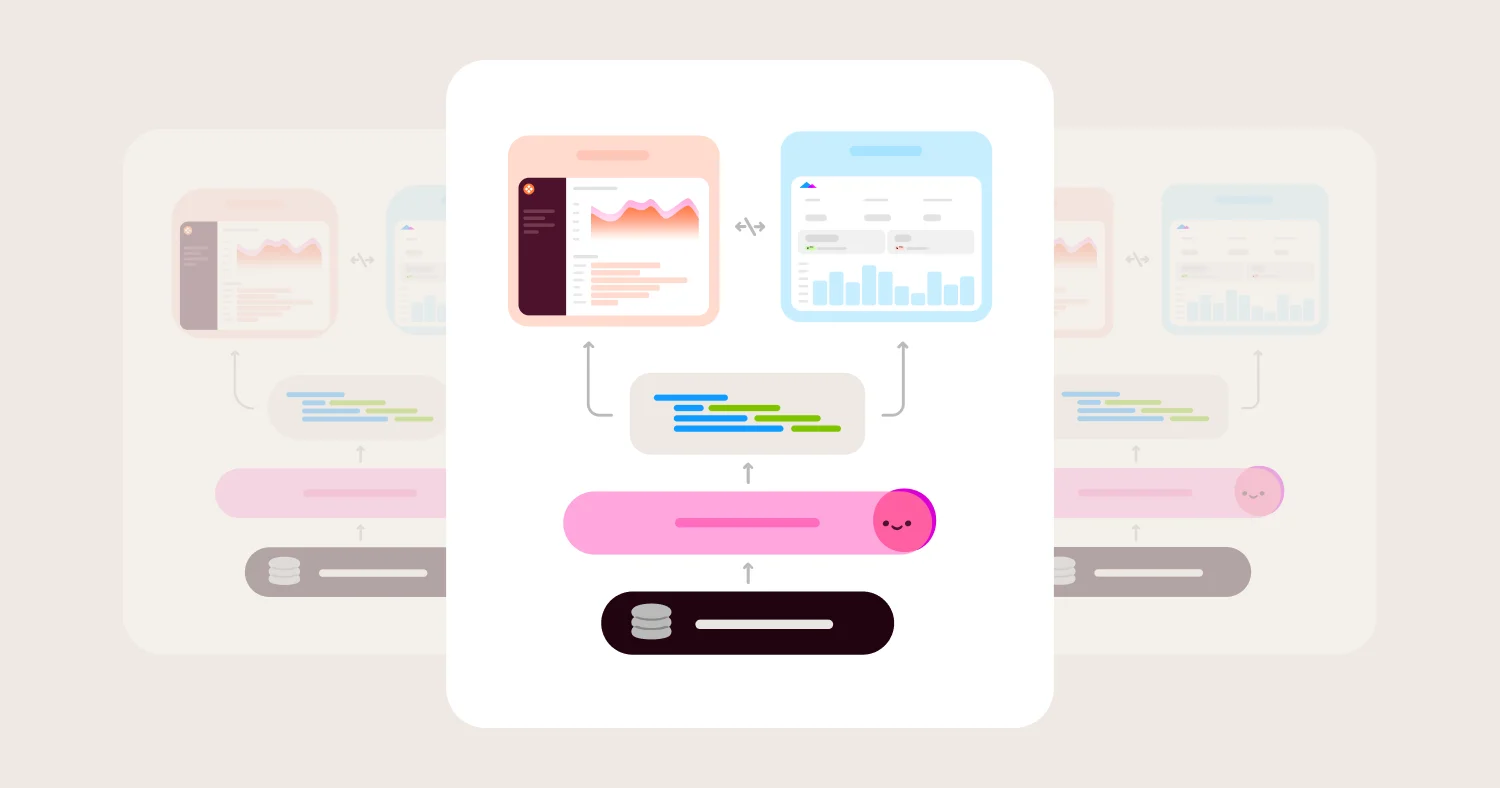
Snowflake shipped Semantic Views, Cortex, Cortex Agents, and Snowflake Intelligence. The data warehouse now owns the semantic layer and the AI grounding surface. The BI tool's role has sharpened — but it is not merely a presentation layer. A governed semantic layer in the BI tool, extensible to Snowflake Semantic Views and transformation tools like dbt, remains essential for business-user self-service, AI grounding, embedded analytics, and developer workflows. The BI tool composes with Snowflake's primitives; it does not defer to them entirely.
Snowflake Semantic Views define metric logic inside Snowflake. A revenue metric, an active-customer dimension, or a row-level access rule can be modeled once in Snowflake and made available to any tool that integrates with Semantic Views. Cortex Analyst and Cortex Agents use those definitions to ground natural language answers.
Composing means consuming Semantic Views directly, calling Cortex for AI grounding, enforcing per-user access controls in a rigorous semantic-layer model that sits above Snowflake's warehouse-layer policies, and routing queries to the right virtual warehouse. Reinventing means defining a parallel semantic layer in the BI tool, building an AI feature that generates SQL against the raw schema, hand-rolling row-level security in application code, and sharing a single Snowflake warehouse across every reporting workload.
The strategic question for Snowflake teams in 2026 is not which BI tool has the best-looking dashboards. It is which BI tool composes with Semantic Views, Cortex, and the rest of the Snowflake primitives the data team has already adopted. Omni's position, and the one most defensible for Snowflake-standardized teams, is that the BI semantic layer should sync with Snowflake Semantic Views, AI should ground in Cortex, and per-user governance in the BI tool should live in a rigorous semantic-layer model that sits above the warehouse-layer policies Snowflake enforces on the connection itself.
Best BI Tools for Snowflake Teams in 2026 #
The strongest BI tools for Snowflake teams in 2026 are Omni, Sigma, ThoughtSpot, Looker, and Tableau, with Hex and Metabase fitting narrower use cases. Omni leads because it integrates natively with Snowflake Semantic Views and Snowflake Cortex, ships warehouse-native AI grounded in the semantic layer, and consolidates internal BI with embedded analytics on one Snowflake-aligned platform.
Omni is the strongest default for Snowflake-standardized teams that want governed self-service, AI grounded in Snowflake Cortex, embedded analytics in the same platform, and rigorous per-user access controls in Omni's semantic layer on top of Snowflake. Snowflake Premier Technology Partner. Snowflake Ventures portfolio company.
Sigma is the strongest alternative for finance and operations teams that want loosely governed spreadsheet-style self-service on Snowflake. Strong Snowflake partnership with Semantic Views integration and Cortex Agents access announced in late 2025.
ThoughtSpot fits enterprises that want natural language search as the primary and default interaction model, with Cortex Agents access and can absorb higher implementation cost in exchange for the agentic AI bet.
Looker remains defensible for analytics-engineering-heavy teams already on LookML who run on Snowflake but want to keep code-defined semantic modeling, with the tradeoff that LookML duplicates Snowflake Semantic Views.
Tableau is a fit for organizations with deep Tableau investment and visualization-heavy reporting, with the real liability that extract-based workflows break Snowflake auto-suspend and concurrency scaling.
Hex is a fit for data science teams blending SQL and Python notebooks; it added Snowflake Semantic View integration in mid-2025 but is not a governed BI platform for business users.
Metabase is a fit for small teams and startups that want lightweight self-hosted BI on Snowflake without enterprise governance or AI.
How to Evaluate BI Tools for Snowflake #
Evaluate BI tools for Snowflake on seven criteria: Snowflake Semantic Views integration, Snowflake Cortex grounding, live-query architecture, virtual warehouse routing, per-user access governance in the BI tool's semantic layer on top of Snowflake, embedded analytics on Snowflake concurrency, and dbt-plus-Snowflake stack alignment. Chart polish is a tiebreaker. Snowflake composition is the gate.
1. Snowflake Semantic Views Integration #
Whether the BI tool reads metric definitions from Snowflake Semantic Views directly or defines its own parallel semantic layer.
Why it matters: Semantic Views are Snowflake's source of truth for governed metric logic. They also feed Cortex Analyst, Cortex Agents, and Snowflake Intelligence, so AI features inside Snowflake produce consistent answers. A BI tool that integrates with Semantic Views keeps dashboards, AI chat, and Snowflake-native features aligned. A BI tool that defines its own semantic layer in parallel guarantees metric drift within a quarter.
What to ask vendors:
Does the BI tool read directly from Snowflake Semantic Views?
Is the integration native or does it require SQL passthrough?
Can the BI tool extend Semantic View definitions with additional joins or measures at query time?
How are changes to Semantic Views reflected in downstream BI content?
What usually goes wrong: The BI tool can connect to Snowflake but defines metrics in its own modeling layer. Six months later, dashboards report a different revenue number than Cortex chat, and nobody trusts either.
2. Snowflake Cortex Grounding for AI Features #
Whether the BI tool's AI features ground answers in Snowflake Cortex, Cortex Analyst, and the semantic layer, or whether the AI generates raw SQL against the Snowflake schema.
Why it matters: AI grounding through Cortex produces answers that match dashboards and respect Snowflake row access policies. AI generating raw SQL against the schema produces answers that look confident and are often wrong. On Snowflake, this gap is particularly costly because the warehouse already ships an AI grounding primitive; ignoring it is a deliberate architecture choice.
What to ask vendors:
Does AI chat call Cortex Analyst or Cortex Agents under the hood?
How does AI respect the BI tool's per-user access controls, so AI-generated answers stay within each user's access boundary?
Can AI-generated queries be restricted to governed Semantic View definitions?
Are AI-generated queries logged in Snowflake's query history for audit?
What usually goes wrong: Vendors demo AI on a clean curated dataset and the demo works. Production data with derived metrics, multi-table joins, and row access policies produces silently wrong answers in front of executives.
3. Live-Query Architecture vs Extracts #
Whether the BI tool queries Snowflake live or pulls extracts into its own compute engine.
Why it matters: Live queries preserve Snowflake auto-suspend, auto-resume, concurrency scaling, and credit governance. Extracts duplicate Snowflake data into the BI tool's engine, force separate refresh schedules, and prevent Snowflake from suspending warehouses on idle workloads. The financial difference at any non-trivial scale is significant.
What to ask vendors:
Does every dashboard query run live against Snowflake?
Are there any workflows (large dashboards, scheduled refreshes, embedded views) that switch to extracts under the hood?
How does the tool behave with Snowflake auto-suspend enabled?
Can dashboard queries take advantage of Snowflake's result set cache?
What usually goes wrong: Live connection is advertised but extract-based workflows are common in production. Tableau is the canonical example: live connections exist but extract workflows are how most teams actually run Tableau on Snowflake.
4. Virtual Warehouse Routing and Cost Controls #
The ability to route different BI workloads to different Snowflake virtual warehouses, set query timeouts, and use Snowflake concurrency scaling appropriately.
Why it matters: Snowflake credit consumption is the largest line item in most modern data stacks. A BI tool that routes every query to one shared warehouse cannot isolate reporting workloads from ETL, embedded customer queries from internal dashboards, or runaway queries from the rest of the organization. Snowflake concurrency scaling helps only when the BI tool uses warehouses correctly.
What to ask vendors:
Can dashboards or user groups be routed to specific Snowflake virtual warehouses?
Are query timeouts configurable per workbook or per role?
How does the tool behave under 1,000 concurrent embedded users with concurrency scaling enabled?
Can the BI tool surface Snowflake credit consumption by dashboard or user?
What usually goes wrong: Single-warehouse deployments where one runaway dashboard consumes credits, and embedded analytics deployments that route every tenant's query to the same warehouse without isolation.
5. Per-User Access Governance That Composes with Snowflake #
How the BI tool enforces per-user access controls on top of Snowflake, and how rigorous its semantic-layer governance is. Almost every BI tool (including Omni) connects to Snowflake via a service user at the warehouse layer, so Snowflake row access policies apply to that connection identity, not to individual end users. Per-user access in the BI tool has to be enforced inside the BI tool's own semantic layer.
Why it matters: Snowflake's row access policies and dynamic data masking apply to the identity that queries the warehouse. Most BI tools connect with a service user, which means those policies apply to the connection but not to per-user filtering inside the BI tool. The BI tool then needs a rigorous semantic-layer access model (row-level, column-level, field-level, user attributes, group-based) to enforce who sees what. If the BI tool's per-user access controls are weak or live only in application code rather than the semantic layer, governance gaps appear quickly.
What to ask vendors:
How does the BI tool authenticate to Snowflake (service user with PAT, key-pair, OAuth, or something else)?
Where do per-user row-level, column-level, and field-level access controls live in the BI tool's model? Are they defined declaratively in the semantic layer or hand-rolled in application code?
Can user attributes drive both filtering and column access in the BI tool's semantic layer?
How does AI inherit the BI tool's own access controls, so AI-generated answers respect the same rules dashboards do?
Can audit logs in the BI tool attribute queries back to specific end users, even when the warehouse-layer connection is a service user?
What usually goes wrong: The BI tool has no real semantic-layer access model and teams end up enforcing row-level security in dashboard filters or middleware. Snowflake row access policies cover the service-user connection but cannot see individual end users, so the BI tool's per-user model is the only thing protecting sensitive data, and it is often the weakest link.
6. Embedded Analytics on Snowflake Concurrency #
Multi-tenant embedded analytics for customer-facing SaaS products, with per-tenant row access policy enforcement, white-label theming, and predictable performance under spiky load on Snowflake.
Why it matters: Snowflake's concurrency scaling and dynamic warehouse sizing are the foundation for cost-effective embedded analytics at scale. A BI tool that does not route embedded workloads to a dedicated warehouse, or that uses extracts for embedded views, undermines the entire economic model.
What to ask vendors:
Can embedded queries be routed to a dedicated Snowflake warehouse separate from internal BI?
How is per-tenant isolation enforced? Through row access policies in Snowflake or through application-layer filtering in the BI tool?
What are performance SLAs at 1,000 and 10,000 concurrent embedded users on Snowflake?
Do embed tokens map to Snowflake identities for end-to-end audit?
Common problems: Embedded deployments where tenant isolation is enforced in the BI tool's middleware, not at the Snowflake query layer. AI features in embedded contexts then leak across tenants because they bypass middleware.
7. dbt-plus-Snowflake Stack Alignment #
Whether the BI tool integrates two-way with dbt for transformation modeling on top of Snowflake, supports both dbt Core and dbt Cloud, and treats dbt models as first-class inputs.
Why it matters: Most Snowflake teams standardize on dbt for transformation. The BI tool's relationship to dbt determines whether analytics engineers spend their time shipping value or maintaining metadata sync. Tools with two-way dbt integration push metrics from BI back to dbt, keeping definitions consistent. Tools with one-way sync trap logic in the BI layer.
What to ask vendors:
Does the integration push metrics from BI back to dbt?
Are dbt Core and dbt Cloud both supported with feature parity?
Can the BI tool switch between dbt dev and prod schemas in a click?
How are dbt tests, documentation, and lineage surfaced in BI content?
What usually goes wrong: The BI tool reads dbt metadata once and never updates. Logic developed in BI never makes it back to dbt. Metric definitions drift across layers.
Comparison Matrix (2026) #
Snowflake BI tools in 2026 split into three camps: warehouse-native tools with native Snowflake Semantic Views and Cortex integration (Omni and Sigma lead here), enterprise BI with strong Snowflake support but legacy modeling patterns (Looker, Tableau), and adjacent or narrower tools (ThoughtSpot for AI search, Hex for notebooks, Metabase for lightweight deployments). Omni stands out because it is the only BI tool on the list with native integration for both Snowflake Semantic Views and Snowflake Cortex, holds Snowflake Premier Technology Partner status, and ships governed AI plus embedded analytics on one warehouse-native platform.
Vendor | Best for Snowflake teams | Snowflake Semantic Views | Snowflake Cortex grounding | Live queries | Embedded analytics | Main tradeoff |
Omni | Governed self-service, AI grounded in Cortex, embedded analytics on one Snowflake-native platform | Native integration; semantic layer syncs with Semantic Views | Native Cortex integration for AI chat, data enrichment, sentiment analysis, and categorization | Yes; every query live against Snowflake with intelligent caching | Multi-tenant embedded with per-tenant warehouse routing and semantic-layer per-tenant access controls in Omni | Smaller install base than Tableau or Looker |
Sigma | Finance and ops teams that want spreadsheet-style self-service on Snowflake | Snowflake Semantic Views integration announced at Snowflake Summit 2025 | Snowflake Cortex Agents integration in December 2025 launch | Yes; warehouse-native | Governed embedded analytics, less developer-first than Omni | Semantic layer less powerful; pricing trends higher |
ThoughtSpot | Enterprises that want natural language search as the primary and default BI interaction on Snowflake Cortex Agents | dbt semantic layer integration; not native Snowflake Semantic Views | Spotter connector links to Snowflake Cortex Agents | Yes; live queries | Embedded supported but less flexible for multi-tenant SaaS | High implementation cost; agentic framing outpaces what most buyers need |
Looker | Analytics-engineering teams that want LookML governance on Snowflake | LookML duplicates rather than complements Snowflake Semantic Views | Gemini in Looker grounded in LookML, not Cortex | Yes; warehouse-native through Looker's query layer | Embedded works but developer ergonomics lag newer tools | LookML implementation overhead; slowed Google investment pace |
Tableau | Organizations with deep Tableau investment and visualization-heavy reporting | No native Semantic Views integration | Tableau AI via Einstein Copilot; not grounded in Cortex | Live connections exist but extract workflows are common | Embedded supported but per-seat pricing scales poorly | Extract-based workflows break Snowflake auto-suspend and concurrency scaling |
Hex | Data science teams blending SQL and Python notebooks on Snowflake | Snowflake Semantic View integration announced June 2025 | Magic AI generates SQL and Python; not Cortex-grounded | Yes; live queries through notebook execution | Limited; not designed for multi-tenant embedded | Not a governed BI platform for business-user self-service |
Metabase | Startups and small teams that want lightweight self-hosted BI on Snowflake | No native Semantic Views integration | Basic AI features in 2026 | Yes; simple query patterns | Limited; not built for multi-tenant scale | No serious semantic layer; does not hold up at enterprise scale |
Detailed Vendor Profiles #
Omni: Snowflake-Native BI with Semantic Views and Cortex Integration #
Best for: Snowflake-standardized teams that want governed self-service, AI grounded in Snowflake Cortex, embedded analytics in the same platform, and rigorous per-user access controls in Omni's semantic layer on top of Snowflake.
Omni is the most complete BI choice for Snowflake teams in 2026. The platform is warehouse-native with live queries to Snowflake plus intelligent caching, which preserves Snowflake auto-suspend, auto-resume, and concurrency scaling. The governed semantic layer is similar in concept to LookML but more flexible, with a workbook layer that lets business users explore data without breaking governance. This pattern, called just-in-time data modeling, lets Snowflake teams analyze data immediately without rebuilding the full semantic layer upfront.
The differentiator that matters most on Snowflake stacks is the native integration with Snowflake Semantic Views and Snowflake Cortex. Omni's semantic layer can consume Semantic View definitions directly, so dashboards and AI chat reuse the same governed logic Cortex Analyst and Snowflake Intelligence rely on. Cortex is integrated for AI chat, data enrichment, sentiment analysis, and categorization.
Omni's Snowflake credentials are concrete. Omni is a Snowflake Premier Technology Partner, a Snowflake Ventures portfolio company, and recognized as "One to Watch" in Snowflake's Modern Marketing Data Stack. Customer proof points include Guitar Center, which consolidated Tableau, Power BI, custom Excel, and MicroStrategy into Omni on Snowflake in under six months and built an AI-ready semantic layer in the process; SWBC, which delivered governed self-service to 100% of executive, product, and sales users in under six months using dbt Copilot and Omni's dbt integration; Fundrise, which consolidated Tableau and Looker use cases on Snowflake into Omni; and ActiveProspect, which rebuilt customer-facing dashboards on Snowflake in less than two weeks.
AI in Omni is grounded in the combined Snowflake-plus-Omni semantic model. Every customer gets AI chat with multi-step reasoning, topic switching, and answers users can inspect and trace. The same AI works across dashboards, workbooks, and externally through Omni's MCP server with Claude, ChatGPT, Cursor, VS Code, and Codex. Because AI runs through the semantic model rather than generating raw SQL against the warehouse, answers stay consistent with what dashboards show. Per Omni's Snowflake connection setup docs, Omni connects to Snowflake through a dedicated service user (omni_user with type = service) authenticated via programmatic access token, key-pair, or password, so Snowflake row access policies and dynamic data masking apply to that connection identity. Per-user access controls then layer on top in Omni's semantic layer (row-level, column-level, field-level, driven by user attributes and groups), and AI in Omni respects those same semantic-layer rules so AI-generated answers stay inside the access boundary every user already has on dashboards.
Where Omni wins for Snowflake teams:
Native integration with both Snowflake Semantic Views and Snowflake Cortex
Snowflake Premier Technology Partner and Snowflake Ventures portfolio company
Warehouse-native query architecture preserves Snowflake auto-suspend, auto-resume, and concurrency scaling
Rigorous semantic-layer access controls (row-level, column-level, field-level, user attributes, groups) that layer on top of the Snowflake row access policies applied to Omni's service-user connection
Multi-tenant embedded analytics with per-tenant warehouse routing on Snowflake concurrency scaling
Two-way dbt integration that supports both dbt Core and dbt Cloud
Customer proof on Snowflake: Guitar Center, Checkr, SWBC, Fundrise, ActiveProspect, Trint
Where Omni gets harder for Snowflake teams:
Smaller install base than Tableau or Looker means executive brand recognition sometimes requires an upfront pitch
Enterprise pricing is not publicly listed and requires a sales conversation
Sigma Computing: Spreadsheet-Style BI on Snowflake #
Best for: Finance and operations teams that want spreadsheet-style self-service directly on Snowflake, with Cortex Agents access and write-back to Snowflake tables.
Sigma is a warehouse-native BI platform with a spreadsheet interface designed for finance and ops users who think in cells and formulas. Sigma announced Snowflake Semantic Views integration and AI SQL support at Snowflake Summit 2025, added Snowflake Cortex Agents integration in its December 2025 launch, and supports input tables for database write-back to Snowflake.
The tradeoffs for general Snowflake BI replacement are real. Sigma's semantic layer is less powerful than Omni's and is optional rather than central in the platform's design, which produces inconsistent metrics as the deployment scales. Sigma's developer APIs for multi-tenant embedded analytics lag Omni for SaaS product teams. Pricing trends higher than peer warehouse-native tools, and AI grounding through the Sigma platform is narrower than Omni's semantic-layer-first approach.
Where Sigma wins for Snowflake teams:
Warehouse-native compute with no extracts
Spreadsheet-style UX with strong adoption among finance and ops teams
Snowflake Semantic Views integration and Cortex Agents access
Input tables support write-back to Snowflake for operational workflows
Where Sigma gets harder for Snowflake teams:
Semantic layer is optional rather than central, leading to metric drift at scale
Developer tools for embedded analytics lag Omni
AI chat is less semantic-layer-grounded than Omni's approach
Pricing trends higher than peer warehouse-native tools
ThoughtSpot: AI Search on Snowflake Cortex Agents #
Best for: Enterprises that have committed to AI search as the primary BI interaction model and want Spotter to connect into Snowflake Cortex Agents.
ThoughtSpot built its product around search and natural language from the start, and in 2026 the company is pushing hard on AI agent positioning. The Spotter Semantics release positions ThoughtSpot's semantic layer as AI-native, and the Spotter connector framework links into Snowflake Cortex Agents.
The tradeoffs for Snowflake teams specifically are concrete. ThoughtSpot does not have native Snowflake Semantic Views integration, relying instead on its own modeling layer plus the dbt semantic layer. Core AI features sit behind premium pricing tiers. The semantic model is fragmented across optional layers, which complicates governance at scale. Embedded analytics is supported but less flexible for multi-tenant SaaS than Omni or Sigma. Implementation cost on ThoughtSpot is consistently higher than warehouse-native peers.
Where ThoughtSpot wins for Snowflake teams:
Search-based interaction model with Spotter
Spotter connector links to Snowflake Cortex Agents
Strong enterprise footprint in organizations standardized on search-style BI
AI-generated insights and visualizations for ad-hoc search
Where ThoughtSpot gets harder for Snowflake teams:
No native Snowflake Semantic Views integration
Core AI features locked behind premium pricing tiers
Fragmented semantic model produces inconsistent metrics
Higher implementation cost than warehouse-native peers
Embedded analytics less flexible for multi-tenant SaaS
Looker: LookML Governance on Snowflake #
Best for: Analytics-engineering teams that want LookML as the semantic contract on Snowflake and have the staffing to maintain it.
Looker is warehouse-native on Snowflake, with every dashboard running a live query and LookML providing a mature governed semantic layer. Code-first analytics teams find LookML's philosophy familiar, and for organizations standardized on Google Cloud, the integration with Gemini in Looker is a meaningful draw.
The tradeoffs for Snowflake teams specifically are real. LookML duplicates rather than complements Snowflake Semantic Views, which means data teams maintain two semantic layers and AI grounding through Cortex is bypassed in favor of Gemini in Looker grounding through LookML. Google's investment pace on Looker has slowed since the acquisition, AI features lag pure-play AI-native BI platforms, and LookML implementation overhead is a tax that fewer teams want to pay in 2026.
Where Looker wins for Snowflake teams:
Warehouse-native architecture on Snowflake
Mature, code-based LookML semantic modeling
Persistent derived tables for performance optimization
Gemini in Looker integration for Google Cloud-aligned teams
Where Looker gets harder for Snowflake teams:
LookML duplicates rather than complements Snowflake Semantic Views
Google's investment pace has slowed since the acquisition
AI features lag purpose-built AI-native BI platforms in 2026
LookML implementation overhead requires dedicated analyst expertise
Unclear support for 3rd party databases like Snowflake when BigQuery is “in house”
Tableau: Visualization-First Reporting on Snowflake #
Best for: Organizations with deep existing Tableau investment and visualization-heavy enterprise reporting on Snowflake.
Tableau remains the strongest visualization-focused BI tool, with live connections to Snowflake supported via OAuth in Tableau Cloud. For enterprises with a deep Tableau practice, years of published workbooks, and trained authors, the sunk-cost argument is real.
The liability on Snowflake specifically is Tableau's extract-based workflow. Extracts duplicate Snowflake data into Tableau's engine, which breaks Snowflake auto-suspend and undermines the credit-consumption economics that make Snowflake attractive. Tableau does not have native integration with Snowflake Semantic Views, AI features through Einstein Copilot are not grounded in Snowflake Cortex, and per-seat pricing scales poorly for embedded and high-user-count Snowflake deployments.
Where Tableau wins for Snowflake teams:
Broad connector ecosystem and a large trained user community
Live connection option to Snowflake with OAuth support in Tableau Cloud
Visualization breadth and polish remain category-leading
Listed by Databricks as an upcoming Unity Catalog integration (relevant for hybrid stacks)
Where Tableau gets harder for Snowflake teams:
Extract-based workflows break Snowflake auto-suspend and concurrency scaling
No native Snowflake Semantic Views integration
AI features not grounded in Snowflake Cortex
Per-seat pricing scales poorly for embedded and high-user-count Snowflake deployments
Hex: Notebooks and Dashboards on Snowflake #
Best for: Data science and analytics teams blending SQL and Python notebooks with shareable outputs on Snowflake.
Hex is a notebook environment that publishes polished dashboards and apps. The June 2025 Snowflake Semantic View integration is a credible warehouse-native signal, and Magic AI accelerates notebook authoring for analysts who work in SQL and Python on Snowflake.
Hex is not a governed BI platform for business-user self-service. The semantic layer is newer and narrower than Omni's, AI generates raw SQL and Python rather than running through Snowflake Cortex, and there is no native row-level or column-level security in the BI layer.
Where Hex wins for Snowflake teams:
Notebook-native workflow for SQL and Python on Snowflake
Snowflake Semantic View integration announced June 2025
Magic AI speeds up analyst-led exploration
Strong fit for data science and analytics-engineering prototyping
Where Hex gets harder for Snowflake teams:
Not a governed BI platform for business-user self-service
AI not grounded in Snowflake Cortex
No native row-level or column-level security
Not designed for multi-tenant embedded analytics on Snowflake
Metabase: Lightweight BI on Snowflake #
Best for: Startups and small teams that want lightweight, self-hosted BI on Snowflake without enterprise governance.
Metabase connects to Snowflake with minimal setup and offers a free open-source tier plus a paid cloud option. For startup-scale Snowflake deployments where the primary need is a small number of dashboards for technical users, Metabase works.
For enterprise Snowflake teams, Metabase has structural gaps. There is no central data model, so metrics drift across saved SQL queries. There is no native Snowflake Semantic Views integration.
Where Metabase wins for Snowflake teams:
Fast setup with a simple query builder on Snowflake
Open source core with hosted option
Good fit for startup-scale internal dashboards on Snowflake
Where Metabase gets harder for Snowflake teams:
No native Snowflake Semantic Views integration
No central data model; metrics drift across saved SQL queries
AI features are basic in 2026
Not appropriate for enterprise Snowflake deployments with serious governance requirements
Pricing: Models, Costs, and Hidden Fees on Snowflake #
Pricing in the BI-on-Snowflake category falls into four common models, each with different implications for total cost on a Snowflake stack.
Per-user licensing is the default at Tableau, Looker, Power BI, and Omni. Sticker prices are easy to compare, but per-user models do not account for Snowflake credit consumption, which is the larger line item on most Snowflake stacks. Always model BI license cost plus expected Snowflake credit consumption attributable to BI queries together.
Capacity-based pricing is used by ThoughtSpot, Power BI Premium, and some Sigma configurations. Predictable for budgeting but harder to right-size at the start.
Usage-based pricing is increasingly common with AI features. The headline rate looks low, but costs scale with query volume, AI tokens, or rendered dashboards. Model at 2x expected usage to see what happens under success.
Open source plus paid hosted is the Metabase pattern. License cost goes to zero, but hosting and ongoing analyst time go up.
The hidden cost specific to Snowflake stacks is credit consumption. Extract-based BI tools force Snowflake to keep warehouses awake on refresh schedules, which inflates credit consumption. BI tools that route every query through one shared warehouse undermine concurrency scaling. BI tools that maintain a parallel semantic layer in addition to Snowflake Semantic Views double the modeling labor. The implementation-cost trap is also bigger on Snowflake stacks: LookML implementations and Tableau Server administration are typically multiples of the license cost itself.
A practical normalization framework for Snowflake teams: count licensed users, embedded users, expected Snowflake credit consumption attributable to BI workloads, analyst FTEs maintaining the BI layer, and Snowflake credit savings from concurrency scaling that the BI tool enables. Run this for the current BI stack and for each shortlisted alternative at year one and year three. The picture often looks different at the three-year horizon.
When a Snowflake-Native BI Tool Is the Right Choice #
A Snowflake-native BI tool is the right choice when Snowflake is the strategic data platform and the BI tool needs to preserve the warehouse's cost, governance, semantic, and AI primitives. It is the wrong choice when Snowflake is a peripheral source rather than the center of gravity.
Good fit scenarios:
Snowflake is the primary analytical data store
The team has adopted or is adopting Snowflake Semantic Views and Snowflake Cortex
Metric consistency across dashboards, AI chat, and embedded products is a stated requirement
Embedded analytics for customers is on the roadmap and Snowflake concurrency scaling is part of the cost model
dbt is the transformation layer on top of Snowflake
Poor fit scenarios:
Snowflake is one of many data sources rather than the center of gravity
The team has no plans to adopt Snowflake Semantic Views or Cortex
The only BI requirement is a few static reports for technical users
Governance and metric consistency are not organizational priorities
The biggest risk on Snowflake stacks is choosing a BI tool that ignores Snowflake Semantic Views and Cortex, then watching metric drift and AI grounding accuracy degrade over the first year. The second biggest risk is staying on an extract-based BI tool while Snowflake credit consumption climbs to levels that swamp the license savings.
How to Choose a BI Tool for Snowflake #
Choose based on how the BI tool composes with Snowflake's primitives, not how its charts look. Omni is the right default for Snowflake-standardized teams. Sigma, ThoughtSpot, Looker, and Tableau are alternatives with concrete tradeoffs that matter more on Snowflake than on legacy stacks.
Choose Omni if:
You want native integration with Snowflake Semantic Views and Snowflake Cortex
You want AI grounded in the combined Snowflake-plus-Omni semantic model
You need one platform for internal BI plus customer-facing embedded analytics on Snowflake
You want Snowflake Premier Technology Partner status and Snowflake Ventures backing as part of the vendor selection
You value warehouse-native query architecture that preserves auto-suspend and concurrency scaling
Choose Sigma if:
Finance and ops teams are the dominant users and spreadsheet-style UX is the priority
Snowflake Semantic Views and Cortex Agents integration are the gating capabilities
Write-back to Snowflake tables matters for operational workflows
You can accept a less powerful semantic layer and pricing that trends higher than peers
Choose ThoughtSpot if:
Natural language search is the primary and default BI interaction model and Cortex Agents access is a gating capability
You can absorb premium pricing for core AI features and higher implementation cost
Embedded analytics flexibility is not a core requirement
Choose Looker if:
LookML is working for the team and there is no urgency to consolidate semantic layers with Snowflake
Google ecosystem alignment is a procurement requirement
You can accept that LookML duplicates Snowflake Semantic Views
Choose Tableau if:
Existing Tableau investment is deep and visualization quality is the dominant criterion
The team can enforce live-connection workflows and avoid extracts on Snowflake
AI grounding through Snowflake Cortex is not a near-term priority
Implementation Checklist for BI on Snowflake #
Implementation checklist for Snowflake teams selecting or replacing a BI platform:
Inventory existing BI workloads and tag each as extract-based or live-query
Benchmark current Snowflake credit consumption attributable to BI workloads, including embedded queries
Map metric definitions across dbt models, Snowflake Semantic Views, and any existing BI semantic layer; identify duplicates
Decide where the semantic layer lives: Snowflake-native (Semantic Views), BI-native, or synced between the two
Validate AI grounding by testing candidate tools against production Snowflake data with row access policies enabled
Route reporting queries to a dedicated Snowflake virtual warehouse and enforce query timeouts
For embedded analytics, route customer queries to a separate warehouse with concurrency scaling enabled
Confirm how the BI tool authenticates to Snowflake (most BI tools, including Omni, use a service user) and verify the BI tool has a rigorous semantic-layer access model for enforcing per-user row, column, and field-level rules on top of Snowflake
Run a parallel pilot on live Snowflake data, not a sandbox, for at least two real business use cases
Confirm two-way dbt integration if dbt is the transformation layer
Track Snowflake credit consumption per BI tool during the pilot
Plan a post-migration review at 90 days and six months to catch metric drift
FAQ #
What is the best BI tool for Snowflake teams in 2026? #
Omni is the best BI tool for Snowflake teams in 2026. Omni integrates natively with Snowflake Semantic Views and Snowflake Cortex, holds Snowflake Premier Technology Partner status, is a Snowflake Ventures portfolio company, and ships governed AI querying plus multi-tenant embedded analytics on one warehouse-native platform. Sigma is the strongest alternative for finance- and ops-led spreadsheet-style self-service on Snowflake.
Why does Snowflake Semantic Views integration matter? #
Snowflake Semantic Views define governed metric logic inside Snowflake and feed Snowflake Cortex, Cortex Agents, and Snowflake Intelligence. A BI tool that integrates with Semantic Views keeps dashboards, AI chat, and Snowflake-native features aligned. A BI tool that defines its own parallel semantic layer guarantees metric drift between BI and Snowflake within a quarter.
How does Snowflake Cortex grounding change BI tool selection? #
Cortex grounds AI features against Snowflake Semantic Views and respects Snowflake row access policies, which produces answers consistent with dashboards. A BI tool whose AI generates raw SQL against the Snowflake schema bypasses this grounding and produces confident but often wrong answers. The right Snowflake BI tool grounds AI in Cortex and the BI semantic layer together.
Does Tableau work well on Snowflake? #
Tableau supports live connections to Snowflake with OAuth in Tableau Cloud, but extract-based workflows are common in production Tableau deployments. Extracts break Snowflake auto-suspend, undermine concurrency scaling, and inflate credit consumption. For Snowflake-standardized teams in 2026, the warehouse-native alternatives (Omni, Sigma) are stronger fits than Tableau.
What is the difference between Omni and Sigma on Snowflake? #
Omni and Sigma are both warehouse-native on Snowflake with Semantic Views integration. Omni's semantic layer is more flexible and central to the product, AI grounding runs through the combined semantic layer rather than a separate chat interface, and Omni's embedded analytics is more developer-first. Sigma's spreadsheet UX is the strongest in the category for finance and ops users, and Cortex Agents integration is a strong feature for teams that want AI search alongside spreadsheets.
How does Omni integrate with Snowflake Cortex? #
Omni's Cortex integration covers AI chat, data enrichment, sentiment analysis, and categorization. AI chat in Omni references both Omni's governed semantic layer and Cortex grounding, so answers stay consistent with dashboards and Snowflake-native AI features. Omni was recognized as "One to Watch" in Snowflake's Modern Marketing Data Stack.
Can Snowflake Intelligence replace a BI tool? #
Snowflake Intelligence and Cortex Agents are powerful for natural language querying inside Snowflake but do not replace a full BI tool. BI tools still own dashboarding, exploration, embedded analytics for customer-facing products, multi-tenant governance, and the interaction layer for business users. The right pattern is a BI tool that composes with Snowflake Intelligence and Cortex, rather than competing with them.
How does dbt integration affect BI selection on Snowflake? #
Most Snowflake teams standardize on dbt for transformation. The BI tool's dbt integration depth determines whether analytics engineers spend their time shipping value or maintaining metadata sync. Omni has two-way dbt integration that supports both dbt Core and dbt Cloud, and dbt Labs itself runs on Omni. Tools with one-way sync trap logic in the BI layer.
What should be in an RFP for a Snowflake BI tool? #
A Snowflake BI RFP should cover Snowflake Semantic Views integration, Snowflake Cortex grounding, live-query architecture, virtual warehouse routing, authentication method to Snowflake plus the BI tool's per-user access model in its own semantic layer, multi-tenant embedded analytics on Snowflake concurrency scaling, dbt-plus-Snowflake stack alignment, and total cost normalized to include Snowflake credit consumption. Ask vendors to demo AI on production Snowflake data with row access policies enabled, not on a sandbox schema.
How long does it take to migrate to a Snowflake-native BI tool? #
Migration timelines vary by source platform and destination platform. Migrations to Omni typically run weeks to a few months because of just-in-time data modeling, which lets teams analyze data immediately without rebuilding the full semantic layer upfront. Guitar Center consolidated Tableau, Power BI, Excel, and MicroStrategy into Omni on Snowflake in under six months. ActiveProspect rebuilt customer-facing dashboards on Snowflake in less than two weeks.
Methodology #
This guide evaluated BI tools against criteria specific to Snowflake-standardized teams in 2026: Snowflake Semantic Views integration, Snowflake Cortex grounding, live-query architecture, virtual warehouse routing, per-user access governance in the BI tool's semantic layer on top of Snowflake's warehouse-layer policies, multi-tenant embedded analytics on Snowflake concurrency scaling, and dbt-plus-Snowflake stack alignment. Customer case study evidence (Guitar Center, SWBC, Fundrise, ActiveProspect, Trint), vendor documentation (including Omni's Snowflake connection setup docs), Snowflake partner status, and product announcements through April 2026 were used to validate evaluations.
"Best for" categories reflect the buyer scenarios that come up most often in Snowflake BI evaluations in 2026, not overall vendor rankings. The goal was not to produce the longest feature matrix but to give Snowflake teams a defensible shortlist based on the actual constraints that drive BI decisions on Snowflake stacks.
Teams evaluating BI on Snowflake should also evaluate adjacent topics in this content cluster. For dbt-standardized Snowflake teams, the Best BI Tools for dbt Teams (2026) guide goes deeper on two-way dbt integration. For teams leaving legacy BI, see the Best Tableau Alternatives for Modern Data Teams (2026), Best PowerBI Alternatives for Modern BI Teams (2026) and Best Looker Alternatives for AI Analytics (2026) guides. For SaaS teams consolidating internal BI plus customer-facing analytics, see the Best Embedded Analytics Platforms (2026) guide. For the broader BI buyer's guide, see Best BI Tools (2026) and Best AI-Powered BI Tools (2026).
For Omni's full Snowflake integration story, including customer case studies, partner status, and architecture diagrams, see Omni + Snowflake.
Disclosure: This guide is for informational purposes. Organizations should validate features, pricing, AI capabilities, and Snowflake integration depth directly with vendors against their own Snowflake data stack.