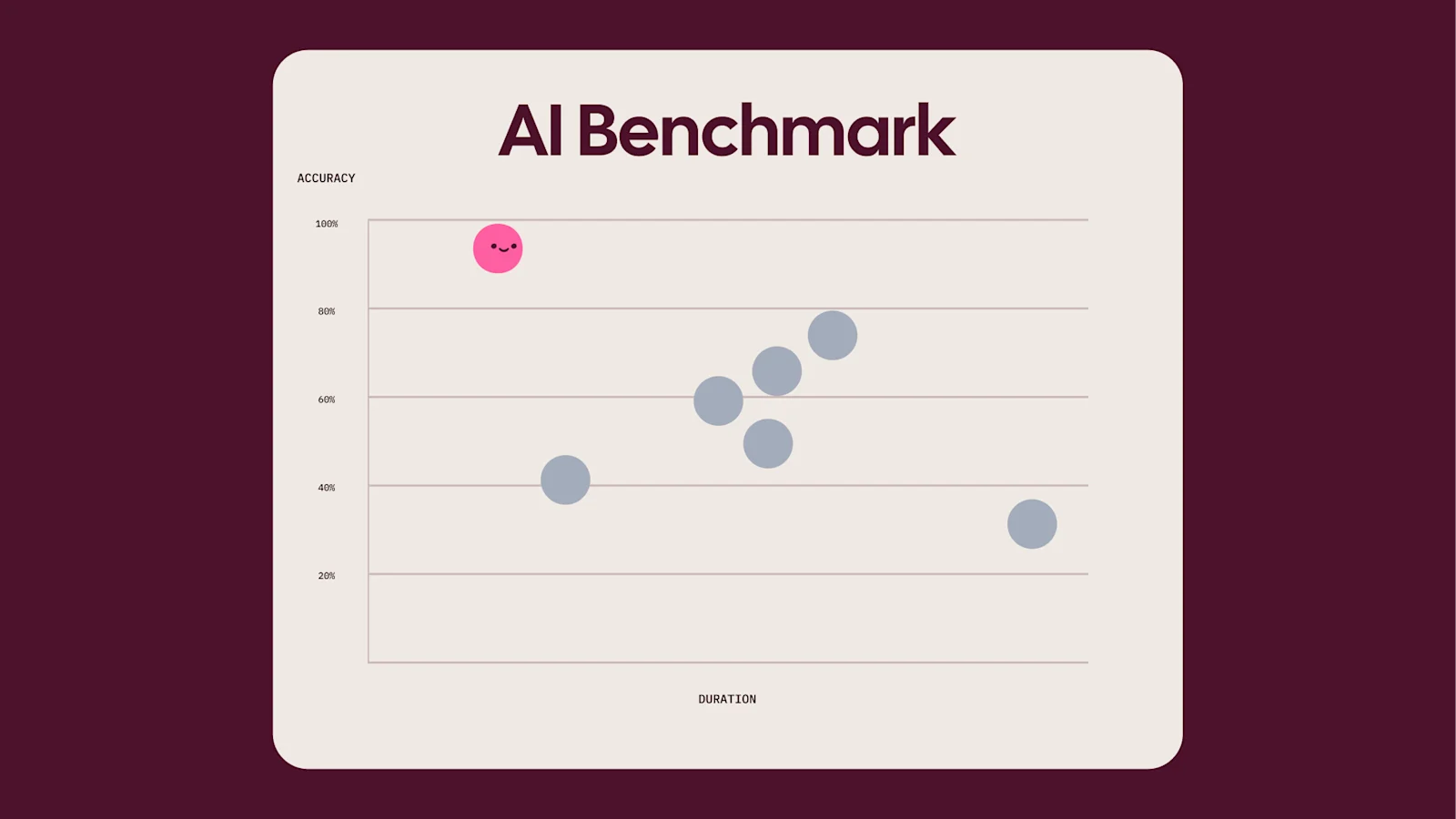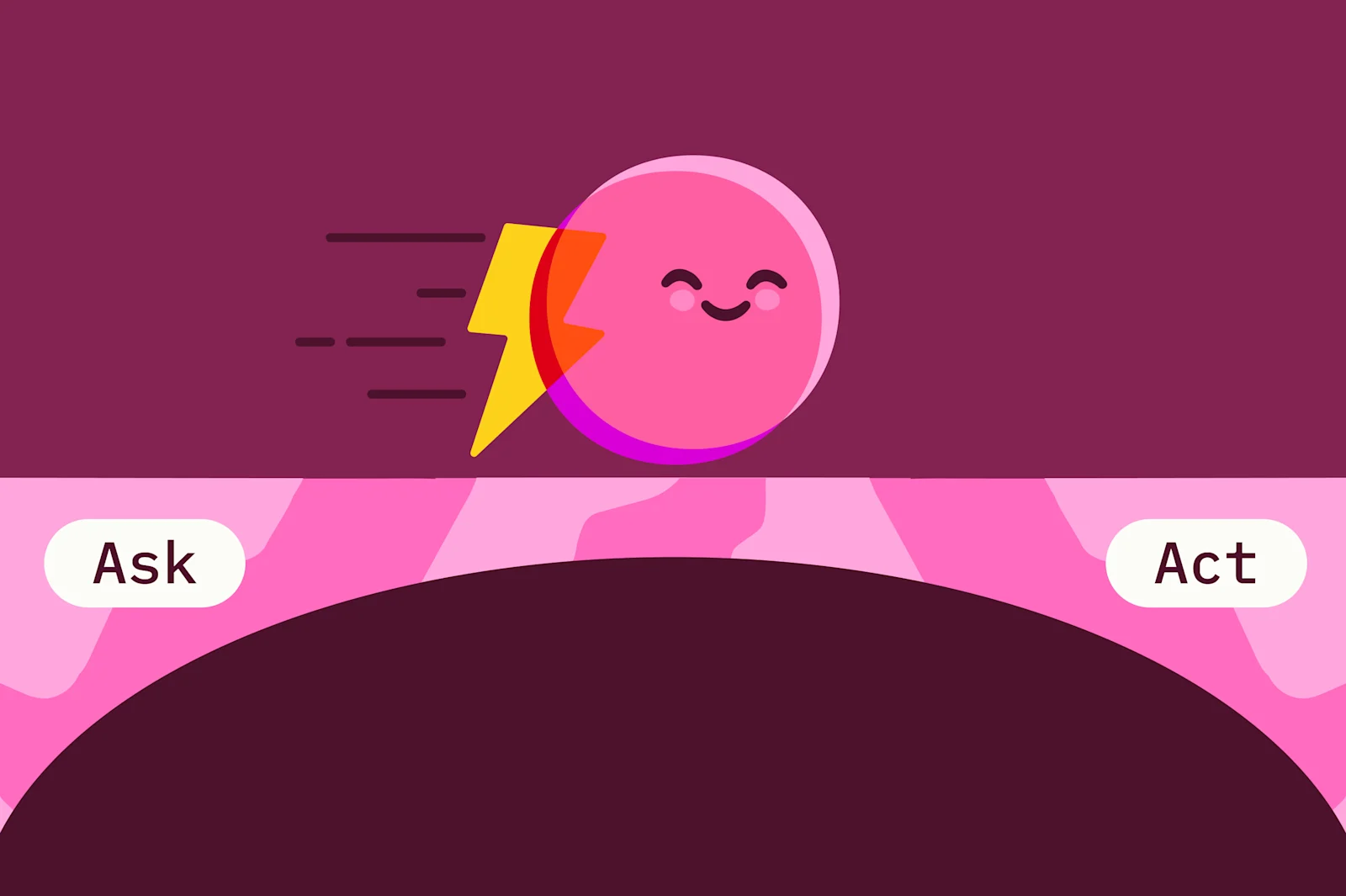
I've spent the last 10 years in various data leadership roles across gaming and fintech before joining Omni, so perhaps my full title is Field CTO and Recovering VP of Data. Which is a long way of saying I've thought about this one question more than is healthy: why do we communicate?
The crude conclusion I've reached is that first we communicate to understand, and then we communicate to act. When we're asking "what do you want for lunch?", "are you okay?", "what do you think of this idea?", we're trying to build a picture and consensus of understanding. This helps us adjust our behaviour and make a decision.
What makes communication work #
In my opinion, there are three distinct attributes.
The first is that good communication feels natural. When we talk in our mother tongue, we have a shared vocabulary and context. We're able to be efficient and direct.
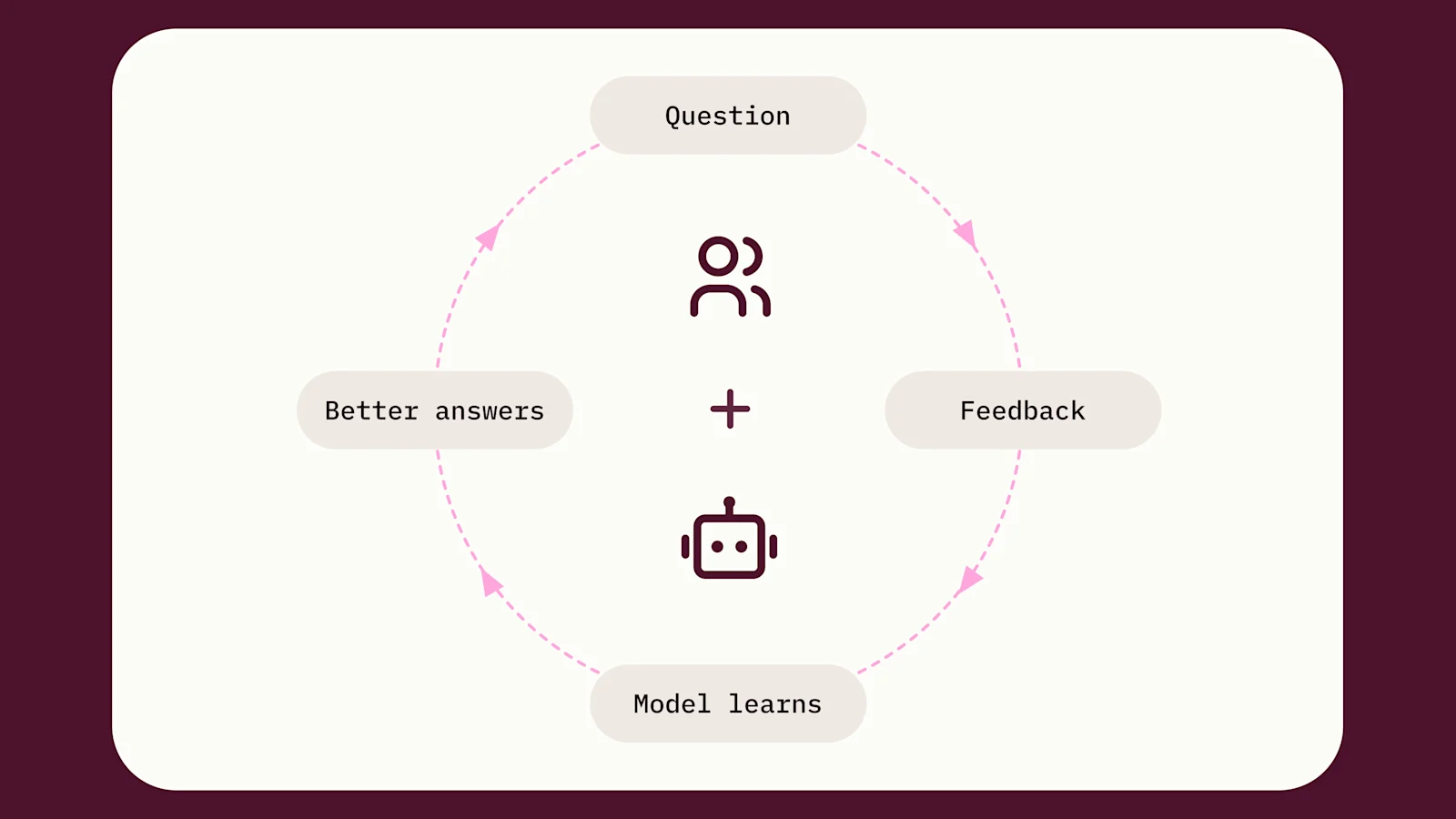
Second, we have rapid feedback loops. None of us are perfect communicators. I imagine it's rare that you've ever said to yourself, "my partner, my boss, my colleague understood exactly what I meant with absolute precision." So we have tools in our vocabulary and our mannerisms to iterate in place: to say "yeah, but," or "no, that's not what I meant," or "yes, exactly, and what about?"
And finally, it's built on trust. When we're not trying to evaluate someone's intent, authenticity, or credibility, we get straight to the point. And bang, we have impactful communication.
That may be stating the obvious, but it's very easily forgotten.
Scoring the dashboard era #
If you're like me and you've been in this industry a while, you've predominantly lived in an era where dashboards have been the primary currency, the unit of request and delivery. They became the US dollar, if you like, around which we've all built.
So how does the dashboard era score against communication attributes?
If the dashboard is the means of communication, did it feel natural? No. We evolved over millennia to be master communicators, to talk and to listen. Not to drag and drop, point and click, or navigate esoteric user interfaces.
Did it have rapid feedback? No. We had to raise a ticket and wait. Or open a dashboard, wait for it to load, pivot, filter, wait a bit longer, have some doubts, ask a clarifying question to the data team. Rapid? Certainly not.
And was it built on trust? No. We live in a world where 10 different dashboards lead to five different Excel spreadsheets being downloaded, which equals 15 different answers to the same question. This meant wasted meetings, angry execs, people arguing about which is the right number, and not making a strategic decision.
Ultimately, it became established convention. Users reluctantly accepted it as the status quo. And data teams, I would argue, looked at the dashboard as the definition of done, not the act that followed it. If you've been around a while, you've either been hired, or you have hired people, where the key skill set is mastery of the dashboard deliverable. I'm not saying that's irrelevant in a world of AI. Far from it. I point to it because it distils how much we optimised for the dashboard as the definition of done.
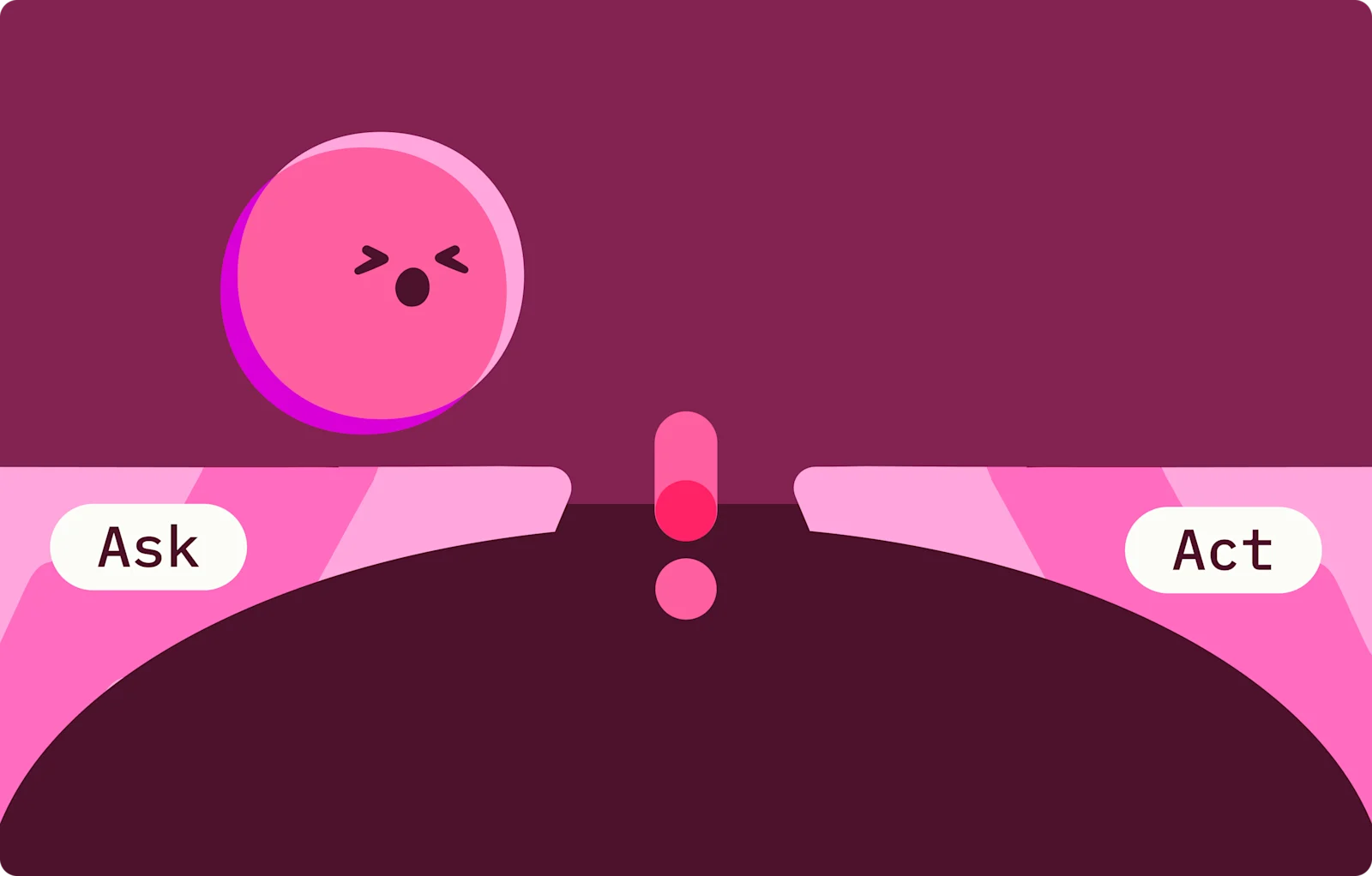
This is a failure of communication. The distance between the ask and the act became huge.
And then everything changed #
In 2022, ChatGPT was released as a mass-market product, and the adoption curve dwarfed anything seen before it. Because for the first time, our interaction with technology felt natural. It had rapid feedback loops. It tapped into what millennia of evolution had optimised us for.
What did that mean for analytics? It essentially called the bluff of BI. Suddenly everyone was using ChatGPT and the likes at home and at work, and they were saying: Hold on. If I can plan my next holiday with this, or even build an app using natural language, why can't I have that same experience with my company's data?
Consciously or subconsciously, we're no longer prepared to accept the friction we'd all become accustomed to.
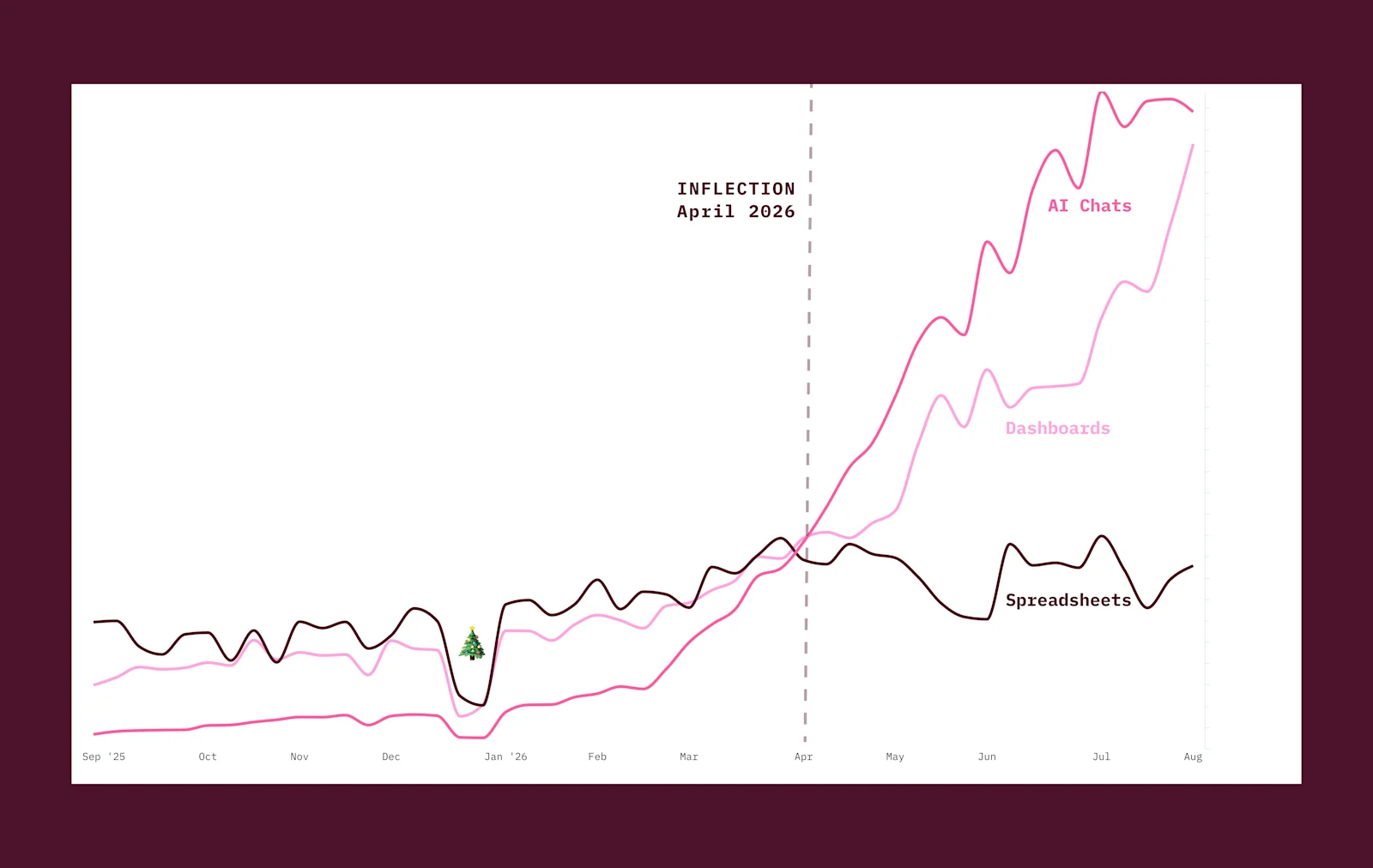
We can see that shift inside our own product. Every week we look at how people start something new in Omni, whether that's a dashboard, a spreadsheet-style workbook, or an AI chat. AI chat climbed all through 2026, and somewhere in the spring the lines crossed: it overtook dashboards as the most common way people begin a piece of analysis.
People aren't asking fewer questions. They're reaching for a more natural way to ask them.
So we just point an LLM at the warehouse, right? #
Hallelujah. We take these LLMs, we point them directly at our data warehouse, and we all live happily ever after.
Well, not quite. We have something that feels natural, yes. We have rapid feedback loops, 100%. But do we have trust? The answer there, I'm afraid, has been no.
In a role like mine, you see the same things coming up over and over. It says on the tin of LLMs that these things can hallucinate, and immediately the doubt creeps in. I've run into this myself, I pointed Claude at my data warehouse, asked a question, and got the right answer straight away. Then I went to show my colleague, asked again, and got a completely different answer. Worse still, and to my mind the most dangerous of all, I've had answers that were plausible. I couldn't eyeball them and tell whether they were correct, and I had no way to drill into that black box and ask how it got there.
Solving for trust #
How do you solve for something as fundamental as trust? Well, I love a checklist.
The first criterion is accuracy. The correct answer is the bare minimum. And crucially, it has to be consistent. Something that is right most of the time cannot inform decision-making. Not something we can take to our board, or, God forbid, to an auditor, and say, "don't worry, this is right most of the time."
It also needs to be transparent. We need to be able to look into that black box, to mark the homework and say, OK, I trust this number because I understand the thought trail. It's exactly the same as joining a conversation halfway through: you're missing the context of how you got from A to B.
And finally, it needs to be efficient, in terms of effort and cost. We don't want to recalculate what a customer is, what a transaction is, what an opportunity is, every time a question is asked. Not least if we've got to take that number to the CFO with "don't worry, that's right most of the time. And by the way, please don't look at the Claude credits I've used up in the process."
The answer was staring us in the face #
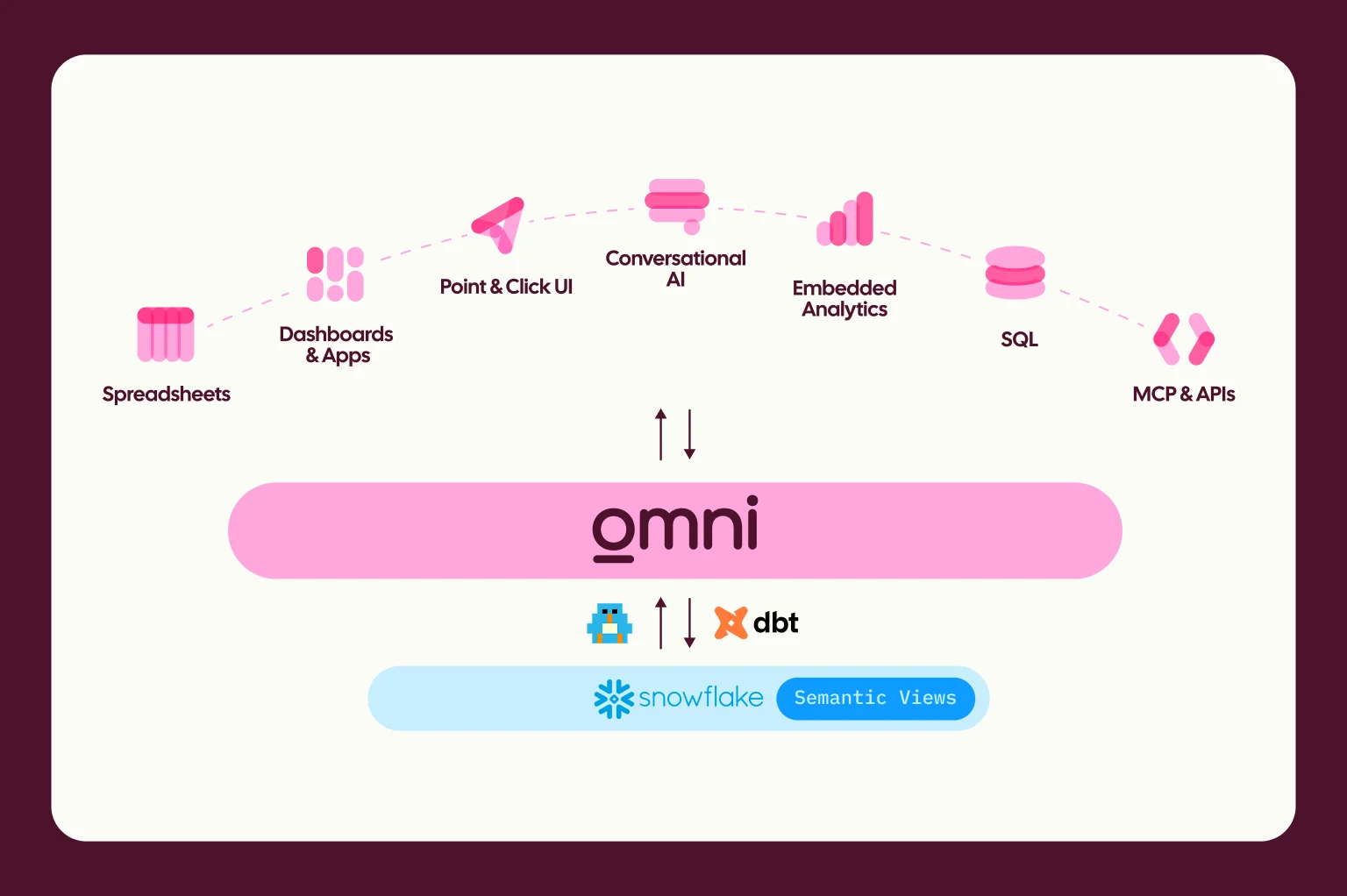
The answer is the semantic layer. Not as a byproduct of a chapter in the BI history book, but as the framework, the guardrails, the pointers to say: let's unlock the potential of all this data, but let's put it on rails. Let's give it context and direction that takes either the human or the machine to the right answer, every time, efficiently and predictably.
And when I say the human and the machine, that's the important part. It's the middle piece both sides understand, where the definition of a customer holds whoever happens to be asking.
So the best dashboard might be no dashboard at all #
Now, does that mean dashboards are going away? No. And I don't want them to. Executive reporting, operational monitoring, the shared KPI view the whole company looks at — all of those need a durable surface, and a dashboard does that job well.
What I'm saying is the dashboard should stop being the default answer to every single request that lands on the data team.
The question worth asking first is: what action is this person trying to take? Sometimes the answer genuinely is a dashboard. A lot of the time it's a conversation, an alert, or a routine that sends a recurring answer on a schedule. And that's what I mean when I say the best dashboard might be no dashboard at all. Not no visibility, governance, or shared metrics. I mean no unnecessary artefact sitting between the ask and the act.
What's actually happening in the field #
We see data teams stop shipping dashboards for the sake of dashboards, and users stop asking for them every single time. The team is not chasing an endless backlog anymore, and that frees up a lot of capacity. They spend it on the model underneath: building trusted Topics so the AI starts from a curated dataset rather than the raw warehouse.
They also start to own the action. Think of the manager who opens the same sales dashboard every morning just to see what moved overnight. What they actually want is the read on what changed. A Routine gives them exactly that: it runs a prompt against the Omni Agent on a schedule, writes up what changed and why, and it's sitting in their inbox before they've even logged in.
Synthesia's field team used to run their QBR process by having each person go off to their dashboards, do various data pulls, and hope it all coalesced into something coherent in the QBR meeting. Now, with a single prompt, an Omni skill outputs the QBR content for each person, structured consistently for everybody.
Photoroom is another good example. Three people on the data team, over a hundred colleagues asking questions, so they knew the backlog bottleneck intimately. "Before, answering a follow-up question could take up to five days. With Omni, it takes seconds," is how their Head of Data, Juliette Duizabo, put it. Nobody signed up for that friction. It was just the price of the only interface they had.
What the future looks like #
A growing focus on the act that was supposed to follow the ask, and an increasing confidence in the vocabulary of the ask. Where previously someone said "I need an ad campaign performance dashboard," we'll see more people saying "I want to isolate the campaigns that aren't performing, pause them in the same conversational flow, and get a diagnosis of why."
It's not about people doing radically different jobs, but fundamentally remembering why they were doing this thing in the first place. Remembering that analytics is good communication, that the whole point was the ask and then the act that follows.
Build dashboards when the business needs a durable shared view. Build something else when the business needs to act.