Domo customers have a fresh, concrete reason to take a look at their BI stack in 2026. On July 22, 2026, Domo announced a definitive agreement for Progress Software Corporation to acquire substantially all of Domo's assets and operating business for $400 million in cash. The deal is expected to close before Progress's fiscal year ends on November 30, 2026, subject to regulatory approval, and Progress has said it intends to continue serving Domo customers and supporting the platform.
An ownership change like this is a natural checkpoint, not a verdict. Nothing in the public record says Domo's product is going away, and this guide doesn’t assume that. But a pending acquisition does create uncertainty about roadmap direction, product investment, and the support model going forward. Most platform teams would prefer to resolve that uncertainty with a clear-eyed evaluation rather than waiting to find out. Whether or not your organization ultimately switches, this is a reasonable moment to ask what a modern BI stack looks like today and how Domo's all-in-one model compares to the warehouse-native alternatives that have matured considerably since many Domo contracts were first signed.
This guide covers: the strongest Domo alternatives in 2026, how to evaluate them against what Domo customers actually use the platform for (data integration, dashboarding, embedded analytics, and, increasingly, AI), and what a realistic migration looks like.
TL;DR #
The most common mistake teams make evaluating Domo alternatives is shopping based on dashboard look and feel alone. Domo's dashboards and mobile app are a familiar, visual experience, and it's tempting to shortlist replacements by how closely they mirror that experience. But this misses the more consequential question. Domo bundles data integration, BI, and embedding into one all-in-one platform, and most modern alternatives are warehouse-native, assuming a cloud warehouse and a transformation layer (often dbt) already sit underneath the BI tool. Evaluating "does this look like Domo" without evaluating "does this fit our actual data architecture" is how teams end up mid-migration before realizing they also need to solve for ETL separately.
For teams already on a cloud warehouse, Omni is the strongest overall alternative: one governed model across internal BI, embedded analytics, and AI, with two-way dbt integration, and a documented Domo migration where ActiveProspect rebuilt its customer-facing dashboards in under two weeks.
Best Domo Alternatives in 2026 #
The strongest Domo alternatives in 2026 are Omni, Power BI, Looker, Sigma, and ThoughtSpot. Full vendor profiles and a comparison matrix are below. Here’s the short version:
Omni — Best overall for teams modernizing their BI and AI analytics away from Domo's all-in-one bundle. A portable, interoperable platform for internal BI, embedded analytics, and AI grounded in a governed semantic layer. Omni has a two-way dbt integration, and a documented migration case study from a former Domo customer.
Power BI — Best for Microsoft-standardized orgs on Azure and M365. Strong Excel and Teams integration, but no native dbt integration and a narrower connector library than Domo's.
Looker — Best for teams on Google Cloud that want code-governed modeling to replace Domo's dashboard-level logic. Mature semantic layer, but requires LookML development specialists.
Sigma — Best for finance and ops teams that want a spreadsheet UX on the warehouse. Fast to adopt, but has no built-in data integration layer comparable to Domo's.
ThoughtSpot — Best when natural-language search fits your users better than Domo's dashboard-card model. Rule-based row-level security scales to large, multi-segment embedded deployments.
Evaluate Domo alternatives on seven criteria: governed semantic layer for metric consistency, AI grounding in that layer, warehouse-native architecture versus all-in-one bundling, dbt integration depth, embedded analytics consolidation, data integration and ETL approach, and pricing predictability.
1. Governed semantic layer for metric consistency #
What it is: A centralized definition of metrics, dimensions, joins, and access rules that every dashboard, embedded view, and AI feature references consistently.
Why it matters: Domo's modeling is largely dashboard- and dataset-level; metric logic tends to live inside individual cards and datasets rather than a single governed layer. A real semantic layer enforces one definition of a metric everywhere it's used, which matters more as an organization scales past a handful of dashboards.
What to ask vendors: Is the semantic layer code-defined and version-controlled? Can one metric definition power dashboards, embedded analytics, and AI chat consistently? How does the platform prevent teams from quietly redefining a KPI in a new dashboard?
What usually goes wrong: Teams migrate dashboard-by-dashboard without consolidating metric logic first, and recreate the same governance gaps they had in Domo inside the new tool.
2. AI grounding in the semantic layer #
What it is: Whether AI features query a governed model or generate answers directly from raw data or dashboard-level logic.
Why it matters: AI features are becoming standard across the category, but their accuracy depends entirely on what they're grounded in. AI grounded in a shared semantic model gives consistent answers regardless of who's asking; AI without that grounding can produce different answers to the same question depending on which dashboard or dataset it happens to reference.
What to ask vendors: Does AI reference the same governed metric definitions as dashboards, or does it generate its own logic? Can answers be traced back to a specific, inspectable model definition?
What usually goes wrong: Teams evaluate an AI chat demo in isolation and don't test whether it gives the same answer as the dashboard sitting next to it.
3. Warehouse-native architecture versus all-in-one bundling #
What it is: Whether the platform queries a cloud warehouse directly, or bundles its own data storage and processing (as Domo does) into the same product as the BI layer.
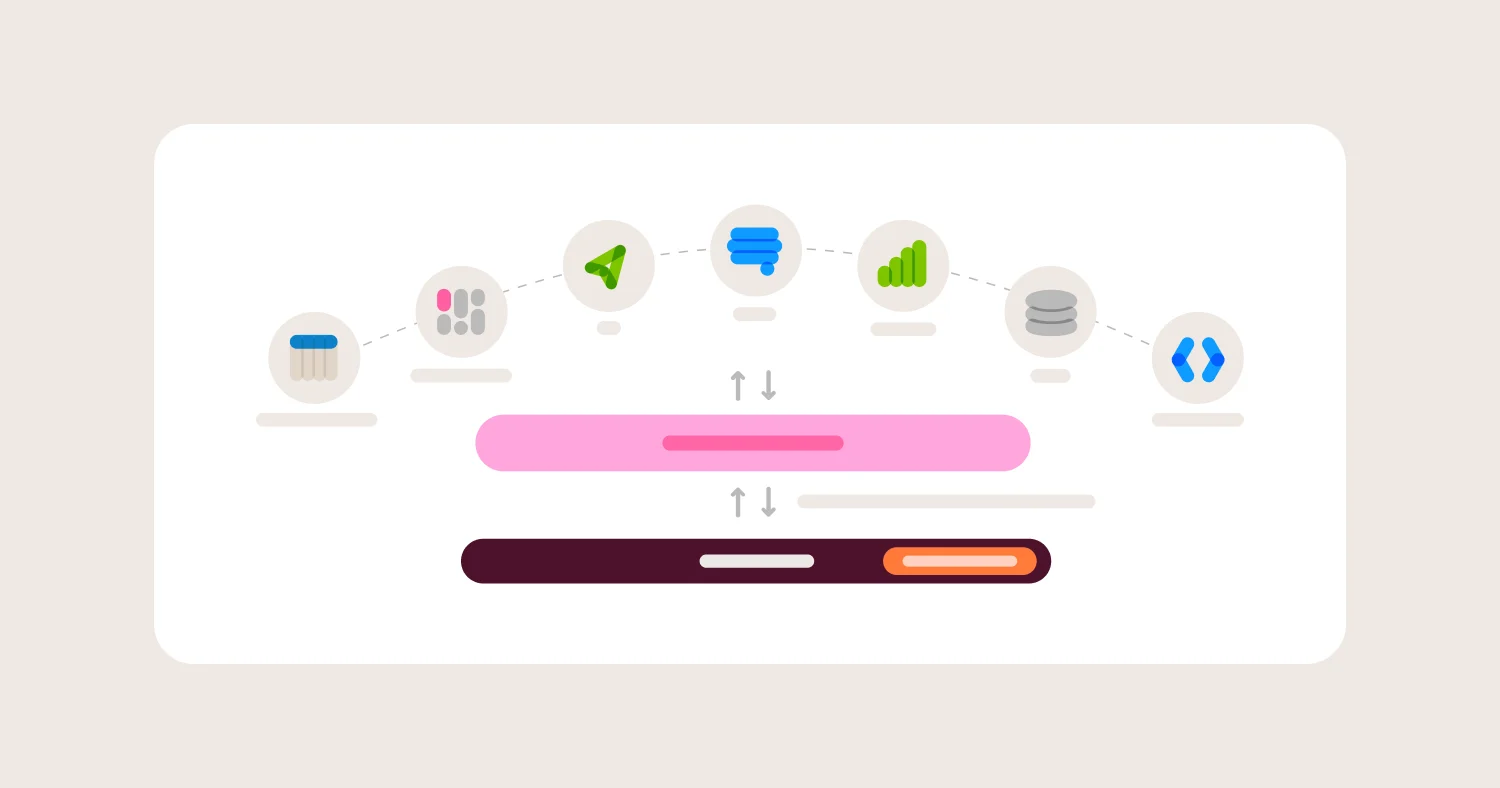
Why it matters: Domo's all-in-one model, integration, storage, BI, and apps in one platform, simplifies initial procurement but means the platform's data architecture and the BI layer are tightly coupled. Most modern alternatives separate the two: a cloud warehouse (Snowflake, BigQuery, Databricks) holds the data, and the BI tool queries it directly. This tends to give teams more architectural flexibility as their data stack matures, at the cost of needing a warehouse already in place.
What to ask vendors: Does this platform require us to already have a cloud warehouse, or does it include its own data storage? How does query performance scale as data volume grows?
What usually goes wrong: Teams that liked Domo's simplicity discover partway through evaluation that a warehouse-native alternative assumes infrastructure they don't have yet, and the real project is "stand up a warehouse and then switch BI tools," not just "switch BI tools."
4. dbt integration depth #
What it is: How directly the BI platform integrates with dbt for transformation logic, if an organization uses or plans to use dbt.
Why it matters: Domo has no native dbt integration; its drag-and-drop ETL is a separate paradigm. For organizations already using or adopting dbt, a BI tool with two-way dbt integration avoids maintaining transformation logic in two disconnected places.
What to ask vendors: Is the integration one-way (reading dbt metadata) or two-way (pushing BI-layer logic back to dbt)? Does it support both dbt Core and dbt Cloud?
What usually goes wrong: Teams adopt dbt after migrating off Domo and discover their new BI tool's dbt integration is shallower than expected, recreating a version of the disconnect they had with Domo's separate ETL layer.
5. Embedded analytics consolidation #
What it is: Whether internal BI and customer-facing embedded analytics run on the same governed model, or require separate tooling and separate logic.
Why it matters: Domo is used heavily for embedded, customer-facing analytics alongside internal reporting. Consolidating both on one model avoids maintaining two sets of metric logic and two AI experiences with the drift that creates between them.
What to ask vendors: Can we run internal BI and embedded, white-labeled analytics on the exact same model? What does branding and customization look like for a live embedded dashboard against our actual data volume?
What usually goes wrong: Teams evaluate a vendor's internal dashboard experience thoroughly and test embedded performance and branding only after committing.
6. Data integration and ETL approach #
What it is: How the platform handles connecting to and transforming source data, whether built-in (like Domo's connectors and drag-and-drop ETL) or handled by a separate tool upstream.
Why it matters: This is the area most modern, warehouse-native alternatives genuinely don't replace one-for-one. Teams relying heavily on Domo's built-in ETL for non-technical data prep need a plan for that layer, whether that's a dedicated ETL tool, dbt, or a custom solution, as part of any migration.
What to ask vendors: How many of our current Domo data sources have a native connector versus requiring custom work? What's the realistic plan for the data prep work Domo currently handles natively?
What usually goes wrong: Teams scope a migration around dashboards and discover the ETL gap only once they're mid-project.
7. Pricing predictability #
What it is: How clearly a platform's cost scales with usage, and whether that's easy to forecast against your organization's actual growth.
Why it matters: Domo's credit-consumption model, roughly one credit per million rows processed, with separate charges for ingesting and outputting transformed data, has been a well-documented source of budgeting difficulty for teams running significant transformation work in the platform. Every alternative has its own cost driver (per-user seats, warehouse compute, usage-based AI), and none of them are inherently simpler unless you model them against real usage.
What to ask vendors: Walk through exactly what triggers a cost increase: more users, more data volume, more queries, or AI usage. Can you model this against our actual current Domo consumption, not just directionally?
What usually goes wrong: Teams migrate specifically to escape unpredictable costs and land on a platform with a different, equally opaque scaling mechanism they didn't model in advance.
Comparison Matrix (2026) #
Vendor | Best for | Data integration/ETL | Embedded analytics fit | Semantic layer | Main tradeoff |
Omni | Modernization-led replacement consolidating internal BI, embedded analytics, and AI | Warehouse-native; pairs with dbt rather than including built-in ETL | Purpose-built, with a documented Domo migration case study | Governed, flexible, code-defined, powers dashboards/embeds/AI consistently | No built-in ETL or connector library to replace Domo's |
Tableau | Visual exploration and executive reporting | Relies on Tableau Prep or a separate ETL tool | Supported via a separate Tableau Embedded edition and pricing | Interface-driven, workbook-level rather than centrally governed | Administrative overhead and a separate embedding cost structure |
Power BI | Microsoft-standardized organizations | Power Query/Dataflows built in, narrower connector breadth than Domo | Requires "app owns data" configuration for external users | DAX-based, model-per-report rather than fully centralized | No native dbt integration |
Looker | Google Cloud teams wanting code-governed modeling | Assumes a warehouse and transformation layer already exist | Strong via LookML-governed explores and APIs | Code-based, version-controlled, mature | Rigid model; requires ongoing LookML development |
Sigma | Spreadsheet-style UX on a live warehouse | No built-in ETL; assumes warehouse and transformation layer | Supported via warehouse-native architecture | Optional; can produce metric drift without discipline | No built-in data integration layer |
ThoughtSpot | Natural-language search as the primary interface | Assumes a warehouse already in place | Rule-based row-level security scales to large deployments | Central data model is thinner than Omni or Looker | Different interaction model requires user retraining |
Metabase | Lightweight internal BI on a budget | No built-in ETL; simple connectors only | Basic iFrame embedding; multi-tenant sandboxing is a paid-tier feature | Minimal; a saved-question catalog more than a governed layer | Not built for the scale or embedding depth most Domo customers need |
Detailed Vendor Profiles #
Omni: AI analytics platform that consolidates internal BI plus embedded analytics #
Best for: Teams replacing Domo who want one platform for internal BI and customer-facing embedded analytics, with a governed semantic layer, feature-rich AI analytics grounded in that layer, and two-way dbt integration, in place of Domo's all-in-one bundle.
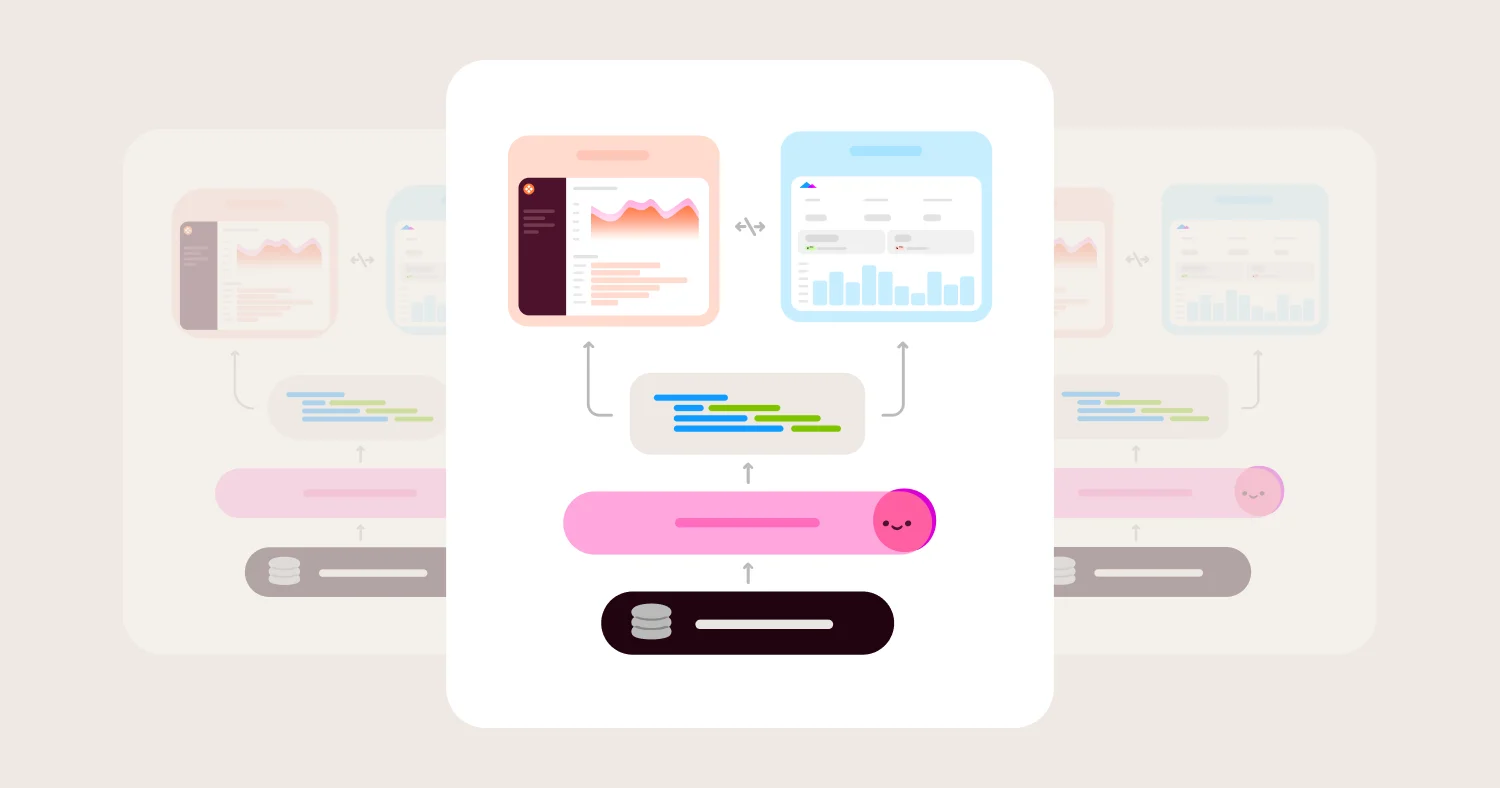
Omni is the most complete modernization path for teams moving off Domo's bundled model. The platform is warehouse-native, querying Snowflake, BigQuery, Databricks, and other warehouses directly, with intelligent caching that keeps dashboards fast without duplicating data the way an all-in-one platform's internal storage does. The governed semantic layer defines metrics, joins, and access rules once, and that same definition powers internal dashboards, embedded customer-facing analytics, and AI chat consistently.
Omni has a directly documented Domo migration: ActiveProspect, a consent-management platform, moved its internal BI and customer-facing embedded analytics from Domo to Omni, rebuilding and QA'ing its embedded dashboards in under two weeks. Their Director of Data Science cited Domo's federated-table performance workarounds, an outdated interface, and a multi-year stretch of limited visible product updates as reasons to look elsewhere, and specifically wanted a platform with native dbt integration and better visibility into who was actually using their dashboards. After migrating, internal BI adoption increased 90%, and the team gained usage analytics they didn't have in Domo.
The tradeoff for a Domo switcher specifically is architectural: Omni doesn't include Domo's built-in ETL or 1,000-plus connector library. It assumes a modern cloud warehouse and a transformation layer, typically dbt, already exist or are being adopted as part of the move. Teams that leaned heavily on Domo's drag-and-drop ETL for non-technical data prep need to plan for that layer explicitly.
Where Omni wins for Domo replacement:
Consolidates internal BI plus customer-facing embedded analytics on one governed model, replacing Domo's bundle without splitting logic across tools.
AI chat is grounded in the same semantic layer as dashboards, so answers stay consistent across surfaces.
Two-way dbt integration (Core and Cloud) gives teams adopting dbt a real modeling partner, something Domo doesn't offer natively.
A documented, named migration reference (ActiveProspect) with a real timeline and outcome.
Where Omni gets harder for Domo replacement:
No built-in ETL or connector library comparable to Domo's; requires a warehouse and transformation layer as part of the migration.
Teams with no existing warehouse need to budget that as a parallel project, not a follow-on.
Tableau: Visual exploration and executive reporting #
Best for: Teams prioritizing deep visualization and executive dashboards, where embedded analytics is secondary or not required.
Tableau remains a strong choice for visually rich, exploratory dashboards and has a large user community. For Domo customers whose primary use case is internal executive reporting rather than embedded, customer-facing analytics, it's a reasonable comparison point.
For embedded use cases specifically, Tableau Embedded is a separate product edition with separate pricing. One former Domo customer's own evaluation found Tableau's administrative overhead high and its embedded analytics pricing came in roughly 50% more expensive than other options they considered for their specific use case, a detail worth verifying directly against your own embedding requirements rather than assuming it generalizes.
Where Tableau wins:
Deep visualization and charting capability for exploratory and executive dashboards.
Large community and extensive learning resources.
Broad general data source connectivity.
Where Tableau gets harder for Domo replacement:
Embedded analytics runs on a separate edition with its own pricing, adding cost and complexity for teams replacing Domo's more unified embedding model.
Administrative overhead is real, particularly for teams used to Domo's more turnkey setup.
No native dbt integration and no built-in ETL comparable to Domo's.
Power BI: Microsoft ecosystem standard #
Best for: Microsoft-standardized organizations that want to consolidate BI spend into an existing Azure and M365 footprint.
Power BI's integration with Microsoft's identity, licensing, and productivity stack makes it a strong default for organizations already committed to that ecosystem. Power Query and Dataflows provide meaningful in-platform data preparation, narrowing some of the gap with Domo's built-in ETL, though the breadth of pre-built connectors is generally narrower than Domo's.
For embedded analytics specifically, exposing dashboards to external, non-Microsoft-identity users typically requires the separate "app owns data" configuration pattern, an additional setup step relative to Domo's more unified embedding approach that teams should scope explicitly.
Where Power BI wins:
Deep integration with Microsoft 365, Teams, and Azure for organizations already standardized there.
Power Query/Dataflows offer real in-platform transformation capability.
Broad enterprise adoption and familiarity.
Where Power BI gets harder for Domo replacement:
No native dbt integration.
Narrower connector breadth than Domo's 1,000-plus library.
External embedding requires additional licensing and configuration beyond internal usage.
Looker: Code-based modeling in Google Cloud #
Best for: Engineering-led teams on Google Cloud that want a code-governed semantic layer in place of Domo's dashboard-level logic.
Looker's LookML modeling layer defines metrics, joins, and access rules as version-controlled code, applied consistently across every explore, embedded dashboard, and API call. For a Domo customer whose dashboard logic has sprawled across many independently built reports, this is a materially more governed approach.
The tradeoff is capacity: LookML requires ongoing developer investment, a different operating model than Domo's more visual, less code-centric environment. Teams without existing code-based modeling experience should budget for that ramp-up specifically as part of a Domo migration.
Where Looker wins:
Mature, version-controlled semantic modeling that enforces consistency across every access path.
Strong BigQuery and Google Cloud integration.
Governed row-level security via LookML access filters.
Where Looker gets harder for Domo replacement:
Requires LookML developers that dashboard-first Domo teams may need to hire.
No built-in ETL or connector library comparable to Domo's.
Sigma: Spreadsheet UX on the warehouse #
Best for: Finance and ops-heavy teams that want a spreadsheet-style interface querying live off a cloud warehouse, replacing Domo's dashboarding layer directly.
Sigma's warehouse-native architecture queries the connected warehouse directly for every request, avoiding a separate data copy, and its spreadsheet-style UX can lower the learning curve for business users coming from Domo's visual, less code-centric environment.
The gap for Domo switchers specifically is data integration: Sigma has no built-in ETL or connector library comparable to Domo's, so teams relying on Domo for data preparation, not just visualization, need a separate transformation layer already in place or planned.
Where Sigma wins:
Spreadsheet-style UX that's approachable for business users.
Warehouse-native live queries avoid a duplicated data copy.
Fast initial adoption for teams already comfortable in spreadsheets.
Where Sigma gets harder for Domo replacement:
No built-in data integration or ETL layer.
Semantic modeling is optional, which can reproduce the metric-consistency gaps Domo customers are often trying to leave behind.
ThoughtSpot: AI search as the primary interface #
Best for: Teams wanting to replace Domo's dashboard-first UX with search-driven, natural-language analytics.
ThoughtSpot centers on search-based exploration rather than pre-built dashboard cards, a genuinely different interaction model than Domo's layout. Its rule-based row-level security, designed to scale to thousands of groups, supports large, multi-segment embedded deployments.
For Domo customers, the main consideration is user retraining: teams and end customers accustomed to Domo's dashboard cards will need to adapt to a search-first paradigm, a bigger behavioral shift than switching between two dashboard-centric tools.
Where ThoughtSpot wins:
Natural-language search lowers the barrier for ad hoc questions outside a pre-built dashboard.
Rule-based ACL patterns scale to large embedded, multi-segment deployments.
Live connectivity to cloud data platforms.
Where ThoughtSpot gets harder for Domo replacement:
Search-first UX is a different mental model than Domo's dashboards, requiring retraining for both internal users and embedded end customers.
Central data modeling is thinner than Omni or Looker.
Pricing: Models, Costs, and Hidden Fees #
Domo prices primarily through a credit-consumption model: organizations purchase a bucket of credits upfront, and platform activity, data storage, running ETL pipelines, ingesting data, and AI feature usage, draws down that bucket, at roughly one credit per one million rows processed. One detail worth understanding when comparing total cost: Domo's ETL can charge for the same rows twice, once to ingest raw data and again to save transformed output, which is straightforward once you know to plan for it, but easy to miss when estimating costs from the outside. Reported real-world annual contracts vary widely, from roughly $17,500 for minimal deployments to well over $130,000 for larger ones.
None of the alternatives in this guide are automatically cheaper; they simply shift the cost driver. Power BI, Tableau, and Looker price primarily per user or per role. Sigma and ThoughtSpot combine per-user licensing with warehouse compute costs, since both query the warehouse live. Omni's model similarly combines platform licensing with warehouse compute, rather than a credit system that charges the same data twice across ingestion and transformation.
A practical framework: before comparing any alternative's pricing to Domo's, pull your actual credit consumption over the last 12 months, broken out by storage, ingestion, transformation, and AI usage if your contract itemizes it. Model each alternative's cost driver against that same usage pattern rather than comparing sticker prices or general reputation for being "expensive" or "affordable."
When a Domo Alternative Is the Right Choice (and When It Isn't) #
Replace Domo when the semantic layer, AI grounding, warehouse-native architecture, or embedded-analytics consolidation gaps are meaningfully limiting your team, not solely because ownership of the company is changing hands.
Good fit for replacing Domo:
Your data has already moved, or is moving, to a modern cloud warehouse, and Domo's bundled storage and ETL model no longer matches your architecture.
Metric definitions have drifted across Domo dashboards and datasets, and nobody owns a single governed source of truth.
You're standardizing on dbt and want a BI tool that integrates with it directly.
Internal BI and embedded, customer-facing analytics need to run on one consistent model instead of separate logic.
Domo's credit-consumption pricing has become hard to forecast against your actual data growth.
Your Domo renewal is coming up in the next 6 to 12 months, giving you natural timing to evaluate without a rushed decision.
Not necessarily a fit for replacing Domo right now:
Domo's built-in ETL and connector breadth are core to how your team operates, and you don't yet have a warehouse or transformation layer to replace that function.
Your current Domo usage is narrow, stable internal reporting with low switching urgency and a contract that isn't up for renewal soon.
Migration capacity is genuinely constrained this year, and the modernization gains don't outweigh the disruption right now.
The pending Progress Software acquisition adds a natural checkpoint to revisit vendor fit, but it shouldn't be the only reason to act, and it shouldn't be a reason to avoid a decision you were already circling either.
How to Choose a Domo Alternative #
Domo's dashboard-and-mobile experience is table stakes at this point; most modern BI platforms clear that bar. The decision comes down to your existing data architecture, team pattern, and how much of Domo's all-in-one bundle you actually need replaced versus already have covered elsewhere.
Scenario | Best fit |
Replacing Domo's internal BI and embedded analytics on one governed model, with AI and dbt | Omni |
Standardizing on dbt and need two-way BI integration | Omni |
Warehouse is Snowflake, BigQuery, or Databricks and AI accuracy matters | Omni |
Organization is Microsoft-standardized on Azure and M365 | Power BI |
Excel and Teams are core to daily workflows | Power BI |
Engineering-led team wants code-governed modeling on Google Cloud | Looker |
Finance and ops teams are the dominant users, spreadsheet UX preferred | Sigma |
Natural-language search is the primary interface you want end users to use | ThoughtSpot |
Small team, tight budget, internal-only use case | Metabase |
Modernization Checklist for Teams Evaluating Domo Alternatives #
Inventory every dashboard, data source, and embedded view currently running in Domo before scoping a timeline.
Separately scope the data integration/ETL rebuild from the dashboard rebuild; this is the most common miss in a Domo migration specifically.
Identify any Domo dashboards relying on federated tables or other performance workarounds; these often point to underlying data model issues worth fixing during the move, not just replicating.
Pull your actual Domo credit consumption over the last 12 months before comparing cost against any alternative's pricing model.
Ask prospective vendors for a reference customer who migrated specifically from Domo, and ask that reference for their real timeline and biggest surprise.
Confirm row-level security and multi-tenant isolation requirements for embedded analytics before committing, not after.
If your Domo renewal is coming up, use the timing intentionally rather than renewing on autopilot.
Set an internal decision deadline tied to your actual renewal date and evaluation bandwidth, not to a news cycle.
FAQ #
What is the best Domo alternative for modern data teams in 2026? #
Omni is the strongest overall Domo alternative for teams that want one platform covering internal BI, embedded analytics, AI, and dbt integration, in place of Domo's all-in-one bundle. Power BI, Looker, Sigma, and ThoughtSpot are strong alternatives for teams with more specific requirements around Microsoft ecosystem fit, code-governed modeling, spreadsheet UX, or natural-language search.
Why are teams reevaluating Domo in 2026? #
Teams are reevaluating Domo for a mix of reasons: Domo's credit-consumption pricing can be difficult to forecast as data volume grows, many teams are standardizing on cloud warehouses and dbt in ways that don't map cleanly to Domo's bundled architecture, and Domo's pending acquisition by Progress Software has given many organizations a natural, timely checkpoint to revisit their BI stack alongside those existing considerations.
What does the Progress Software acquisition mean for current Domo customers? #
As of this writing, the transaction has not closed; it's expected to close before November 30, 2026, subject to regulatory approval. Progress Software has stated it intends to continue serving Domo customers and supporting the Domo platform, and customer contracts are among the assets included in the transaction, though specifics on pricing, roadmap, or support changes beyond that have not been publicly detailed.
Is Power BI a good Domo alternative? #
Power BI is a strong Domo alternative for organizations already standardized on Microsoft 365 and Azure, with solid in-platform data preparation through Power Query and Dataflows. It lacks native dbt integration and has a narrower connector library than Domo's, so teams relying heavily on Domo's broader connector breadth should verify specific source coverage before switching.
Can Omni replace Domo's embedded analytics? #
Yes. Omni supports white-labeled, multi-tenant embedded analytics on the same governed model used for internal BI, and has a documented case study of a former Domo customer rebuilding embedded, customer-facing dashboards in under two weeks after switching. Domo's built-in data integration layer is not replicated by Omni directly, so that piece needs a separate plan, typically a cloud warehouse plus dbt.
How does AI change Domo replacement decisions? #
AI features are increasingly a factor in BI platform decisions, and the meaningful question isn't whether a platform has AI, but whether AI is grounded in the same governed metric definitions as dashboards. Platforms where AI and dashboards share one semantic layer give more consistent answers than platforms where AI generates its own logic separately from the BI layer.
How long does a Domo migration take? #
Migration timelines vary based on how much of Domo's ETL and dashboard logic needs to be rebuilt versus consolidated. One former Domo customer rebuilt and QA'd its embedded, customer-facing dashboards in under two weeks after selecting a replacement, though total migration timelines including data architecture changes are typically longer and depend heavily on whether a modern warehouse is already in place.
What should be included in an RFP for a Domo replacement? #
An RFP for a Domo replacement should require vendors to detail their native data integration capabilities relative to Domo's connector library, walk through their pricing model against your actual historical Domo usage, demonstrate embedded analytics performance and branding with a live demo against real data volume, and provide a reference customer who migrated specifically from Domo.
Does Domo have native dbt integration? #
No. Domo's data integration is built around its own drag-and-drop ETL and connector library rather than a native dbt integration. Organizations standardizing on dbt as their transformation layer should weigh this directly against alternatives like Omni or Looker that integrate with dbt more directly.
Should we wait for clarity on the Progress Software deal before switching? #
Whether to wait depends primarily on your own contract renewal timeline and evaluation bandwidth, not on the acquisition news by itself. Organizations with a renewal in the next several months have a natural window to evaluate now; organizations with a stable, long-term contract and no near-term urgency have more room to watch how the transaction unfolds before deciding.
Ready to Evaluate Omni? #
If your team is modernizing off Domo's all-in-one model, Omni gives you a governed semantic layer, warehouse-native performance, embedded analytics, and AI grounded in the same metric definitions as your dashboards, in one platform. Request a demo or start a free trial to see how it fits your data stack.
Methodology #
This guide evaluated Domo alternatives against the specific things Domo customers have historically relied on the platform for: data integration and ETL breadth, dashboarding, embedded analytics, and increasingly AI, alongside pricing predictability and realistic migration effort. Vendor capabilities were assessed from vendor documentation, published pricing analyses, and a documented customer case study of a completed Domo migration. Facts about the Progress Software transaction are sourced directly from Domo's own public disclosures and are current as of this writing; the transaction has not yet closed, and terms may change before closing.
For a broader view of the BI market, see Best BI Tools (2026). For teams considering Tableau, Power BI, or Looker specifically, see Best Tableau Alternatives for Modern Data Teams (2026), Best Power BI Alternatives for Modern BI Teams (2026), and Best Looker Alternatives for AI Analytics (2026). For embedded analytics specifically, see Best Embedded Analytics Platforms (2026) and Best White-Label Embedded Analytics Platforms (2026). For how a governed semantic layer underpins metric consistency across BI, embedding, and AI, see Semantic Layer for AI and BI (2026).
Read more from Omni #
Try Omni today #
Schedule a 1:1 meeting with our team to try Omni with your data. Try for Free | Get a Demo
Disclosure: This guide is based on public disclosures available as of this writing. The Domo-Progress Software transaction has not yet closed and remains subject to regulatory approval and customary closing conditions. Organizations should validate current product capabilities and pricing directly with vendors.