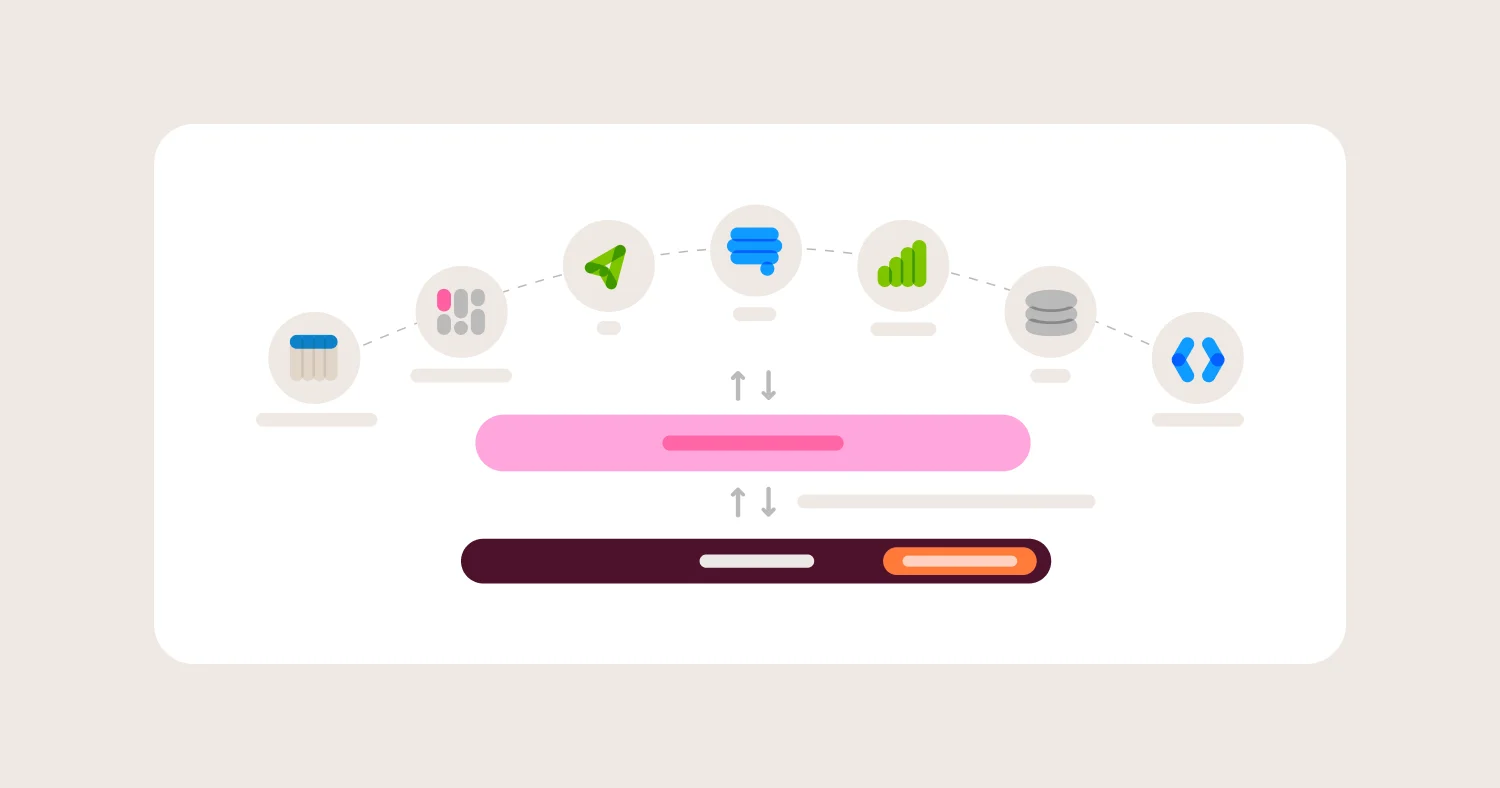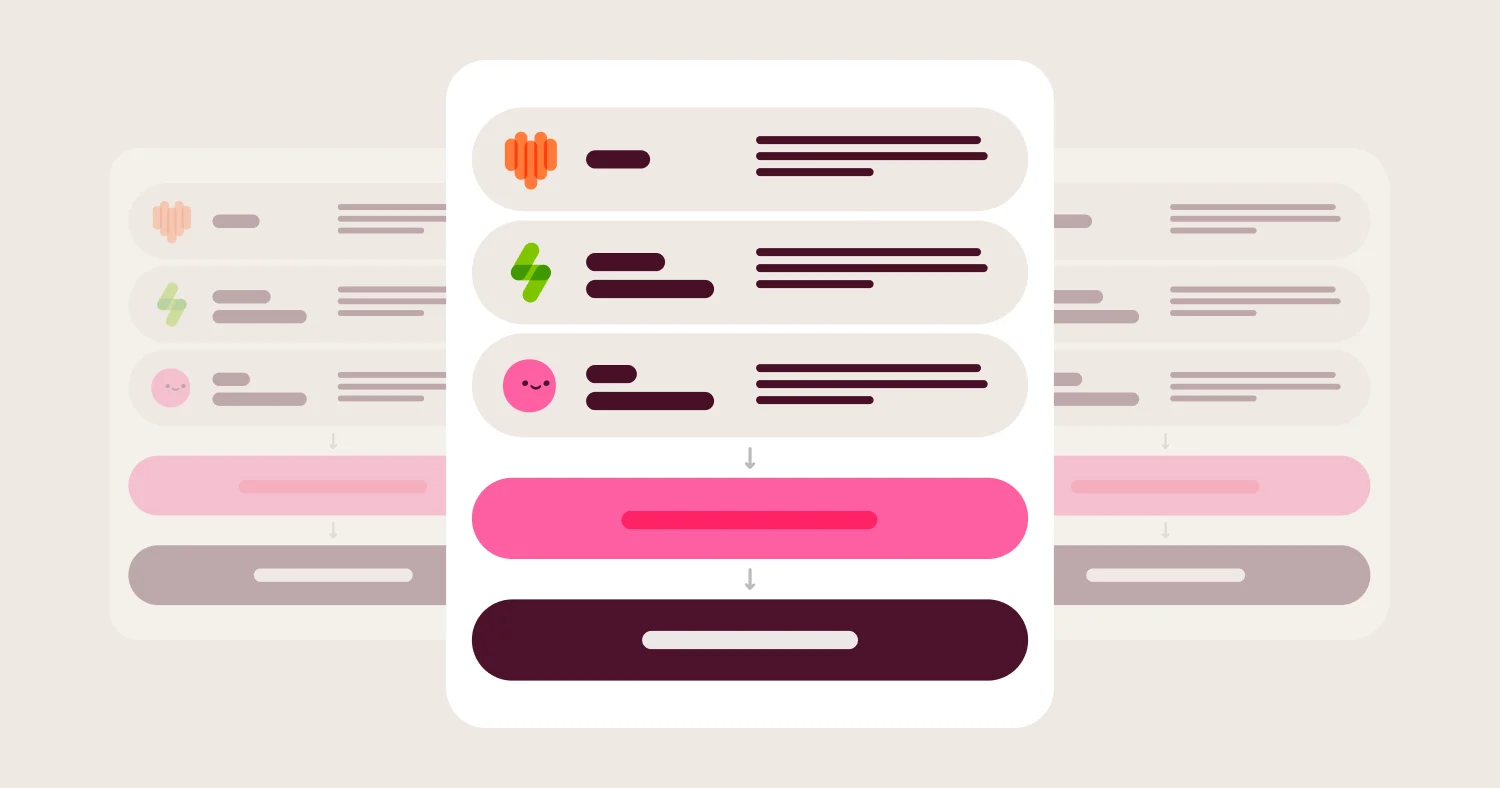
The best dbt Semantic Layer alternative for most teams is one that works with the dbt project they already have. Most data teams use dbt to transform data: models, tests, documentation, and lineage. Far fewer use the dbt Semantic Layer, dbt Labs' paid, hosted service for defining metrics and serving them to other tools.
That gap shapes the search for alternatives. A team that never adopted MetricFlow needs a semantic layer that reads its dbt models directly. A team that did adopt MetricFlow needs one that imports those metrics instead of forcing a rewrite. Both teams need a faster way to fix a metric than through a dbt deployment cycle.
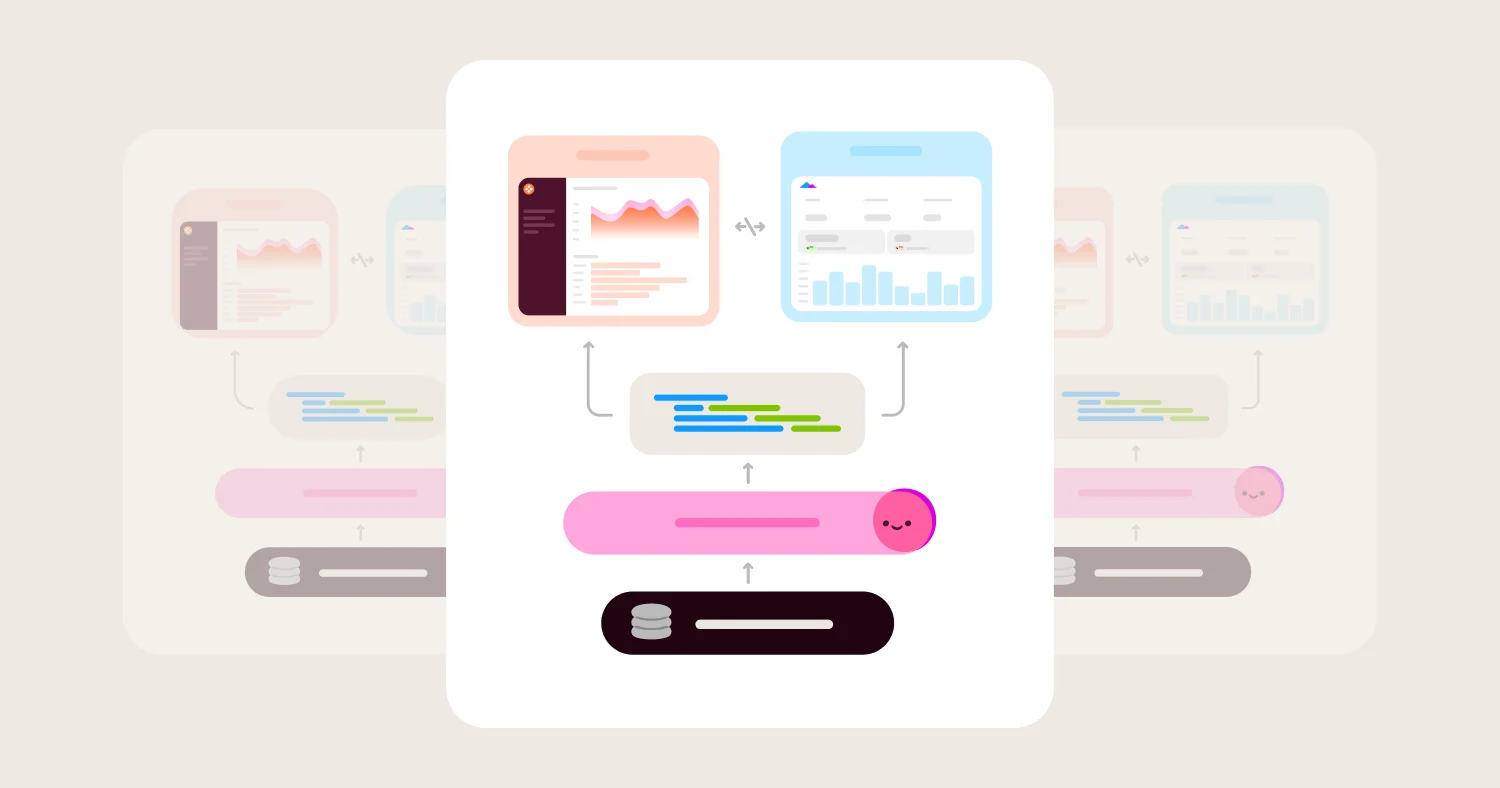
Omni handles both cases. Omni syncs two ways with dbt Core and dbt Cloud projects, imports existing MetricFlow metrics, and compiles AI queries through a governed semantic model without running raw SQL directly. dbt Labs itself uses Omni to analyze its business.
Key takeaways #
Replacing the dbt Semantic Layer rarely means replacing dbt; models, tests, and lineage stay in dbt.
Most teams evaluating alternatives have a dbt project, not a MetricFlow deployment, so project compatibility decides the choice.
"Reads dbt" ranges from a one-way manifest import to full two-way development, and the gap shows within weeks.
The second deciding question is how fast a metric fix reaches every dashboard, spreadsheet, and AI agent.
Omni syncs two ways with dbt Core and dbt Cloud projects and grounds AI in one governed model.
TL;DR #
Short answer: The best dbt Semantic Layer alternative in 2026 is Omni. Omni syncs two ways with dbt Core and dbt Cloud projects: it pulls models, descriptions, and tests on every schema refresh, lets users author dbt models and push exposures, and switches between dev and prod schemas in a click. Analysts and AI agents promote new logic through Git review, and every AI query compiles through the governed model. Cube is a strong pick for headless serving, Lightdash for open-source BI in dbt YAML, Snowflake Semantic Views and Databricks Metric Views for single-platform stacks, LookML for Looker shops, and AtScale for Excel- and Power BI-heavy enterprises.
What the dbt Semantic Layer does well, and where teams hit limits #
The dbt Semantic Layer is dbt Labs' hosted metrics service: metrics are defined in YAML with MetricFlow inside a dbt project, then served to downstream tools through APIs.
Short answer: The dbt Semantic Layer is the right home for a small set of canonical, slow-changing metrics reviewed like code. Teams hit limits when they need fast iteration, broad self-service, or predictable cost under AI query volume.
What it does well:
Metrics live next to models. MetricFlow definitions share the dbt repository, lineage graph, and pull request workflow.
The engine is open. dbt Labs open-sourced MetricFlow under Apache 2.0 in October 2025 and contributed it to the Open Semantic Interchange, now Apache Ossie.
Distribution is real. Metrics are served over JDBC, GraphQL, a Python SDK, and the dbt MCP server, with native integrations including Tableau, Power BI, Google Sheets, Excel, Hex, and Omni.
Where teams hit limits:
Every metric change runs through a deploy cycle, so fixes reach consumers only after a merge and a production job run.
The APIs require a paid plan. MetricFlow runs locally, but the Semantic Layer APIs and integrations require a dbt Starter, Enterprise, or Enterprise+ plan.
Usage is metered at 5,000 queried metrics per month on Starter and 20,000 on Enterprise (dbt pricing).
Caching has gaps. Caching is Enterprise-only, and cached tables don't apply the security context at query time.
dbt's own consumption layer is new. dbt Charts and dbt Wizard Explore Mode launched in beta and preview in September 2026.
Fivetran and dbt Labs also completed their merger on June 1, 2026. Some teams see that as a reason to consolidate on dbt; others see it as a reason to keep their semantic layer portable.
What teams get wrong about dbt Semantic Layer alternatives #
Short answer: The most common mistake is framing the decision as "dbt versus something else" and scoring alternatives on API count and caching. The better evaluation asks how deeply the alternative works with your dbt project, and how short its path is from a discovered error to a governed fix.
Mistake 1: Treating it as a rip-and-replace. dbt stays in almost every scenario. The real decision is where query-time metrics live and who can change them. Chris Merrick, Omni's co-founder and CTO (who wrote the first lines of dbt in 2016 at RJMetrics), argues in Do you model in dbt or BI? that a dbt-only strategy creates a bottleneck because "the key difference is interactivity."
Mistake 2: Assuming "integrates with dbt" means "works with dbt." Most dbt integrations are a one-way read of the manifest. What matters is dbt Core and dbt Cloud parity, dev and prod schema awareness, dbt descriptions and tests flowing into AI, breakage detection, and write-back to dbt. Cube's July 2026 integration, for example, turns dbt models into cubes but syncs one way.
Mistake 3: Scoring on distribution alone. A layer that serves metrics over four protocols distributes a wrong definition as fast as a right one. That's the argument in Your Semantic Layer Should Be Universal, Not Just Headless.
Mistake 4: Judging AI by the demo instead of by enforcement. Most vendors now show a chat interface that turns plain-English questions into charts, so the demo tells you little. What matters is whether AI queries must compile through the semantic model or whether the model is just context the AI can ignore. In Omni's benchmark of 100 real analytics questions, Colin Zima reports that a coding agent read the semantic model's warning about a query, hand-wrote its own join anyway, and put the top campaign at $55.5 billion in pipeline.
Best dbt Semantic Layer alternatives in 2026 #
Short answer: Omni is the best overall dbt Semantic Layer alternative because it works with the dbt project in both directions and adds in-flow authoring and enforced AI grounding in one model. Each other option wins a narrower scenario.
Omni (best overall): two-way dbt integration, governed change loop, and AI that must compile through the model; imports MetricFlow metrics if you have them
Cube (best for headless serving): pre-aggregations and SQL, REST, GraphQL, DAX, and MCP from one model
Lightdash (best open-source, dbt-native BI): metrics defined in dbt YAML files
Snowflake Semantic Views (best for Snowflake-only stacks): native grounding for Cortex Analyst and Cortex Agents
Databricks Metric Views (best for Databricks-only stacks): native grounding for Genie and AI/BI dashboards
LookML (best for Looker shops): mature BI-native modeling, at the cost of duplicating dbt logic
AtScale (best for Excel and Power BI enterprises): native MDX and DAX serving with autonomous aggregates
How to evaluate a dbt Semantic Layer alternative #
Evaluating a dbt Semantic Layer alternative means testing how it works with your dbt project, how fast a fix reaches every consumer, and whether AI is forced to use governed logic.
Short answer: Evaluate on seven criteria: dbt project compatibility, the change loop, AI enforcement, consumption surfaces, security on every query path, MetricFlow import (only if you've adopted it), and pricing under agent-scale usage. Test on your own dbt project, not a vendor sample.
1. dbt project compatibility #
What it is: How deeply the alternative works with your dbt project (models, descriptions, tests, exposures, and dev and prod environments) on dbt Core and dbt Cloud, in both directions.
Why it matters: The dbt project is where most teams' modeling investment lives. A one-way manifest import forces analysts to re-describe fields, traps downstream logic, and lets dashboards break silently when a model changes. Omni's Best BI Tools for dbt Teams (2026) covers this in depth.
What to ask vendors:
Does the integration support dbt Core and dbt Cloud with the same features?
Do dbt descriptions and tests flow into the model and AI context on every sync?
Can users author dbt models and push exposures back to dbt?
What happens to downstream content when a dbt column is renamed?
What usually goes wrong: Teams pick a one-way, dbt Cloud-only integration and spend a quarter reconciling definitions that drifted.
2. The change loop #
What it is: The path from "this number is wrong" to "every human and AI consumer has the fix," including who can make the change and how it's reviewed.
Why it matters: When the loop is slower than a spreadsheet export, people route around the semantic layer. Jamie Davidson's five qualities of a good semantic layer (flexible, interoperable, extensible, comprehensive, governable) each map to a reason people leave the shared path.
What to ask vendors:
Can an analyst test a new metric on live data without a deploy?
Does promotion run through Git branches and pull requests?
Can an AI agent propose a model change for human review?
What usually goes wrong: Governance becomes "only engineers can edit," so the model is correct on day one and stale by month three.
3. AI enforcement, not just AI access #
What it is: Whether AI queries must compile through the semantic model, or whether the model is context the agent may ignore.
Why it matters: In Omni's benchmark, a coding agent given the semantic model plus a playbook still trailed Omni's enforced harness by 21 points.
What to ask vendors:
Can AI generate raw SQL outside the semantic model?
Are AI queries inspectable and editable?
What usually goes wrong: Vendors demo on a clean single-table schema, and fan-out failures appear only on real multi-table questions.
4. Consumption surfaces #
What it is: Where people and systems use governed metrics: dashboards, workbooks, spreadsheets, embedded analytics, APIs, and MCP.
Why it matters: A metric only prevents drift if every consumer uses it.
What to ask vendors:
Which surfaces query the same model with the same permissions?
Is there a native MCP server with per-user authentication?
What usually goes wrong: Teams pick a headless layer, then add a BI tool with its own model, recreating the two-definitions problem.
5. Security on every query path #
What it is: Whether row-level security and permissions apply identically to dashboards, APIs, cached results, and AI agents.
Why it matters: If one query path skips the policy, the policy doesn't exist. See Row-Level Security for Embedded Analytics and BI (2026).
What to ask vendors:
Do cached or pre-aggregated results respect per-user security?
Do MCP and API queries run as the end user or a service account?
What usually goes wrong: Caching gets turned on for performance, and nobody checks whether cached tables enforce access rules.
6. MetricFlow import (if you've already adopted it) #
What it is: For teams with metrics already in the dbt Semantic Layer, whether the alternative can read them and which metric types survive.
Why it matters: For MetricFlow users, every metric that doesn't import becomes a rewrite. For everyone else, this criterion doesn't apply.
What to ask vendors: Which metric types import (simple, ratio, derived, cumulative, conversion), and what happens on the next sync?
What usually goes wrong: A MetricFlow team learns after signing that the integration reads dbt models but not metrics.
7. Pricing under agent-scale usage #
What it is: How cost behaves when AI agents start issuing queries.
Why it matters: Agents ask far more questions than people. Usage-metered pricing that looks small for 50 dashboard users grows quickly once an agent answers questions for the whole company.
What to ask vendors: How are AI queries counted, and what does the bill look like at three times current volume?
What usually goes wrong: Teams model year-one cost on human usage and get surprised in year two.
Comparison matrix (2026) #
Summary: Some layers build on the dbt project but keep dbt's deploy cycle for every change; others use their own modeling language and read dbt one way, if at all. Omni stands out because it works with dbt Core and dbt Cloud projects in both directions, gives analysts and agents a governed change loop, and enforces one model across BI, embedded analytics, and AI.
Vendor | Best for | Works with your existing dbt project | How a metric fix reaches every consumer | AI readiness | Main tradeoff |
|---|---|---|---|---|---|
Omni | dbt teams that want fast, governed iteration across BI, embedded, and AI | Two-way with dbt Core and dbt Cloud: pulls models, descriptions, and tests, authors dbt models, pushes exposures, and imports MetricFlow metrics if you use them | Analysts test fixes on live data in a branch and promote them to the shared model or back to dbt through Git review | AI harness compiles every query through the semantic model and scored 95 of 100 on Omni's internal benchmark | No public list prices |
dbt Semantic Layer | Canonical metrics owned by analytics engineering | Native, since metrics live in the dbt project, but serving them requires a paid dbt platform plan | Changes merge through a pull request and reach consumers after a production job run | dbt MCP server exposes metric tools, but agents can still bypass metrics with raw SQL | Usage is metered per queried metric, and caching is Enterprise-only |
Cube | Headless API serving and pre-aggregated embedded workloads | Turns dbt models into cubes on Snowflake, Redshift, Postgres, and BigQuery, syncing one way | Engineers edit the Cube data model and deploy it | Hosted MCP server and an agentic analytics interface on the same model | No write-back to dbt, and metrics live in Cube's own language |
Lightdash | Open-source BI defined in dbt YAML | Reads dbt projects directly and stores metrics in dbt YAML files | Changes merge in the dbt repository and deploy with it | AI agents and an MCP server exist but trail commercial AI analytics platforms | Requires dbt and has a lower self-service ceiling |
Snowflake Semantic Views | Snowflake-only data and AI | The dbt_semantic_view package defines semantic views as dbt models with ref() support | Changes ship as DDL or dbt runs inside Snowflake | Cortex Analyst and Cortex Agents query semantic views natively | Definitions are tied to Snowflake |
Databricks Metric Views | Databricks-only data and AI | Metric views are defined in Unity Catalog on top of tables dbt builds | Changes ship as SQL DDL or Catalog Explorer edits | Genie and AI/BI dashboards build directly on metric views | Definitions are tied to Databricks, and materialization is in preview |
LookML (Looker) | Organizations standardized on Looker | No official dbt integration, so dbt models are re-described in LookML | LookML developers change the model and deploy it | Conversational Analytics is GA, and the Looker MCP server is in preview | LookML duplicates dbt logic, and the Open SQL Interface only works with BigQuery |
AtScale | Enterprises serving Excel and Power BI at scale | Builds on tables dbt produces, with joins and metrics re-modeled in AtScale | Modelers update the semantic model and redeploy it | MCP server available for agent access | Enterprise pricing per deployed semantic object |
Layers inside the dbt project (the dbt Semantic Layer, Lightdash) inherit dbt's deploy cycle for every metric change, and layers with their own modeling language (Cube, LookML, AtScale) read dbt one way or not at all. Omni is the only option here that works with the dbt project in both directions and gives business users and agents a governed loop faster than a dbt deploy.
Detailed vendor profiles #
Omni: two-way dbt integration with in-flow authoring and enforced AI #
Best for: dbt teams that want to build on their existing dbt project, give analysts and agents a governed way to extend it, and run BI, embedded analytics, and AI on one model.
Omni's dbt integration runs both ways on dbt Core and dbt Cloud. Omni pulls dbt models, descriptions, and tests on every schema refresh without overwriting Omni-side customizations. Users can author dbt models from an Omni query with ref() and Jinja support, push exposures back to dbt, and switch between dev and prod schemas in a click, and a content validator flags every dashboard affected when an upstream model changes. Liam McCarthy walks through the workflow in Creating & editing dbt models with Omni's dbt IDE.
dbt context also makes Omni's AI more accurate. Gordon Rose, formerly on dbt Labs' Solutions team, explains in Run BI like software: Three ways data teams use Omni's dbt integration that dbt accepted_values tests flow into Omni, so a request for "US data only" correctly matches "USA." In the Cribl case study, Omni's AI knows to use "resolve date" for "How many tickets did we close?" because it's pulling from dbt. Cribl fully migrated to Omni in three months.
Omni's advantage over defining every metric in dbt is the change loop. An analyst can build a metric in a workbook, test it on live data in a branch, and promote it through Git review. Chris Merrick calls this just-in-time data modeling, and Anika Swenson explains the hybrid in The case for a BI semantic layer on top of dbt: dbt's smallest unit of definition is a table, while Omni's can be a single aggregation or join.
Omni's AI routes each question to a Topic, scopes fields and joins, and compiles the query through the semantic model. In Omni’s AI benchmark, Omni answered 90% of hard questions correctly, and the next-closest setup reached 60% on hard questions. External agents like Claude reach the same model through Omni's MCP server under each user's own permissions.
Teams already on MetricFlow can bring those metrics along: Omni's dbt Semantic Layer integration maps dimensions, entities, measures, and metrics into the Omni model. As Roxi Pourzand of dbt Labs puts it, "You author your business logic once in dbt, and your downstream tools, like Omni, simply know how to read it." dbt Labs uses Omni internally to explore its own business metrics.
Where Omni wins:
Two-way dbt integration for dbt Core and dbt Cloud, including model authoring, exposures, and dev and prod schema switching
dbt descriptions and tests flow into AI context
Content validator catches breakage from upstream dbt changes
Git-based promotion, so analysts and agents fix definitions without bypassing review
AI harness that forces queries through the semantic model
MetricFlow import, plus integrations with Snowflake Semantic Views and Databricks Metric Views
Where Omni gets harder:
Omni is a full BI and AI platform; a team that only needs an API for one application may not use most of it
Analytics engineers who think only in dbt code take a session to learn the workbook layer
MetricFlow import is one-way, and cumulative and conversion metrics don't import yet
No public list prices
Cube: headless semantic layer with pre-aggregations #
Best for: Engineering-led teams serving metrics to applications, embedded analytics, and agents over APIs.
Cube is the most established headless semantic layer. Cube Core is open source, and Cube serves one model over a Postgres-compatible SQL API, REST, GraphQL, DAX, and a hosted MCP server, with pre-aggregations in Cube Store for high-concurrency workloads. Cube added an analytics interface in 2025, now called Cube Agentic Analytics.
Cube's dbt integration, launched in July 2026, turns each dbt model into a cube with its dimensions, descriptions, and joins. It runs one way, so logic built in Cube stays in Cube. It supports Snowflake, Redshift, Postgres, and BigQuery, and doesn't import metric definitions.
Where Cube wins:
Pre-aggregations for fast, high-concurrency serving
Broadest interface set in the category
Automatic cube generation from dbt models
Where Cube gets harder:
No path to author dbt models or push exposures back
The dbt integration doesn't cover Databricks at launch
Compute is billed separately from seats on Cube Cloud
Lightdash: open-source BI defined in dbt YAML #
Best for: dbt-standardized teams that want open-source BI with metrics next to dbt models.
Lightdash has the tightest coupling to the dbt project of any alternative here: it reads dbt projects directly and stores metrics in dbt .yml files. Cloud Pro is $3,000 per month with unlimited users, and the open-source edition is self-hosted. That coupling is also the limit. Metric changes ride dbt's deploy cycle, self-service for non-technical users is narrower than full BI platforms, and AI features trail commercial alternatives.
Where Lightdash wins: open-source core, metrics in one repository with dbt models, and flat unlimited-user pricing.
Where Lightdash gets harder: requires dbt, has a lower self-service ceiling, and every metric change waits on a dbt deploy.
Snowflake Semantic Views: native semantics for Snowflake #
Best for: Teams whose data, AI, and applications all run inside Snowflake.
Snowflake Semantic Views are schema-level objects that Cortex Analyst and Cortex Agents query directly, with access control riding on Snowflake grants. dbt teams can define them with Snowflake Labs' dbt_semantic_view package, which adds a semantic_view materialization with ref() support. The limit is portability: a second warehouse needs somewhere else to reconcile definitions. Omni imports semantic views as Topics and pushes Omni topics back, as Peter Whitehead shows in How to use Snowflake Semantic Views with Omni's semantic layer. See also Best BI Tools for Snowflake Teams (2026).
Where they win: no extra infrastructure, native Cortex grounding, and definable from dbt.
Where they get harder: definitions are tied to Snowflake, and business-user exploration needs a separate BI tool.
Databricks Metric Views: native semantics for Databricks #
Best for: Databricks-standardized teams that want Genie and AI/BI dashboards grounded in governed metrics.
Unity Catalog Metric Views reached general availability on April 2, 2026. They're defined in YAML inside SQL DDL or Catalog Explorer on top of the tables dbt builds, and Genie and AI/BI dashboards build on them directly. Like Snowflake's object, they're platform-bound, and materialization is still in preview. Omni imports metric views and can generate metric view DDL through its Python SDK. See Best BI Tools for Databricks Teams (2026).
Where they win: native Unity Catalog governance and direct grounding for Genie.
Where they get harder: definitions are tied to Databricks and require Databricks Runtime 16.4 or later.
LookML (Looker): BI-native modeling for Looker shops #
Best for: Organizations already running Looker, especially on BigQuery.
LookML is a mature modeling language with strong join control and consistent permissions, and Google made Conversational Analytics generally available at Next '26. For dbt teams, though, LookML is a second modeling layer: there's no official Google integration with dbt, so models are re-described in LookML and maintained by hand. The Open SQL Interface requires a BigQuery connection. See Best Looker Alternatives for AI Analytics (2026).
Where LookML wins: mature code-based modeling, deep BigQuery integration, and a large LookML talent pool.
Where LookML gets harder: duplicates dbt logic, the Open SQL Interface is BigQuery-only, and all editions are priced through sales.
AtScale: semantic layer for OLAP-style enterprise BI #
Best for: Large enterprises whose analysts work in Excel PivotTables and Power BI.
AtScale gives Power BI a live connection over DAX and Excel over MDX, with an optimizer that manages aggregates automatically. It open-sourced its Semantic Modeling Language (SML) in 2024 and offers an MCP server. AtScale builds on the tables dbt produces, but joins and metrics are modeled again in AtScale, and pricing is per deployed semantic object with no public list prices.
Where AtScale wins: native DAX and MDX serving, autonomous aggregates, and open-source SML.
Where AtScale gets harder: enterprise-weight deployment and pricing, and re-modeling instead of inheriting the dbt project.
Staying on the dbt Semantic Layer #
Best for: Teams with a small set of canonical metrics consumed through one or two integrated tools.
Staying, or adopting it, is legitimate when metrics change slowly, analytics engineering owns every definition, and consumption runs through a well-integrated tool. dbt Charts and dbt Wizard Explore Mode may close more of the consumption gap as they mature.
Pricing: models, costs, and hidden fees #
Short answer: dbt Semantic Layer alternatives are priced per seat, per queried metric, per developer plus compute, per deployed semantic object, or through warehouse consumption. The largest hidden cost is usually re-modeling, since every dbt model, join, and description an alternative can't inherit becomes engineering time.
Vendor | Pricing model (public information, October 2026) |
|---|---|
dbt Semantic Layer | Starter is $100 per seat per month with 5,000 queried metrics; Enterprise includes 20,000 |
Cube | Free tier, Starter at $40 and Premium at $80 per developer per month, Enterprise custom, compute billed separately |
Lightdash | Open source self-hosted, Cloud Pro at $3,000 per month, Enterprise custom |
AtScale | Per deployed semantic object, no public list prices |
Looker | Standard, Enterprise, and Embed editions priced through sales |
Snowflake and Databricks | Included in platform consumption |
Omni | No public list prices; quoted based on users and scope |
Hidden costs to model:
Re-modeling dbt logic: the models, joins, and descriptions an alternative can't inherit automatically
One-way drift: someone maintaining two definitions by hand when logic can't flow back to dbt
Agent-driven usage: AI agents multiply request volume under queried-metric metering
Change-loop labor: every metric request that waits on an engineer
To normalize, estimate three-year cost as license plus compute plus (dbt models needing manual re-modeling × hours per model × hourly rate) plus (monthly metric requests × engineer hours per request × 36). The cheapest license often loses on the last two terms.
When replacing the dbt Semantic Layer is the right choice #
Short answer: An alternative makes sense when business users and AI agents need metrics faster than a deploy cycle delivers them, or when consumption has outgrown partner integrations. It doesn't when a few stable metrics serve a few technical users.
Good fit for an alternative:
Business users request new or changed metrics weekly
AI agents are becoming a primary way people ask questions
One model must power dashboards, spreadsheets, embedded analytics, and agents
You run dbt Core and don't want a paid dbt platform plan just to serve metrics
Not a fit for an alternative:
A few dozen metrics, all owned by analytics engineering
One BI tool with a mature dbt Semantic Layer integration that users like
No AI or self-service roadmap
How to choose a dbt Semantic Layer alternative #
Short answer: Choose based on how the alternative works with your dbt project and who needs to change metrics. Omni fits teams that want a two-way dbt integration plus fast, governed iteration with enforced AI.
Choose Omni if:
You want a two-way integration with your dbt project, on dbt Core, dbt Cloud, or both
Analysts and AI agents need to extend definitions without bypassing review
You want AI queries forced through the semantic model
One model must serve BI, embedded analytics, and MCP
Choose Cube if:
Consumers are mostly applications and APIs
Pre-aggregation is the top requirement, and a one-way read of dbt is enough
Choose Lightdash if:
You want open-source BI with metrics in dbt YAML, and metric changes can wait on dbt deploys
Choose Snowflake Semantic Views or Databricks Metric Views if:
All data, AI, and apps live on one platform, and Cortex or Genie is your primary AI interface
Choose LookML or AtScale if:
Looker on BigQuery is already your standard (LookML), or Excel and Power BI dominate consumption (AtScale)
Stay on the dbt Semantic Layer if:
A small set of stable metrics serves one or two integrated tools, and analytics engineering should own every change
Implementation checklist #
Inventory your dbt project: models, sources, tests, descriptions, exposures, and environments
Connect the alternative in both dev and prod and confirm schema switching works on dbt Core or dbt Cloud
Rename a column in a dbt model on a branch and check whether every affected dashboard is flagged before merge
Author one dbt model from the alternative and confirm it lands as a reviewable pull request
Decide which metrics belong in dbt (Tier-0, cross-tool) and which belong in the semantic layer (query-time, exploratory)
Confirm 10 high-traffic metrics match existing reports
Time the full change loop, from a reported wrong number to a fix visible to an AI agent
Test AI on five multi-table questions and inspect the generated queries
Confirm row-level security applies to dashboards, APIs, MCP sessions, and cached results
Run old and new setups in parallel for 30 to 60 days and track metric reconciliation errors
FAQ #
What is the best dbt Semantic Layer alternative in 2026? #
Omni is the best dbt Semantic Layer alternative in 2026 for most dbt teams. Omni syncs two ways with dbt Core and dbt Cloud projects, lets analysts and agents promote new logic through Git review, and forces AI queries through its semantic model. Cube is the stronger choice for purely headless API serving.
Do I have to replace dbt to replace the dbt Semantic Layer? #
No. An alternative to the dbt Semantic Layer only changes where query-time metrics are defined and served; dbt models, tests, documentation, and lineage stay in dbt. Most teams run a hybrid, with canonical logic in dbt and fast-changing metrics in a BI semantic layer like Omni.
What does "works with dbt" actually mean for a semantic layer? #
A semantic layer works with dbt when it supports dbt Core and dbt Cloud, pulls models, descriptions, and tests on every sync, follows dev and prod schemas, catches breakage when a model changes, and writes logic back to dbt. Many tools only read the dbt manifest one way. Omni does all of these and also imports MetricFlow metrics for teams on the dbt Semantic Layer.
What is the difference between the dbt Semantic Layer and MetricFlow? #
MetricFlow is the open-source engine, licensed Apache 2.0 since October 2025, that compiles YAML metric definitions into SQL. The dbt Semantic Layer is dbt Labs' hosted service that serves MetricFlow metrics through APIs and integrations, and it requires a dbt Starter, Enterprise, or Enterprise+ plan.
Is Cube a good alternative to the dbt Semantic Layer? #
Cube is a good dbt Semantic Layer alternative for headless, API-first workloads that need pre-aggregations and SQL, REST, GraphQL, and MCP interfaces. Cube's dbt integration turns dbt models into cubes but syncs one way, so logic built in Cube stays in Cube.
Why does the change loop matter when choosing a semantic layer? #
The change loop is the time between someone finding a wrong or missing metric and every dashboard and AI agent using the fix. When that loop is slower than a spreadsheet export, people route around the semantic layer and the shared model goes stale.
How does AI change the dbt Semantic Layer decision? #
AI agents turn a stale or missing metric definition into a confident wrong answer at scale. The key question is whether AI queries must compile through the semantic model or can bypass it with raw SQL. In Omni's 100-question benchmark, Omni's enforced harness scored 95, and a coding agent using the same model as reference trailed by 21 points.
How much does the dbt Semantic Layer cost? #
The dbt Semantic Layer is included in paid dbt plans: Starter is $100 per seat per month with 5,000 queried metrics, and Enterprise includes 20,000. Each metric in each successful API request counts, so AI agent usage raises consumption. Caching is Enterprise-only.
Are Snowflake Semantic Views and Databricks Metric Views alternatives to the dbt Semantic Layer? #
Yes, for single-platform teams. Snowflake Semantic Views ground Cortex Analyst and Cortex Agents, and Databricks Metric Views, generally available since April 2026, ground Genie and AI/BI dashboards. Both tie definitions to one platform, so multi-platform teams pair them with a layer like Omni that syncs with both.
What should be in an RFP for a dbt Semantic Layer alternative? #
An RFP for a dbt Semantic Layer alternative should start with dbt project compatibility: dbt Core and dbt Cloud parity, two-way sync, dev and prod schema switching, and breakage detection. It should then cover how fixes are promoted, whether AI must compile through the semantic model, and whether security applies to APIs, MCP, and cached results.
Methodology #
This guide evaluated dbt Semantic Layer alternatives on the criteria that decide success after rollout, not the longest feature list. In priority order: dbt project compatibility, the change loop, AI enforcement, consumption surfaces, security on every query path, MetricFlow import for teams that have adopted it, and pricing under agent-scale usage. dbt project compatibility was weighted highest because the dbt project is where nearly every team's modeling investment lives. The change loop came second because it determines whether a semantic layer gets used, the standard Jamie Davidson sets in What makes a semantic layer good?
Vendor capabilities reflect public documentation, pricing pages, and announcements as of October 2026. Products in this category ship updates frequently, so validate capabilities in a proof of concept on your own dbt project.
The evaluation builds on Omni's published research:
What makes a semantic layer good? by Jamie Davidson: the five qualities and the practical test used here
Why AI needs a semantic model and Why text-to-SQL fails by Jamie Davidson: why ungoverned AI queries fail confidently
Benchmarking Omni's agentic analytics harness by Colin Zima: the 100-question benchmark
Do you model in dbt or BI? and The case for just-in-time data modeling by Chris Merrick: where logic belongs between dbt and BI
The case for a BI semantic layer on top of dbt by Anika Swenson: the hybrid dbt-plus-BI pattern
Put your semantic layer where the action happens by Jon Palmer: why upstream-only layers are too rigid for every metric
Run BI like software by Gordon Rose and Creating & editing dbt models with Omni's dbt IDE by Liam McCarthy: two-way dbt workflows in practice
Magic sauce after all by Steven Talbot: keeping AI-generated queries inspectable
How to use Snowflake Semantic Views with Omni's semantic layer by Peter Whitehead: two-way sync with warehouse-native semantics
Announcing Apache Ossie by Jamie Davidson: the open standard for exchanging semantic definitions
Cribl scales self-service AI analytics with Omni and dbt: a dbt-centric migration in three months
Related Omni guides:
Disclosure: Omni publishes this guide and has an interest in the outcome. We've aimed to describe each alternative's real strengths, state Omni's limitations plainly, and name the cases where staying on the dbt Semantic Layer is the better call.